

Reunite Every Unaccompanied Newborn Infant, Toddler and other children Expeditiously Act or the REUNITE Act This bill directs the Department of Homeland Security (DHS) and the Department of Health and Human Services (HHS) to reunite children and their parents or legal guardians who were apprehended for illegal entry into the United States. DHS and HHS shall develop procedures and programs, including procedures to (1) identify separated family members, (2) allow apprehended parents or legal guardians to have frequent no-cost contact with their separated children, and (3) coordinate with foreign consulates to locate apprehended individuals. DHS and HHS shall ensure immediate reunification of apprehended children with a parent or legal guardian, but may make exceptions for the child's safety. DHS and HHS may use DNA testing to determine family relationships, but shall first use other methods, such as official documents. DHS and HHS shall develop procedures for instances where the aliens refuse to consent to DNA testing. Collected DNA information may not be used for any purpose other than family reunification, including criminal or immigration enforcement. The bill restores the Family Case Management Program, an alternative to detention program that uses case managers to promote compliance with immigration law obligations. DHS, HHS, and the Department of Justice (DOJ) shall establish the Office for Locating and Reuniting Children with Parents. Aliens shall have access to counsel inside immigration detention facilities, and DOJ may provide counsel for immigration proceedings. DOJ shall provide counsel if necessary for children and vulnerable individuals, and children's cases shall be heard individually.
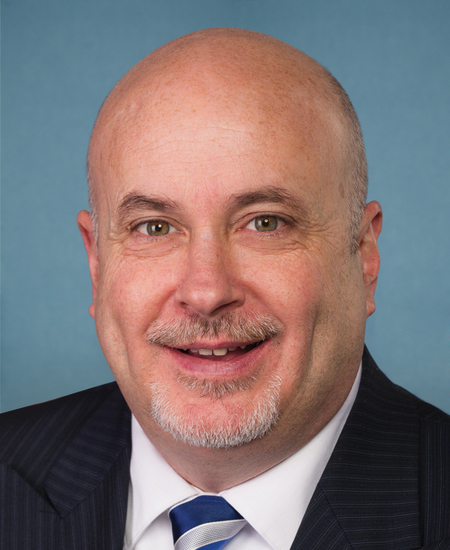
Rep. Mark Pocan
Sponsored bills
Protecting Sensitive Locations Act This bill prohibits immigration enforcement actions within 1,000 feet of a sensitive location unless there are exigent circumstances and written prior approval has been obtained from certain officials. Sensitive locations include health care facilities; schools and school bus stops; places that provide assistance for people such as children, pregnant women, and abuse victims; places that provide disaster or emergency services; places of worship; courthouses and lawyers' offices; and public assistance offices. The prohibition shall apply to Department of Homeland Security officers and agents, as well as state employees pursuing immigration enforcement actions. If an enforcement action is carried out in violation of this prohibition (1) no information resulting from the action may be entered into the record in a resulting removal proceeding, and (2) the affected alien may move to immediately terminate such a proceeding. U.S. Immigration and Customs Enforcement and U.S. Customs and Border Protection shall annually report to Congress about enforcement actions taken at sensitive locations in the preceding year.
This joint resolution proposes a constitutional amendment authorizing Congress and the states to set reasonable limits on the raising and spending of money by candidates and others to influence elections. The amendment grants Congress and the states the power to implement and enforce this amendment by legislation. They are allowed to distinguish between natural persons and corporations or other artificial entities created by law, including by prohibiting such entities from spending money to influence elections.
This resolution impeaches President Donald John Trump for high crimes and misdemeanors. Specifically, the resolution sets forth two articles of impeachment stating that President Trump has abused the powers of the presidency. The first article states that, using the powers of his office, President Trump sought to threaten, intimidate, and solicit the Secretary of State of Georgia to acquiesce to his demand to find enough votes to make him the winner of Georgia's presidential election, even though the votes in Georgia had already been counted three times in favor of his opponent. The article further states that, by doing so, President Trump actively undermined public faith and confidence in the integrity of American elections, subverted the rule of law, and placed his personal interests above the national interest. The second article states that President Trump has endeavored to undermine foundations of U.S. democracy, indicating an intention to make himself an authoritarian ruler who is unaccountable to the U.S. people. The article specifies the following actions by President Trump: refusing to acknowledge, and opposing efforts to protect against, Russian interference in U.S. affairs; expressing willingness to accept foreign assistance to win reelection; refusing to accept the results of the election; undermining the ability of American citizens to exercise their rights as voters; falsely alleging widespread voting fraud while producing no evidence; inciting his supporters to believe falsely that the election had been stolen from him; and failing to take action to protect federal officers, personnel, property, and institutions on January 6, 2021, when the Capitol was besieged by his supporters. Both articles state that, by such conduct, President Trump warrants impeachment and trial, removal from office, and disqualification to hold U.S. office.
This resolution requires the House Committee on Ethics to investigate and report on whether (1) actions taken by Members of the 117th Congress seeking to overturn the 2020 Presidential election violated their oath of office; and (2) these Members should face sanction, including removal from the House of Representatives. It also condemns all targeted and malicious efforts to disenfranchise Black, Brown, and Indigenous voters.
This resolution impeaches President Donald John Trump for high crimes and misdemeanors. Specifically, the resolution sets forth two articles of impeachment. The first article states that President Trump abused the powers of the presidency by attempting to unlawfully overturn the results of Georgia's presidential election. The article specifies that President Trump, on a recorded call, repeatedly asked the Secretary of State of Georgia to overturn the verified results of the election and threatened consequences for a failure to do so. The second article states that President Trump abused the powers of the presidency by inciting violence and orchestrating an attempted coup. The article specifies that, on January 6, 2021, President Trump incited a crowd of supporters to attack the Capitol while Congress was in session to certify the results of the election. The article further specifies that, after those supporters had violently breached the Capitol, President Trump made a statement repeating his false claims of election fraud and expressing affection for the supporters. Both articles state that, by such conduct, President Trump warrants impeachment and trial, removal from office, and disqualification from holding U.S. office.
This resolution censures and condemns President Donald J. Trump for asking the Georgia Secretary of State on January 2, 2021, to overturn the Georgia results of the November 2020 presidential election. It further calls on President Trump to (1) retract and disavow this behavior, and (2) acknowledge President-elect Joseph R. Biden as the victor of the November 2020 presidential election.
Medicare Audiologist Access and Services Act of 2021 This bill provides for Medicare coverage of certain audiologist services. Specifically, the bill expands coverage to include diagnostic and treatment services that are furnished by audiologists and that would otherwise be covered if provided by a physician, including incidental services, regardless of whether such services are provided pursuant to a referral from, or under the supervision of, a physician or other health care practitioner.
Ellie Helton, Lisa Colagrossi, Kristen Shafer Englert, Teresa Anne Lawrence, and Jennifer Sedney Focused Research Act or Ellie's Law This bill authorizes appropriations for the National Institute of Neurological Disorders and Stroke to conduct or support research on unruptured brain aneurysms in a patient population diversified by age, sex, and race.
Nutrition Counseling Aiding Recovery for Eating Disorders Act of 2021 or the Nutrition CARE Act of 2021 This bill provides for Medicare coverage of medical nutrition therapy services for individuals with eating disorders. Such services must be furnished by a registered dietitian or nutrition professional pursuant to a referral from a physician, psychologist, or other authorized mental health professional.