

Stop Militarizing Law Enforcement Act This bill restricts the Department of Defense (DOD) from transferring certain surplus military property to federal, state, or local law enforcement agencies. Specifically, DOD may not transfer to such agencies specified property such as controlled firearms, ammunition, grenade launchers, explosives, certain vehicles or trucks, armored or weaponized drones, certain controlled aircraft, silencers, or long-range acoustic devices. DOD may waive this limitation and transfer certain vehicles or trucks if DOD determines that the transfer is necessary for disaster or rescue purposes or for another purpose where life and public safety are at risk. As a condition for a transfer of allowable property, DOD must require the federal or state agency that receives the property to return the property if the agency is investigated by the Department of Justice for civil liberties violations or is otherwise found to have engaged in widespread abuses of civil liberties. DOD must also periodically submit certain transfer-related information and certifications to Congress. Furthermore, as a condition for transfer, the recipient must receive the approval of its local governing body, provide specified notice to the local community, and submit specified information and certifications to DOD. A federal or state agency that receives controlled property under such a transfer may never take ownership of the property. The bill also eliminates the requirement for DOD to give preference to transfers of property that will be used in counter-drug, counterterrorism, disaster-related emergency preparedness, or border security activities.
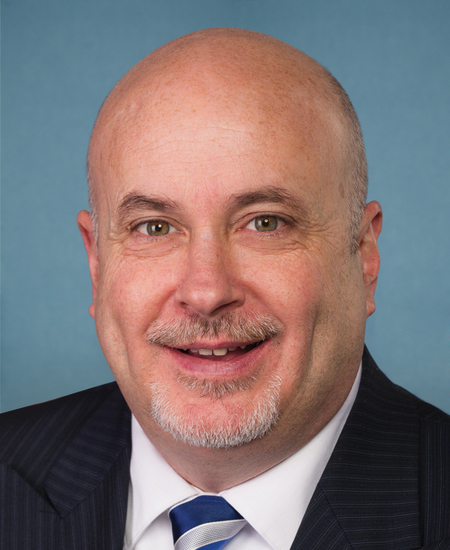
Rep. Mark Pocan
Sponsored bills
Abortion is Health Care Everywhere Act of 2021 This bill authorizes the use of certain foreign assistance funds to provide comprehensive reproductive health care services in developing countries, including abortion services, training, and equipment.
Energy Storage Tax Incentive and Deployment Act of 2021 This bill allows tax credits for (1) energy storage technologies, and (2) battery storage technology. The bill expands the tax credit for investments in energy property to include equipment that (1) receives, stores, and delivers energy using batteries, compressed air, pumped hydropower, hydrogen storage (including electrolysis), thermal energy storage, regenerative fuel cells, flywheels, capacitors, superconducting magnets, or other technologies identified by the Internal Revenue Service; and (2) has a capacity of at least five kilowatt hours. The bill also expands the tax credit for residential energy efficient property to include expenditures for battery storage technology that (1) is installed on or in connection with a dwelling unit located in the United States and used as a residence by the taxpayer, and (2) has a capacity of at least three kilowatt hours.
Prevent Interruptions in Physical Therapy Act of 2021 This bill allows a physical therapist to receive payment under Medicare for services provided to the physical therapist's patients by another physical therapist through a qualifying temporary arrangement, regardless of the geographic area or population served. Currently, physical therapists may only receive payment with respect to such arrangements for services provided in medically underserved, rural, or health professional shortage areas.
This bill expedites the approval process for renewable fuels under the renewable fuel standard (RFS) program. The existing RFS program requires transportation fuel to contain a minimum volume of renewable fuel. Producers must register renewable fuels under the program. The bill considers an application to register a renewable fuel under the RFS program to be approved by the Environmental Protection Agency (EPA) if the fuel has been approved under any state renewable fuel program. It also establishes a deadline for the EPA to make a decision on any pending application for a renewable fuel that has not yet been approved under any state program. In addition, the bill establishes deadlines for the EPA to make decisions on pending pathway petitions by producers to register biofuels. If the EPA does not make decisions on the petitions by the deadlines, then petitions are automatically approved.
George Floyd Justice in Policing Act of 2021 This bill addresses a wide range of policies and issues regarding policing practices and law enforcement accountability. It increases accountability for law enforcement misconduct, restricts the use of certain policing practices, enhances transparency and data collection, and establishes best practices and training requirements. The bill enhances existing enforcement mechanisms to remedy violations by law enforcement. Among other things, it does the following: lowers the criminal intent standard—from willful to knowing or reckless—to convict a law enforcement officer for misconduct in a federal prosecution, limits qualified immunity as a defense to liability in a private civil action against a law enforcement officer, and grants administrative subpoena power to the Department of Justice (DOJ) in pattern-or-practice investigations. It establishes a framework to prevent and remedy racial profiling by law enforcement at the federal, state, and local levels. It also limits the unnecessary use of force and restricts the use of no-knock warrants, chokeholds, and carotid holds. The bill creates a national registry—the National Police Misconduct Registry—to compile data on complaints and records of police misconduct. It also establishes new reporting requirements, including on the use of force, officer misconduct, and routine policing practices (e.g., stops and searches). Finally, it directs DOJ to create uniform accreditation standards for law enforcement agencies and requires law enforcement officers to complete training on racial profiling, implicit bias, and the duty to intervene when another officer uses excessive force.
War Powers Amendments of 2021 This joint resolution revises the War Powers Resolution, a law that limits the President's power to introduce Armed Forces into hostilities. Changes include shortening the time that Armed Forces may be involved in hostilities without congressional action and providing for judicial enforcement. The President shall remove any Armed Forces introduced into hostilities without congressional approval within 30 days unless Congress (1) declares war, (2) enacts a joint resolution specifically authorizing such use of the Armed Forces, or (3) is unable to meet because of an attack on the United States. This 30-day period may be extended by up to 15 days under specified circumstances. Current law allows such use of the Armed Forces for 60 days from when the President first reports to Congress about the engagement and allows for a 60-day extension. If Congress takes no such actions, funds may not be used to continue Armed Forces involvement in the hostilities, except to withdraw. The bill removes a provision requiring the removal of such engaged Armed Forces if Congress passes a concurrent resolution requiring such removal. A member of Congress may sue in district court for an order directing the President to comply with this bill. A judgment in such an action shall be directly appealable to the Supreme Court. The bill also revises various provisions relating to (1) the President reporting to and consulting with Congress regarding the use of the Armed Forces without congressional authorization, and (2) procedures for the expedited handling of joint resolutions related to such use of force.
Girls' Leadership, Engagement, Agency, and Development Act of 2021 or the Girls LEAD Act This bill directs the Department of State and the U.S. Agency for International Development (USAID) to jointly report to Congress a strategy to strengthen the participation of adolescents, particularly girls, in democracy, human rights, and governance. The State Department and the USAID shall (1) implement activities to achieve this goal, including activities to increase adolescent girls' civic and political knowledge and skills and address barriers to political participation; and (2) prioritize foreign assistance funding for democracy, human rights, and governance programs toward achieving the goals in this bill.
This resolution thanks and honors the journalists and news staff who risked themselves to chronicle the insurrection at the U.S. Capitol on January 6, 2021, and it condemns the harassment and violent attacks on the media during the insurrection.
New Way Forward Act This bill makes changes to immigration enforcement, including ending mandatory detention in certain cases. The Department of Homeland Security (DHS) shall not enter into or extend any contract with any public or private for-profit entity to own or operate a facility to detain aliens in DHS custody. The bill provides for various protections related to detaining aliens, such as (1) requiring DHS to make an initial custody determination and establish probable cause within 48 hours of taking an alien into custody, (2) establishing in hearings related to such determinations a presumption that the alien be released, and (3) requiring immigration judges to impose the least restrictive detention conditions necessary. A DHS officer may not interrogate a person as to immigration status based on factors such as the person's race, religion, sexual orientation, or spoken language. The bill removes mandatory detention requirements for certain aliens, such as asylum seekers with a credible fear of persecution. Removal proceedings against certain aliens previously admitted into the United States must commence within five years of the alien becoming deportable or inadmissible. The bill also removes certain crime-related grounds of inadmissibility and deportability. The bill gives immigration judges discretion to provide relief from removal if the removal is not based on certain crime-related grounds. State or local officers are prohibited from performing certain immigration enforcement functions, such as apprehending aliens. The National Crime Information Center database shall not contain an alien's immigration information. The bill repeals provisions providing criminal penalties for improper entry or reentry into the United States.