

Maddy summaryThe CLEANER Act of 2023 requires the Environmental Protection Agency (EPA) to evaluate within one year of enactment whether waste from oil, gas, and geothermal energy production - such as drilling fluids and produced waters - is hazardous. If determined hazardous, these wastes must be listed and regulated under existing hazardous waste rules, with potential modifications to address their unique properties while ensuring health and environmental protection. For non-hazardous waste from these sources, the EPA must establish new facility requirements, including groundwater monitoring, location standards, and financial assurance for cleanup. This bill directly affects oil, gas, and geothermal energy producers and facilities handling such waste.
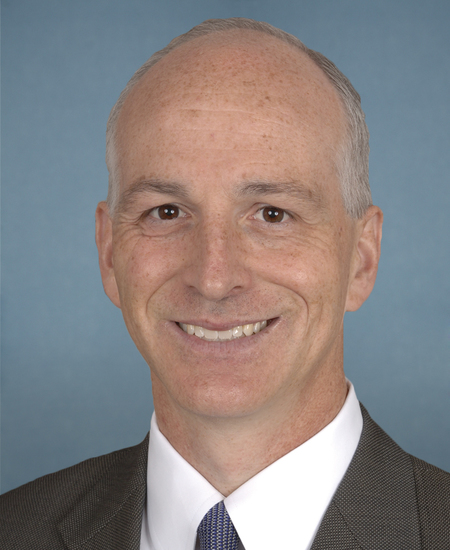
Rep. Adam Smith
Sponsored bills
Maddy summaryHR 4811 requires oil, gas, and geothermal companies conducting hydraulic fracturing (fracking) operations to test nearby underground drinking water sources before, during, and after activities. It mandates testing at specific intervals (e.g., before starting operations, every 6 months during operations, and annually for five years post-operation) and submitting results to the EPA within two weeks. Companies must test using EPA-certified labs for contaminants linked to fracking, with results stored in a public, searchable EPA database by ZIP code. The requirement does not apply if no accessible drinking water source exists within one mile of the site. The bill amends the Safe Drinking Water Act to establish these testing and reporting obligations.
Maddy summaryThe People's Response Act establishes a new Division on Community Safety within the Department of Health and Human Services to fund community-based approaches to safety that are disconnected from traditional law enforcement and criminal justice systems. It creates four grant programs totaling $13 billion over five years: one for community-led organizations serving disproportionately impacted communities (especially Black and Indigenous communities), one for local governments to conduct safety needs assessments, one for states to support statewide implementation, and one for hiring and training first responders who provide non-carceral crisis response. These grants require recipients to use "qualified approaches to community safety" that avoid collaboration with carceral institutions and prioritize organizations led by or serving communities most affected by the criminal legal system. Recipients must report on outcomes including racial disparities in arrests, incarceration, and how funds are used to address safety needs through community-led initiatives.
Maddy summaryHR 4812, the Food for Thought Act of 2023, provides federal grants to eligible colleges and universities to offer free on-campus meals to low-income students. The bill targets institutions with high Pell Grant enrollment (at least 30% of undergrads), prioritizing community colleges, minority-serving institutions, and those in areas with high need. Participating schools must provide 1-10 free meals weekly to students facing food insecurity, with priority given to those with greatest financial need, and must report on student outcomes like retention and graduation rates. Grants cover meal costs, campus food pantries, and SNAP enrollment support, with funds allocated for 5 years and requiring detailed reporting on program impact.
Maddy summaryThis bill creates two tax credits to support local media and small businesses. It provides a credit for small businesses (under 50 full-time employees) that advertise in qualifying local newspapers or broadcast stations, covering 80% of first-year ad costs up to $5,000 and 50% of subsequent-year costs up to $2,500. It also establishes a payroll tax credit for employers hiring local news journalists, covering 50% of wages for the first four quarters (capped at $12,500 per journalist) and 30% thereafter, with a maximum of 1,500 journalists per employer. Both credits expire after five years and require strict definitions of "local media" (e.g., publishers with local journalists and community focus) to prevent misuse.
Maddy summaryH.J.Res. 25 would remove the 1979 deadline for states to ratify the Equal Rights Amendment (ERA), which was originally proposed in 1972. This bill directly affects states that ratified the ERA after the deadline (such as Nevada, Illinois, and Virginia in 2017-2018) by making their ratifications legally valid. The key provision states that the ERA is valid as part of the Constitution if ratified by three-fourths of states, regardless of the original deadline. The bill does not create new rights but aims to finalize the constitutional amendment process by eliminating the time limit.
Maddy summaryHJRES 82 is a non-binding resolution stating that the Equal Rights Amendment (ERA) has been validly ratified by the required 38 states (including Virginia's 2020 ratification) and should be certified as the 28th Amendment to the U.S. Constitution. It directs the Archivist of the United States to fulfill their statutory duty under Title 1, U.S. Code, to certify and publish the ERA without delay. The resolution argues Article V of the Constitution has no ratification deadline, citing precedents like the 27th Amendment. It does not change the Constitution itself but urges the Archivist to complete the certification process. The bill affects the Archivist’s office, requiring them to act on the ERA’s ratification status.
Maddy summaryHRES 580 is a symbolic resolution expressing the House's support for designating "Journeyman Lineworkers Recognition Day." It honors lineworkers who work in hazardous conditions (such as at heights near live wires) and respond to disasters like hurricanes and wildfires, while recognizing their contributions and the legacy of Henry Miller, an early electrical worker who died on the job. The resolution has no legal effect - it solely encourages public recognition and reflection on these workers' service.
Candidate Voice Fraud Prohibition Act This bill prohibits the distribution of certain paid-for political communications that contain materially deceptive audio that is generated by artificial intelligence which impersonates a candidate's voice. It also establishes criminal penalties for related violations. The bill generally prohibits individuals, political committees, and other entities from distributing such a communication if the communication (1) contains materially deceptive audio that is generated by artificial intelligence which impersonates a candidate’s voice, (2) is distributed with actual malice, (3) is intended to injure the candidate’s reputation or to deceive a voter into voting against the candidate, and (4) is distributed within 60 or 90 days of an election (depending on the type of election). This prohibition does not apply to certain entities, such as radio or television broadcasting stations that broadcast the deceptive audio as part of a bona fide newscast. Additionally, the bill establishes a new criminal offense related to the distribution of materially deceptive audio that is generated by artificial intelligence which impersonates a candidate's voice. A violator is subject to criminal penalties—a fine, up to two years in prison, or both. The bill requires the Federal Election Commission to (1) promulgate regulations related to this bill, and (2) report to Congress on matters relating to compliance with and enforcement of this bill and recommendations to ensure compliance with this bill.
Maddy summaryThe Afghan Adjustment Act creates a pathway for certain Afghans who directly supported U.S. missions in Afghanistan during the 20-year U.S. military presence to adjust to lawful permanent resident status (green card holders). It specifically targets Afghans who worked with U.S. forces or agencies, including military personnel, security personnel, and their families, who received "Chief of Mission approval" for special immigrant status. Key provisions include new vetting requirements (in-person interviews and biometric screening), exemption from immigration numerical limits, $20 million annually for implementation, and a task force to develop resettlement strategies. The bill also establishes a new category of special immigrant visas for at-risk Afghan allies and sets a two-year application deadline after guidance is published.