

Maddy summaryThis bill establishes new federal requirements for employers to prevent heat-related illness and injury among workers. It mandates that employers provide safe work environments by implementing specific measures, including access to cool water, scheduled rest breaks in shaded areas, employer-paid cooling equipment, and training for employees and supervisors on recognizing heat illness symptoms. The Secretary of Labor must create these standards within one year, requiring employers in high-heat occupations (like construction, agriculture, and outdoor labor) to adopt engineering controls, administrative schedules, and health protocols. Key provisions include ensuring hydration, rest, and language-accessible training, while preserving existing safety protections and allowing for updates as scientific evidence evolves.
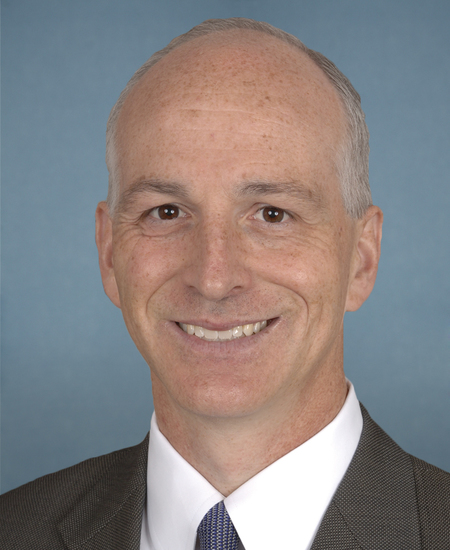
Rep. Adam Smith
Sponsored bills
Maddy summaryHR 4900, the Fair College Admissions for Students Act, bans colleges receiving federal financial aid from favoring applicants based on family connections to donors or alumni. Specifically, it amends the Higher Education Act to prohibit institutions from giving preferential treatment in admissions to students whose parents or relatives donated money to the school or are alumni. This applies to all colleges participating in federal student aid programs under the Higher Education Act. The rule takes effect for the second award year starting after the bill's enactment date.
Maddy summaryHR 1776, the End Tuberculosis Now Act of 2023, would amend U.S. foreign assistance law to strengthen global tuberculosis (TB) programs. The bill requires U.S. assistance to align with the World Health Organization's End TB Strategy, aiming to reduce TB deaths by 95% and incidence by 90% by 2035. It mandates annual reporting on TB diagnosis and treatment progress, prioritizes research for new diagnostics and treatments, and emphasizes integrating TB services into primary health care. The legislation affects U.S. government agencies, global health partners, and countries with high TB burdens, particularly focusing on low- and middle-income nations.
Maddy summaryHR 4893, the Scientific Integrity Act, requires federal agencies that fund, conduct, or oversee scientific research to adopt policies preventing political interference in science. The bill mandates these agencies to prohibit suppression or distortion of research findings, establish Scientific Integrity Officers to enforce policies, and implement training and reporting systems. It directly affects scientists and engineers employed by or contracted with covered agencies (like the EPA or NIH), ensuring their work remains free from political pressure. Key mechanisms include annual public reporting on misconduct complaints, whistleblower protections, and requiring scientific conclusions to be based on evidence, not ideology.
Maddy summaryHR 4870, the Wall Street Tax Act of 2023, imposes a 0.1% tax on most securities transactions occurring on U.S. exchanges or involving U.S. persons. It directly affects financial institutions, brokers, and investors participating in covered transactions like stock, bond, and derivative trades. The tax applies to the fair market value of transactions (excluding initial security issuances and short-term debt under 100 days), with payment responsibility falling on U.S. exchanges, brokers, or U.S. parties depending on the transaction type. Exceptions include certain real property contracts, insurance products, and derivatives used in normal business operations. The tax takes effect for transactions after December 31, 2023.
Maddy summaryHR 4889, the Raise the Wage Act of 2023, would gradually increase the federal minimum wage for most workers to $15.50 per hour by 2027, with specific annual targets: $9.50 starting in 2023, rising to $11.00 after one year, $12.50 after two years, and $15.50 after four years. It would also phase out the separate lower minimum wage for tipped employees (starting at $6.00/hour) by aligning their pay with the regular minimum wage by 2028, while requiring employers to let workers keep all tips. The bill includes similar phased increases for workers under 20 and transitions toward fairer wages for workers with disabilities under special certificates, which would sunset after 2028. Future annual increases after 2028 would tie the minimum wage to the median hourly wage of all workers.
Maddy summaryHR 4157, the "Not Just a Number Act," requires the Department of Veterans Affairs (VA) to produce annual reports on veteran suicide rates and their connection to VA healthcare and benefits. The reports must break down suicide rates by age, gender, and race, and examine how engagement with VA services (like Vet Centers, healthcare enrollment, benefits claims, and housing loans) correlates with suicide trends. The bill also mandates a VA toolkit for state/local coroners to improve veteran suicide death reporting, and a study on creating a dedicated VA suicide prevention office. These measures aim to standardize data collection and identify effective prevention strategies, directly affecting VA operations, congressional oversight, and veteran care systems.
Maddy summaryHR 4785, the Fracturing Responsibility and Awareness of Chemicals Act of 2023, requires oil and gas companies conducting hydraulic fracturing operations to disclose detailed chemical information to state agencies or the EPA. Specifically, companies must provide a pre-operation list of chemicals (including CAS numbers and volumes) and a post-operation report of chemicals actually used, which states must then make publicly available online. The bill also mandates immediate disclosure of proprietary chemical formulas to medical personnel during emergencies, without requiring prior written consent. It explicitly excludes natural gas storage from the definition of hydraulic fracturing. This bill directly affects oil and gas operators and state environmental agencies managing disclosure requirements.
Maddy summaryThis bill, the CLOSE Act (HR 4782), removes a loophole that allowed oil and gas facilities to aggregate emissions from multiple sources when calculating pollution levels under federal law. It requires the EPA to add hydrogen sulfide - a pollutant linked to health harm - directly to the list of hazardous air pollutants within 180 days of the bill becoming law. The EPA must then, within a year, define specific categories of oil and gas wells and other sources that emit hydrogen sulfide. This change directly affects oil and gas operators by subjecting hydrogen sulfide emissions from their facilities to stricter federal pollution controls.
Maddy summaryThe FRESHER Act of 2023 requires the Secretary of the Interior to study stormwater runoff impacts from oil and gas operations on environmental contamination and groundwater resources. The study must analyze measurable contamination levels, groundwater conditions, and aquifer vulnerability to contamination in affected areas. The Secretary must complete the study and submit a report to Congress within one year of the bill’s enactment. This bill does not impose new regulations on the oil and gas industry but mandates a federal review to inform future environmental policy decisions.