

Maddy summaryThis bill restores visa eligibility for immigrants who had diversity visas allocated for fiscal years 2017-2022 but were denied entry due to specific travel restrictions (like Executive Orders 13769/13780 or related proclamations) or pandemic-related delays. The State Department must notify affected individuals within 90 days of the bill’s enactment, giving them one year to confirm they wish to proceed with their visa applications. Unused visas from those years can be reallocated without counting against current annual limits, and applicants who fail to respond or are denied for standard reasons (like education requirements) lose eligibility. The policy directly affects individuals impacted by these specific past barriers to immigration.
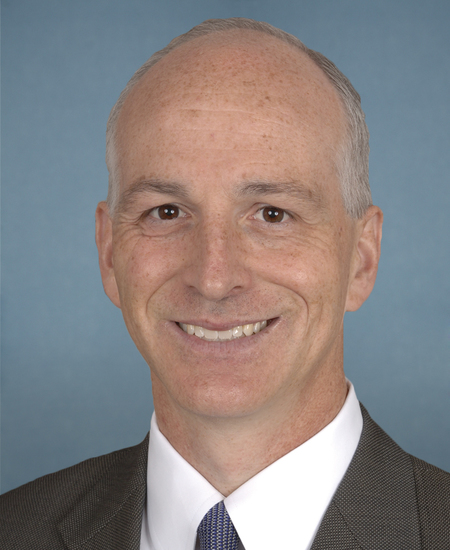
Rep. Adam Smith
Sponsored bills
Maddy summaryHRES 963 is a symbolic resolution honoring Korean American Day, which commemorates the January 13, 1903 arrival of the first large wave of Korean immigrants to the U.S. It recognizes Korean Americans' contributions to U.S. society, including their economic, cultural, and military impacts, and marks the 121st anniversary of this historic migration. The resolution urges all Americans to observe Korean American Day to appreciate these contributions. As a commemorative measure, it does not create new policies or affect specific groups beyond this ceremonial recognition.
CONtinuity in Necessary Evaluative Crisis Treatment Act of 2024 or the CONNECT Act of 2024 This bill requires the Substance Abuse and Mental Health Services Administration to award grants to certain crisis centers for providing follow-up care to individuals who receive suicide prevention and crisis intervention services.
Maddy summaryThe Affordable Connectivity Program Extension Act of 2024 allocates $7 billion in funding for the Affordable Connectivity Program (ACP) during fiscal year 2024. The ACP provides subsidies to low-income households to help cover the cost of internet service and connected devices like laptops or tablets. This funding ensures the program can continue supporting eligible households throughout the year, with the money remaining available until fully spent. The bill extends existing program funding without changing eligibility criteria or service requirements.
Maddy summaryHR 6888, the Clean Energy Workforce Act, provides $100 million in federal grants to develop clean energy job training programs. It directly affects local schools, career technical education centers, colleges, and industry partners by funding: (1) new or expanded training programs in clean energy fields (like renewable energy and climate adaptation), designed to be shared with other schools and accessible to diverse students; and (2) upgrades to school facilities to use renewable energy and improve energy efficiency. Grants require partnerships between educational institutions, industry representatives, and community groups to create replicable training that prepares students for jobs in growing clean energy sectors. The bill focuses on concrete workforce development, not environmental outcomes.
Maddy summary# Summary of National Defense Authorization Act for Fiscal Year 2024 This document outlines key provisions of the National Defense Authorization Act for Fiscal Year 2024, focusing on defense spending, military aircraft programs, research and development, and program management requirements. **Key Aircraft Program Restrictions:** - Prohibits retirement of F-15E aircraft beyond 68 until 2029 - Maintains minimum RQ-4 inventory at 10 aircraft through 2028 - Limits F-16C/D retirement until specific reporting requirements are met - Prohibits retirement of KC-135 aircraft (with limited exceptions) - Maintains minimum A-10 inventory at 135 aircraft - Requires certification before taking actions related to KC-46A remote vision systems **Reporting Requirements:** - Mandates annual reports on force structure changes for major weapon systems - Requires detailed reporting on F-15E, F-16C/D, and other aircraft retirement plans - Requires annual reports on hypersonic capabilities funding through 2030 - Mandates updates to accountability matrices for Next Generation Air Dominance programs **Research & Development Focus:** - Authorizes multiyear procurement for domestically processed critical minerals - Establishes quantum information science fellowships and university partnerships - Creates a Consortium on Additive Manufacturing for Defense Capability Development - Requires biennial updates to hypersonics testing strategy - Authorizes support for the Defence Innovation Accelerator for the North Atlantic (DIANA) **Program Management:** - Requires detailed accountability matrices for Next Generation Air Dominance programs - Mandates key performance parameters for cost management - Establishes Naval Air Warfare Rapid Capabilities Office - Requires cost-benefit analysis for F-35 propulsion modernization The legislation contains numerous specific restrictions on aircraft retirement, procurement limits, and detailed reporting requirements designed to maintain military readiness while managing defense spending.
Maddy summaryHRES 942 is a symbolic House resolution honoring Wadee Alfayoumi, a 6-year-old Palestinian Muslim-American boy murdered in a hate crime in Illinois on October 16, 2023. The resolution recognizes that Wadee was stabbed 26 times by a perpetrator who yelled "All Muslims should die" and consumed anti-Muslim rhetoric, and it condemns hate crimes targeting Palestinian, Muslim, and other minority identities. It affirms that elected officials and media should avoid dehumanizing language, upholds freedom of speech, and declares the U.S. has "zero tolerance" for Islamophobia, antisemitism, anti-Palestinian discrimination, and hate crimes. As a non-binding resolution, it does not create new laws but formally honors Wadee’s life and addresses the broader issue of hate-driven violence against minority communities.
Maddy summaryThe Care Across Generations Act (HR 6835) creates a competitive grant program to fund child care centers within long-term care facilities (like nursing homes and assisted living centers). It directly affects facilities that operate or partner with licensed child care centers to coordinate activities between children and seniors. Key provisions include 36-month grants for co-locating child care, mandatory evaluations of program effectiveness, and required reports to Congress on outcomes and best practices. The bill aims to test whether integrated facilities improve experiences for both children and seniors, with findings to inform future policy.
Maddy summaryHR 6654, the Farewell to Foam Act of 2023, bans the sale and distribution of expanded polystyrene foam food containers, packaging peanuts ("loose fill"), and coolers starting January 1, 2026. It directly affects food service providers (like restaurants and schools), manufacturers, distributors, and retailers who sell these foam products. The bill prohibits selling these items, with enforcement starting with a written warning for first violations, followed by escalating civil penalties ($250 for a second violation, up to $1,000 for fourth+ violations), while exempting small businesses with low annual revenue from repeated penalties within a 7-day period.
Maddy summary# Summary of the Gun Violence Prevention and Community Safety Act of 2023 This comprehensive legislation introduces sweeping reforms to U.S. gun control laws, with several key provisions: ## Major Restrictions - **Semiautomatic assault weapons**: Requires registration of "grandfathered" weapons, mandates background checks for transfers, and imposes strict storage requirements - **Ghost guns**: Prohibits manufacturing, selling, or possessing untraceable firearms (those without serial numbers) with limited exceptions - **Undetectable firearms**: Bans weapons made of materials that can't be detected by airport security scanners - **Firearm accessories**: Bans trigger cranks, bump-fire devices, and other accessories that accelerate firing rate - **Silencers/mufflers**: Prohibits possession and sale of silencers/mufflers except for law enforcement and military use ## Dealer Reforms - Requires secure storage (locked cabinets, safes, security systems) at all gun dealers - Mandates annual inspections of high-risk dealers and triennial inspections for others - Requires background checks for all dealer employees before they can handle firearms - Requires dealers to maintain detailed records of all firearm sales and transfers - Establishes civil penalties for security violations (up to $20,000 per violation) ## New Funding Mechanisms - Increases excise taxes on firearms (30% on pistols, revolvers, and other firearms; 50% on ammunition) - Dedicates 39% of ammunition tax revenue to a Community Violence Intervention Fund - Allocates $60 million annually to DOJ and HHS for gun violence prevention research ## Community Programs - Creates a $120 million annual grant program for community violence intervention programs - Funds hospital-based violence intervention programs and street outreach initiatives - Requires evidence-based approaches to reducing homicides and group-related violence ## Implementation Timeline - Most provisions take effect 90 days after enactment - Some provisions (like ghost gun restrictions) have 1-2 year transition periods - Requires dealers to submit security plans within 1 year of enactment The legislation aims to reduce gun violence through both regulatory restrictions and investment in community-based prevention programs, with significant emphasis on closing loopholes that allow untraceable firearms to enter circulation.