

Protecting the Right to Organize Act of 20 21 This bill expands various labor protections related to employees' rights to organize and collectively bargain in the workplace. Among other things, it (1) revises the definitions of employee , supervisor , and employer to broaden the scope of individuals covered by the fair labor standards; (2) permits labor organizations to encourage participation of union members in strikes initiated by employees represented by a different labor organization (i.e., secondary strikes); and (3) prohibits employers from bringing claims against unions that conduct such secondary strikes. The bill also allows collective bargaining agreements to require all employees represented by the bargaining unit to contribute fees to the labor organization for the cost of such representation, notwithstanding a state law to the contrary; and expands unfair labor practices to include prohibitions against replacement of, or discrimination against, workers who participate in strikes. The bill makes it an unfair labor practice to require or coerce employees to attend employer meetings designed to discourage union membership and prohibits employers from entering into agreements with employees under which employees waive the right to pursue or a join collective or class-action litigation. The bill further prohibits employers from taking adverse actions against an employee, including employees with management responsibilities, in response to that employee participating in protected activities related to the enforcement of the prohibitions against unfair labor practices (i.e., whistleblower protections). Such protected activities include providing information about a potential violation to an enforcement agency, participating in an enforcement proceeding, initiating a proceeding concerning an alleged violation or assisting in such a proceeding, or refusing to participate in an activity the employee reasonably believes is a violation of labor laws. Finally, the bill addresses the procedures for union representation elections, provides employees with the ability to vote in such elections remotely by telephone or the internet, modifies the protections against unfair labor practices that result in serious economic harm, and establishes penalties and permits injunctive relief against entities that fail to comply with National Labor Relations Board orders.
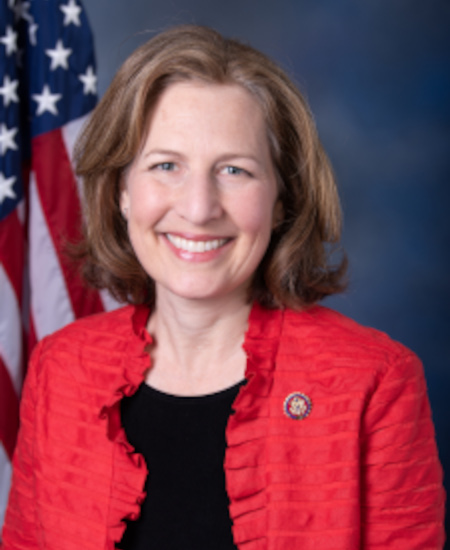
Rep. Kim Schrier
Sponsored bills
For the People Act of 2021 This bill addresses voter access, election integrity and security, campaign finance, and ethics for the three branches of government. Specifically, the bill expands voter registration (e.g., automatic and same-day registration) and voting access (e.g., vote-by-mail and early voting). It also limits removing voters from voter rolls. The bill requires states to establish independent redistricting commissions to carry out congressional redistricting. Additionally, the bill sets forth provisions related to election security, including sharing intelligence information with state election officials, supporting states in securing their election systems, developing a national strategy to protect U.S. democratic institutions, establishing in the legislative branch the National Commission to Protect United States Democratic Institutions, and other provisions to improve the cybersecurity of election systems. Further, the bill addresses campaign finance, including by expanding the prohibition on campaign spending by foreign nationals, requiring additional disclosure of campaign-related fundraising and spending, requiring additional disclaimers regarding certain political advertising, and establishing an alternative campaign funding system for certain federal offices. The bill addresses ethics in all three branches of government, including by requiring a code of conduct for Supreme Court Justices, prohibiting Members of the House from serving on the board of a for-profit entity, and establishing additional conflict-of-interest and ethics provisions for federal employees and the White House. The bill requires the President, the Vice President, and certain candidates for those offices to disclose 10 years of tax returns.
Disability Access to Transportation Act This bill expands transportation access for individuals with disabilities. Specifically, the bill requires the Department of Transportation to establish a one-stop paratransit pilot program to develop or expand paratransit programs carried out pursuant to the Americans with Disabilities Act of 1990 (ADA) to prevent long wait times between multiple trips that unduly limit an individual's ability to complete essential tasks; issue regulations enforcing guidelines that set forth minimum standards for pedestrian facilities in the public right-of-way, including shared use paths; implement procedures that allow an individual to submit an ADA complaint by phone, by mail-in form, and online; require each public transit provider and contractor providing paratransit services to post certain information for how an individual can file a disability-related complaint; file yearly reports of accessibility complaints; and create an accessibility data pilot program to assist states and metropolitan or rural planning organizations to improve their transportation planning.
This resolution supports the designation of a National FFA Week. It also (1) recognizes the important role of the National FFA Organization (Future Farmers of America) in developing the next generation of leaders who will change the world, and (2) celebrates 50 years of National FFA alumni and supporters.
TRICARE Reserve Select Improvement Act This bill expands TRICARE Reserve Select eligibility to include members of the Selected Reserve who are enrolled or eligible to enroll in the Federal Employees Health Benefits Program.
Abortion is Health Care Everywhere Act of 2021 This bill authorizes the use of certain foreign assistance funds to provide comprehensive reproductive health care services in developing countries, including abortion services, training, and equipment.
This resolution honors Officers Brian Sicknick and Howard Liebengood of the U.S. Capitol Police, and it commends the bravery and service demonstrated by officers of the U.S. Capitol Police, the Metropolitan Police Department of the District of Columbia, and the other law enforcement agencies and protective entities that assisted in responding to the January 6, 2021, attack on the U.S. Capitol.
Build America's Libraries Act This bill establishes and provides funds through FY2024 for the Build America's Libraries Fund, from which the Institute of Museum and Library Services (IMLS) must allocate funding to states and, through them, need-based grants to libraries to make long-term improvements to library facilities. The IMLS must also award grants to Indian tribes and organizations that primarily serve and represent Native Hawaiians. Specifically, the bill requires each state that receives an allocation, and each library that receives a grant, to carry out certain activities to improve library facilities. These activities include constructing and renovating library facilities, investing in infrastructure projects to improve internet access and connectivity, improving indoor air quality, and making facilities accessible to individuals with disabilities. The bill also outlines administrative and oversight provisions, including by requiring library projects to use iron and steel products that are produced in the United States.
Research Investment to Spark the Economy Act of 2021 or the RISE Act of 2021 This bill authorizes the Departments of Agriculture, Commerce, Defense, Education, Energy, the Interior, Health and Human Services, and Transportation, National Aeronautics and Space Administration (NASA), National Science Foundation, and Environmental Protection Agency to provide support for research regarding COVID-19 (i.e., coronavirus disease 2019) or research disrupted by the COVID-19 pandemic. Support may be used to provide supplemental funding to extend the duration of a grant to a research institution, national laboratory, or individual that was awarded prior to the enactment of this bill, or to expand the purposes of such a grant as specified; issue awards to research the effects of the current pandemic and potential future pandemics; and provide flexibility on awards to account for facility closures or other limitations during the COVID-19 public health emergency. Agencies must provide the support as rapidly as possible. Provided funds shall remain available through FY2021.
Arctic Refuge Protection Act This bill repeals the Arctic National Wildlife Refuge oil and gas program. The bill designates approximately 1,559,538 acres of land within Alaska in the Arctic National Wildlife Refuge as a component of the National Wilderness Preservation System.