

Wise Investment in Children Act of 2021 or the WIC Act of 20 21 This bill expands eligibility for children to receive benefits under the Special Supplemental Nutrition Program for Women, Infants, and Children (WIC). The bill authorizes the Department of Agriculture to grant a waiver to a state, on request, that waives certification deadline requirements under the program if such state demonstrates there are unusual technological barriers to implementation, operational costs are not affordable within the nutrition services and administration grant of the state, or it is in the best interest of the program. If a waiver is granted, the bill extends eligibility for the program until the period that ends on the earlier of the sixth birthday of a child or when the child enters kindergarten; extends the certification period under the program for infants to up to two years, instead of the current one year; and increases the certification time under the program for postpartum women to a period of up to two years.
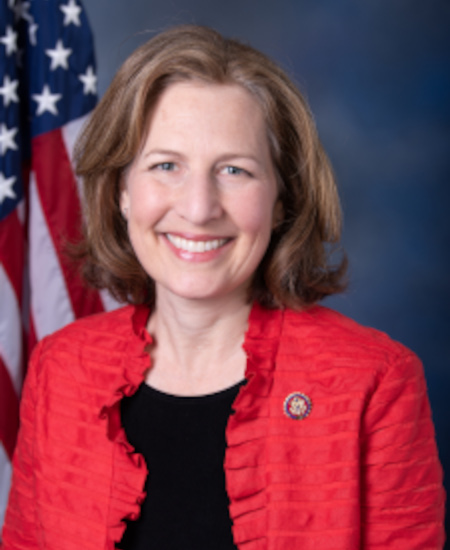
Rep. Kim Schrier
Sponsored bills
This bill directs the Speaker of the House and the President pro tempore of the Senate to arrange for the award of three Congressional Gold Medals to the U.S. Capitol Police (USCP) and other law enforcement agencies that protected the U.S. Capitol on January 6, 2021. Following the award of these medals, one medal shall be given to the USCP, one medal shall be given to the Metropolitan Police Department of the District of Columbia, and one medal shall be given to the Smithsonian Institution and displayed with a plaque listing all law enforcement agencies that participated in protecting the Capitol on January 6, 2021.
Equality Act This bill prohibits discrimination based on sex, sexual orientation, and gender identity in areas including public accommodations and facilities, education, federal funding, employment, housing, credit, and the jury system. Specifically, the bill defines and includes sex, sexual orientation, and gender identity among the prohibited categories of discrimination or segregation. The bill expands the definition of public accommodations to include places or establishments that provide (1) exhibitions, recreation, exercise, amusement, gatherings, or displays; (2) goods, services, or programs; and (3) transportation services. The bill allows the Department of Justice to intervene in equal protection actions in federal court on account of sexual orientation or gender identity. The bill prohibits an individual from being denied access to a shared facility, including a restroom, a locker room, and a dressing room, that is in accordance with the individual's gender identity.
Stronger Child Abuse Prevention and Treatment Act This bill reauthorizes through FY2027 and revises the Child Abuse Prevention and Treatment Act and the Child Abuse Prevention and Treatment and Adoption Reform Act of 1978 to expand services for preventing and treating child abuse. Specifically, the bill establishes requirements concerning collecting and exchanging data about child abuse and neglect. For instance, the bill requires the Department of Health and Human Services (HHS) to (1) establish uniform national standards for tracking and reporting child fatalities and near fatalities resulting from maltreatment, and (2) develop an electronic interstate data exchange system that allows states to share information from their child abuse and neglect registries with other states. The bill also addresses child abuse and neglect related to families impacted by substance use disorders, racial bias in the child protective services system, and child sexual abuse. Further, the bill revises the community-based grants program to emphasize access to effective services for diverse populations and to promote the development of statewide strategies to scale up family strengthening services. Finally, the bill requires HHS to examine unregulated custody transfers and make recommendations for preventing, identifying, and responding to such transfers.
Rural and Underserved Small Hospital Protection Act of 2021 or the RUSH Protection Act of 2021 This bill applies certain modified payment limits to rural health clinics that temporarily enrolled in Medicare during the public health emergency relating to COVID-19 (i.e., coronavirus disease 2019) or that applied to enroll by December 31, 2020. The bill applies retroactively.
Children’s Health Insurance Program Permanency Act or the CHIPP Act This bill permanently extends the Children's Health Insurance Program (CHIP) and related measures, programs, and authorities. Specifically, the bill permanently funds CHIP and related programs that support the development of child health quality measures and outreach and enrollment efforts. The bill also permanently authorizes the Medicaid and CHIP express lane eligibility option, which allows states to use information from designated programs (e.g., the Supplemental Nutrition Assistance Program) to streamline eligibility determinations for children. Additionally, under the bill, states may expand eligibility to children whose family income exceeds the otherwise applicable limits.
Information Transparency & Personal Data Control Act This bill requires the Federal Trade Commission (FTC) to establish requirements for certain entities when they collect, transmit, store, process, use, or otherwise control sensitive personal information. Information relating to an identifiable individual is generally considered sensitive personal information. However, information that is publicly available is not considered sensitive. Specifically, these entities must (1) obtain affirmative consent from users for functionality related to the disclosure of sensitive personal information, (2) publish a privacy and data use policy that is readily understandable, (3) provide users the ability to opt-out of the sharing of their nonsensitive information, and (4) obtain at least once every two years a privacy audit that evaluates the sufficiency of the entity's data privacy and security controls. These requirements do not apply to the collection or sharing of sensitive or nonsensitive personal information for certain purposes such as detecting fraud or identity theft. The bill provides authority for the FTC and state attorneys general to enforce these requirements. Additionally, the FTC must hire 500 new employees to focus on privacy and data security.
Funding for Aviation Screeners and Threat Elimination Restoration Act or the FASTER Act This bill repeals the requirement that a portion of aviation security service fees collected from passengers be credited as offsetting receipts and deposited in the general fund of the Treasury. It requires such fees to be deposited into a separate account in the Treasury for expenditure to pay only the costs of activities and services for which the fee is imposed (i.e., aviation security screening).
Civics Secures Democracy Act of 2021 This bill provides resources to expand educational programs in American civics and history, including by establishing grant and fellowship programs and reauthorizing various programs. First, the bill authorizes the Department of Education (ED) to award grants to states, qualified nonprofit organizations, institutions of higher education (IHEs), and qualified researchers to support and expand access to civics and history education. Next, the bill establishes a fellowship program to diversify the civics and history education workforce. In addition, the bill reauthorizes through FY2027 and revises the American History for Freedom grant program. The bill renames the program as the American Civics Education Program. The bill revises the grant program to authorize ED to award grants to IHEs once every three years to establish or strengthen academic programs to promote American political thought and history; the history, achievements, and impact of American representative democracy and constitutional democracies globally; and the means of participation in political and civic life. IHEs may use grants to support additional activities, such as collaborating with federal or state humanities programs and using open educational resources. Further, the bill reauthorizes through FY2022 and revises the Harry S. Truman Memorial Scholarship Trust Fund and the James Madison Memorial Fellowship Trust Fund. Finally, the bill requires the National Assessment of Educational Progress in civics and history to be administered every two years to certain grade levels.
Public School Green Rooftop Program This bill directs the Department of Energy (DOE) to establish a grant program for installing and maintaining green roof systems on public elementary and secondary school buildings. Green roof refers to a layer of vegetation that is planted over a waterproofing system or to a waterproof management practice that is installed on a roof and may support plant growth. Specifically, DOE must award grants to public elementary and secondary schools, local educational agencies, and partnerships with nonprofit organizations to (1) pay the costs of planning assistance for green roof systems on school buildings (e.g., assessing structures, conducting financial and engineering analyses, and receiving cost estimates), and (2) install green roof systems on these buildings. Additionally, a grant recipient must complete the installation of a green roof system within four years of receiving the grant. A grant recipient that completes this installation requirement shall receive additional funding for maintenance activities, such as conducting routine inspections to monitor the condition of the green roof.