

Maddy summaryThis resolution (HRES 1049) is a non-binding House of Representatives congratulatory measure celebrating the Seattle Seahawks' victory in Super Bowl LX and honoring their fan base, known as the "12th Man." It specifically acknowledges the team's second Super Bowl title, key players like MVP Kenneth Walker III and record-setting kicker Jason Myers, and the defensive performance. The resolution has no legal effect or policy changes - it serves solely as ceremonial recognition for the team and fans, with no direct impact on individuals or legislation.
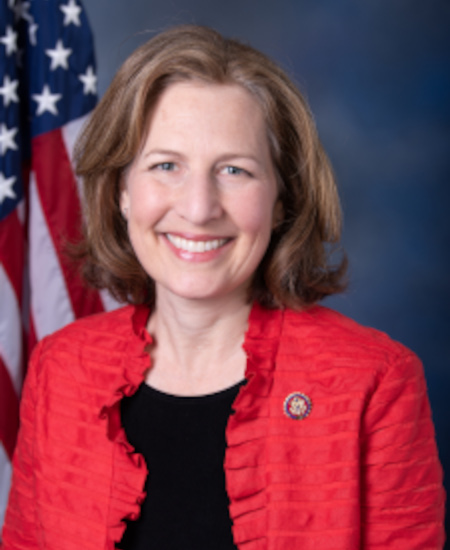
Rep. Kim Schrier
Sponsored bills
Maddy summaryThe Patient Debt Relief Act (HR 7478) requires Medicare-participating hospitals to implement new financial assistance and debt collection standards starting January 1, 2028. It prohibits hospitals from garnishing wages, placing home liens, or selling medical debt to collectors without offering income-based repayment plans (capping payments at 4% of monthly income) and providing clear eligibility information with bills. Hospitals failing to comply face civil penalties up to $1 million per violation, with annual audits and a public portal for patients to report noncompliance. The bill also creates a $100 million grant program to discharge medical debt for individuals meeting income thresholds (5% of income or household income ≤400% of poverty line). These changes directly affect hospitals and patients burdened by medical debt, aiming to standardize fair collection practices.
Maddy summaryHR 7377, the "Know Before You Drive Act," requires vehicle manufacturers and dealers to clearly explain the capabilities and limitations of partially automated driving systems to consumers. It prohibits misleading claims (like calling partial automation "fully autonomous") and mandates plain-language notices at the time of sale, detailing what drivers must monitor (e.g., object detection, system failures), plus updates for software changes affecting performance. The bill also adds new labeling requirements to vehicle information sheets, specifying operational conditions (like weather or road types) and whether driver supervision is needed. These rules apply to all manufacturers selling vehicles with such systems in the U.S., enforced by NHTSA and the FTC.
Maddy summaryThe PART Act requires new vehicles to have catalytic converters marked with a unique identification number that links directly to the vehicle's identification number, stored in a law enforcement-accessible database. It establishes a $7 million grant program to help repair shops, dealers, law enforcement, and fleet owners purchase equipment for marking converters with visible, durable identifiers (using die or pin stamping and high-visibility paint). The bill also mandates that businesses buying catalytic converters keep detailed seller records (including vehicle information) for two years and use traceable payments, banning cash or cryptocurrency transactions. Additionally, it creates new federal criminal penalties for stealing or trafficking in catalytic converters, with potential sentences of up to five years in prison.
Safe Vehicle Access for Survivors Act This bill requires providers of connected vehicle services, upon the request of a domestic violence survivor, to terminate or disable an identified domestic abuser’s access to a vehicle’s connected capabilities and data. Specifically, within two business days of receiving a request from a survivor, a covered provider must, if technically feasible (1) terminate or disable the connected vehicle account associated with the identified abuser or the relevant vehicle, or the vehicle’s connected capabilities; or (2) instruct the survivor on how to terminate or disable connected services directly. Covered providers may not make the termination of connected vehicle services or accounts contingent on any requirement other than the provision of specified information by the survivor. For example, a provider may not require a survivor to pay a fee or extend their contract with the provider. Under the bill, an abuser is an individual identified by a survivor who committed or allegedly committed certain acts against the survivor, including domestic violence, sexual assault, stalking, and sex trafficking. A survivor is an adult against whom such an act was committed. Further, a covered provider is a vehicle manufacturer, affiliate, or entity acting on behalf of a manufacturer that provides a connected vehicle service. Connected vehicle service is any capability that enables a person to remotely access data from or send commands to a vehicle. Finally, the Federal Communications Commission must prescribe regulations governing how covered providers address survivors’ requests related to connected vehicles.
Maddy summaryThe REPAIR Act requires motor vehicle manufacturers to provide car owners and independent repair shops with full access to vehicle data and repair information, prohibiting technological or legal barriers that restrict this access. It mandates that manufacturers share vehicle-generated data, critical repair information, and tools on equal terms with dealers and authorized service providers, without requiring consumers to use specific brands of parts or tools. The law establishes an advisory committee to monitor implementation and ensure fair competition in vehicle repair, while giving the Federal Trade Commission authority to enforce these requirements as unfair or deceptive practices. This legislation directly affects car owners, independent repair facilities, aftermarket parts manufacturers, and motor vehicle manufacturers by shifting control of repair information and data from manufacturers to consumers.
Maddy summaryThe Kids Off Social Media Act prohibits social media platforms from allowing children under 13 to create accounts and requires them to delete the personal data of any existing accounts belonging to children. It also bans platforms from using personalized recommendation systems to show content to children and teens, except when the system relies only on basic information like device type, language, and location. The Eyes on the Board Act of 2026 requires schools that receive discounted internet subsidies to certify that they block students from accessing social media platforms and monitor their online activities. Together, these measures aim to limit children's access to social media and restrict how platforms use data from young users.
Maddy summaryThis bill directs the federal government to conduct a study on co-locating high-voltage power lines on existing highway and rail corridors. The study, led by the Energy Secretary with input from transportation agencies and stakeholders, will assess technical feasibility, safety, costs, and benefits of building transmission infrastructure within these rights-of-way. It will identify suitable corridors, evaluate different line configurations (like overhead or underground), and analyze impacts on grid reliability, energy costs, and transportation operations. The study must produce public reports within three years, including data to help accelerate future transmission projects without requiring immediate construction. This focuses on planning and data-sharing to address grid capacity constraints, directly affecting federal agencies, utilities, and transportation infrastructure owners.
Maddy summaryHR 7335 establishes comprehensive humanitarian standards for individuals held in U.S. Immigration and Customs Enforcement (ICE) and U.S. Customs and Border Protection (CBP) custody. The bill requires facilities to provide immediate health screenings within 12 hours (6 hours for high-risk individuals like children, pregnant people, or those with medical conditions), ensure access to adequate water, sanitation, food (with 2,000+ calories daily for adults), and age-appropriate shelter. It mandates specific facility standards including separate housing for males and females, accessible accommodations for people with disabilities, daily outdoor access for those detained over 48 hours, and proper medical equipment and personnel on-site. The bill also requires regular inspections, staff training on humanitarian protocols, and public reporting of sexual abuse complaints. These standards directly affect all individuals detained by ICE or CBP, with special protections for vulnerable groups like children, pregnant people, and those with medical needs.
Maddy summaryThis bill amends federal energy conservation law to require federal agencies to consider mechanical insulation as a standard energy-saving measure during building evaluations. It defines "mechanical insulation property" as materials that reduce energy loss in mechanical systems while meeting ASHRAE 90.1 standards, including insulation placed in service with those systems. The law adds mechanical insulation to the list of measures agencies must evaluate for potential installation in federal buildings as part of their required energy and water assessments. This directly affects federal agencies managing buildings, ensuring they formally assess this specific efficiency measure during routine evaluations.