

Maddy summaryHRES 932 is a symbolic resolution passed by the House of Representatives that condemns six specific members of Congress (including Senators Kelly and Slotkin and Representatives Crow, Deluzio, Goodlander, and Houlahan) for allegedly making statements that encouraged military and intelligence personnel to disobey orders from the President. The resolution claims these lawmakers falsely suggested the administration issued "illegal orders" and undermined the military chain of command, violating the Uniform Code of Military Justice (UCMJ). It does not create new laws or policies but formally denounces the lawmakers' statements as "dangerous and seditious rhetoric." As a procedural resolution, it has no binding effect on military conduct or policy.
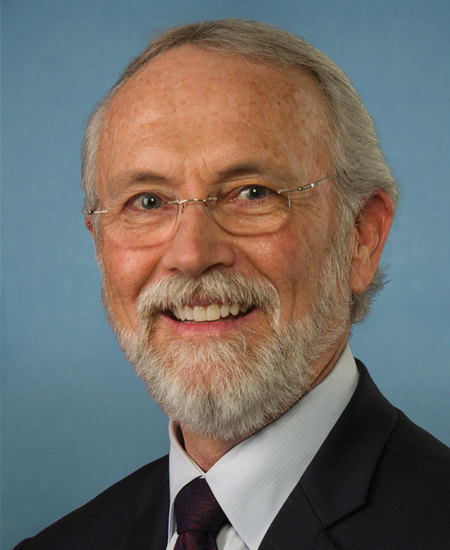
Rep. Dan Newhouse
Sponsored bills
Maddy summaryThis bill expands tax credit eligibility for renewable energy projects by broadening the definition of "energy communities" under two existing tax provisions. It specifically adds non-metropolitan (rural) areas to the list of eligible locations for the increased renewable electricity production credit (Section 45) and removes a restriction affecting the clean electricity investment credit (Section 48E). As a result, renewable energy developers in rural communities will now qualify for higher tax credits previously limited to urban areas. The changes align with permanent provisions from the Inflation Reduction Act, making these expanded credits available for projects in non-urban locations.
Maddy summaryThis bill amends the Food Security Act of 1985 to streamline enrollment in a conservation program focused on wildlife habitat. It adds a new enrollment category for land under the "State acres for wildlife enhancement initiative" and updates acreage limitation rules to reference this specific program. The changes directly affect farmers and landowners participating in conservation programs who enroll land for wildlife habitat improvements. The bill simplifies administrative processes for this specific initiative without altering conservation requirements or funding.
Give Kids a Chance Act of 2025 This bill expands the Food and Drug Administration’s (FDA’s) authority with respect to research on rare pediatric diseases, including by permitting the FDA to take enforcement action against drug sponsors that fail to satisfy pediatric study requirements and by reauthorizing programs that support pediatric research. Specifically, the bill modifies requirements relating to molecularly targeted pediatric cancer investigations to permit research on new drugs in combination with active ingredients that have already been approved, provided certain conditions are met; permits the FDA to take enforcement action against drug sponsors that fail to comply with pediatric study requirements, if such sponsors demonstrated a lack of due diligence in satisfying the requirement; renews the FDA’s authority to award priority review vouchers to sponsors of new products intended to treat rare pediatric diseases through September 30, 2029; and reauthorizes through FY2027 certain funding for the National Institutes of Health to support priority pediatric research. The bill also provides statutory authority for the FDA’s interpretation of the orphan drug exclusivity period. The bill specifies, consistent with FDA regulations, that the seven-year market exclusivity period for drugs for rare diseases or conditions (i.e., orphan drugs) prohibits the approval of the same drug for the same approved use or indication with respect to the disease or condition. (In Catalyst Pharmaceuticals, Inc. v. Becerra , a court rejected the FDA’s interpretation and held that orphan drug exclusivity extends to all uses or indications for the disease or condition.)
Maddy summaryHCONRES 58 is a symbolic congressional resolution denouncing socialism in all its forms. It does not create new laws or affect any policies, as it is a non-binding statement of opinion. The resolution cites historical events and quotes from Founding Fathers to argue that socialism leads to authoritarianism and economic harm, referencing examples like the Soviet Union and Venezuela. It formally "denounces" socialism and opposes implementing socialist policies in the U.S., but has no legal effect on citizens or government actions. This is a procedural resolution, not a policy measure.
Maddy summaryThis bill amends the Water Infrastructure Finance and Innovation Act to make water infrastructure financing more accessible to small communities and rural water projects. It lowers the maximum eligible project cost from $5 million to $1 million, provides technical assistance for small communities (population ≤ 25,000) to develop project proposals, and clarifies definitions to include projects for federally recognized Indian Tribes. The bill introduces collaborative project delivery methods like design-build and construction management at-risk, and authorizes $68 million annually for the EPA and $15 million annually for the Army Corps of Engineers through fiscal year 2029. These changes directly affect small communities and rural water projects seeking federal assistance for water infrastructure improvements.
Maddy summaryThis bill defines "urban canals of concern" as city-area canals where failure could endanger over 100 people or cause more than $5 million in property damage. It requires the Secretary of the Interior to fund 35% of emergency maintenance costs for these high-risk canals, with local operators covering the remaining costs. Federal funding is non-reimbursable for the 35% share, but local entities must repay any additional federal funds provided. The policy applies specifically to canals previously transferred to local management under federal programs.
Maddy summaryHR 6220, the MIRACLE Act of 2025, directs the U.S. Department of Health and Human Services (HHS) to study neonatal abstinence syndrome (NAS), a condition affecting infants exposed to substances in utero. The study will examine NAS prevalence, barriers to accurate data collection under Medicaid (Title XIX), and the scope of available treatment services for affected infants and mothers. HHS must complete the study and submit a public report to Congress within three years of the bill’s enactment, detailing findings and recommendations. This bill directly affects HHS, state Medicaid programs, and pediatric transitional care facilities providing NAS treatment, but does not create new programs or funding.
Maddy summaryHR 5981, the VA Billing Accountability Act, requires the Department of Veterans Affairs (VA) to stop billing veterans for care or medications if the VA delayed sending payment notices due to its own errors. Specifically, it creates a two-year window (ending two years after enactment) where veterans won’t have to pay if they received care or medications but weren’t notified of required payments more than 180 days later for VA facilities or more than 18 months for non-VA care. The bill also sets strict deadlines for VA to send billing notices and mandates that veterans receive clear options to apply for waivers or set up payment plans if notices are late. This directly affects veterans who received delayed billing notices due to VA administrative errors, ensuring they aren’t charged for delays the VA caused. The law terminates after two years, with the VA required to review billing procedures within 180 days of enactment.
Maddy summaryThis bill extends and modifies the premium tax credit (subsidy) for health insurance purchased through the marketplace, applying to coverage for 2026 and 2027. It raises the income threshold for full subsidy eligibility from 400% to 600% of the federal poverty level, meaning more low-to-moderate-income households (up to 600% of poverty) will pay lower monthly insurance costs. The bill also adds new penalties for agents or brokers who provide false information during enrollment, including civil fines up to $50,000 per person and criminal charges for intentional fraud. These changes directly affect individuals buying health insurance through marketplaces and the agents/brokers who assist them.