

Listing Reform Act This bill modifies requirements concerning the review of petitions to add a species to the list of endangered or threatened species or to remove a species from the list. Specifically, the bill allows the Department of the Interior and the Department of Commerce to prioritize the consideration of petitions to list a species as endangered or threatened other than in the order in which the petitions are received. The appropriate department may not give general priority to petitions to add species to the list of endangered or threatened species over petitions to remove a species from the list. The deadline for the appropriate department to decide on whether or not a petition to list or remove a species should be granted is changed from within 12 months to as expeditiously as possible. The appropriate department is given the authority to preclude the listing of a species as threatened due to the likelihood of significant, cumulative economic effects that would result from such listing or from the likely resulting designation of critical habitat of the species. Once a petition is precluded due to those economic effects, the appropriate department may not reconsider that finding unless the department (1) determines there is endangerment of extinction of the species; or (2) receives a new petition to add the species to the list that includes an analyses concluding that alternative actions are possible other than those resulting in significant, cumulative economic effects.
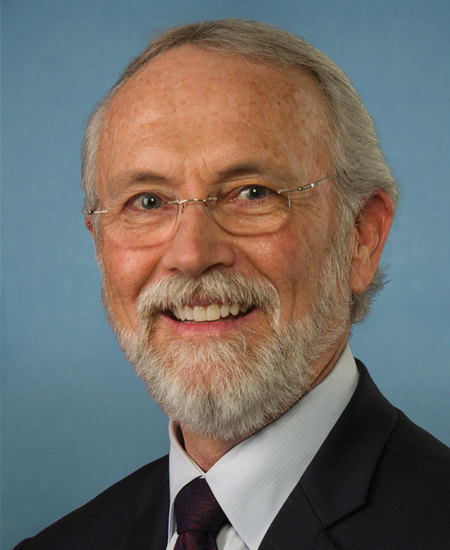
Rep. Dan Newhouse
Sponsored bills
This bill revises the royalty rates for leases on federal land to produce coal, oil, and gas. Specifically the bill caps the royalty rate for coal and establishes a royalty rate for oil and gas.
This resolution denounces socialism and opposes the implementation of socialist policies in the United States.
Less Imprecision in Species Treatment Act of 2021 or the LIST Act of 2021 This bill revises the process for removing a species from the endangered or threatened species lists. A species must be removed from the endangered or threatened species lists if the Department of the Interior produces or receives substantial scientific or commercial information demonstrating that the species is recovered or that recovery goals set for the species have been met. The publication and notice of a proposed regulation to remove a species from the lists must consist solely of a notice of the removal. The bill establishes a process for removing species from the lists if they were erroneously or wrongfully listed. The bill prohibits a person from submitting a petition to list a species as a threatened or endangered species for 10 years if the person knowingly submitted a petition with information that was inaccurate beyond scientifically reasonable margins of error, fraudulent, or misrepresentative.
Preserving Home and Office Numbers in Emergencies Act of 2021 or the PHONE Act of 2021 This bill restricts the reassignment of a telephone number assigned to a subscriber for the provision of fixed wireline voice service. Specifically, for up to one year after a major disaster has been declared, a number may not be reassigned except at the request of the subscriber. At the request of a subscriber, this prohibition must be extended for an additional year. Further, a subscriber may cancel service without a cancellation fee and resubscribe with the same number and no fee if the subscriber is located in a disaster area and the residence where the number is located is inaccessible or uninhabitable.
Entrepreneurs Need Timely Replenishment (for) Eating Establishments Act or the ENTRÉE Act This bill provides FY2021 supplemental appropriations for the Restaurant Revitalization Fund and modifies requirements related to administration of the fund. The fund was established in response to COVID-19 to make grants to eligible food and beverage purveyors for covering specified costs such as payroll, operational expenses, and paid sick leave. The bill correspondingly rescinds unobligated amounts previously made available for the Economic Injury Disaster Loan Program and coronavirus state and local fiscal recovery funds. Further, the bill requires the Small Business Administration (SBA) to (1) review and process grant applications in the order in which they are received; (2) impose requirements on applicants that reduce waste, fraud, and abuse; and (3) submit and report monthly on an oversight and audit plan outlining the SBA's policies, procedures, and activities with respect to these grants.
Water and Agriculture Tax Reform Act of 2021 This bill permits tax-exempt mutual ditch or irrigation companies to earn income from dispositions of certain property and stock interests without affecting their tax-exempt status, but requires that such income be used to pay the costs of operations, maintenance, and capital improvements of such a company. The bill also establishes a rule regarding the organizational governance of mutual ditch or irrigation companies. Where state law provides that such a company may be organized in a manner that permits voting on a basis that is pro rata to share ownership on corporate governance matters, the tax-exempt status of the mutual ditch or irrigation company must be determined without taking into account whether its member shareholders have one vote on corporate governance matters per share held in the corporation.
Wildfire Prevention and Drought Mitigation Act of 2021 This bill categorically excludes forest management activities carried out on specified public lands from requirements to conduct environmental assessments and environmental impact statements. In order to be excluded from environmental review, the primary purposes of such activities must be to protect a municipal or tribal water source from damage caused by wildfire; improve watershed or habitat conditions; improve, maintain, or restore water yield or quality; improve, maintain, or restore snowpack; or adapt the forest landscape to an increased threat of drought. The bill limits the categorical exclusion to activities that manage up to 10,000 acres of land. However, activities that manage up to 30,000 acres of land may be categorically excluded from environmental review if the activities are located in areas that (1) are in a severe, extreme, or exceptional drought; or (2) have been in such droughts in the previous five years.
This bill provides supplemental FY2021 appropriations to the National Guard for its response to the events at the U.S. Capitol on January 6, 2021. The bill designates the funding as emergency spending, which is exempt from discretionary spending limits.
This resolution recognizes and expresses support for the efforts of democracy and human rights activists in Cuba.