

Protecting and Restoring Our Trees by Enhancing Conservation and Treatments Act or the PROTECT Act This bill categorically excludes forest management activities carried out on specified public lands from requirements to conduct environmental assessments and environmental impact statements. In order to be excluded from environmental review, the primary purposes of such activities must be to address insect or disease infestations, reduce hazardous fuel loads, protect municipal water sources, protect critical habitats from catastrophic disturbances, increase water yield, remove dead or dying trees or trees at high risk of dying, or facilitate native species restoration. The bill limits the categorical exclusion to activities that manage up to 10,000 acres of land. However, activities that manage up to 30,000 acres of land may be categorically excluded from environmental review if the activities are developed through a collaborative process, proposed by certain resource advisory committees, or covered by community wildfire protection plans.
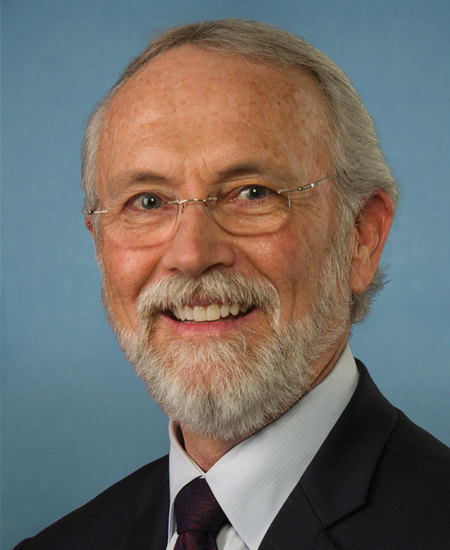
Rep. Dan Newhouse
Sponsored bills
Tribal Biochar Promotion Act of 2021 This bill establishes biochar demonstration projects. Biochar refers to carbonized biomass produced by converting feedstock through reductive thermal processing for nonfuel uses. Specifically, the bill directs the Department of the Interior (for land under Bureau of Land Management jurisdiction) and the Department of Agriculture (for land under Forest Service jurisdiction) to enter into agreements with tribes or tribal organizations to carry out biochar demonstration projects. These projects must support the development and commercialization of biochar on Indian forest land or rangeland and in nearby communities by providing them with reliable supplies of feedstock from federal lands.
Active Forest Management, Wildfire Prevention and Community Protection Act This bill establishes forest management, forest conservation, and wildfire prevention programs and activities. The bill establishes a collaborative prescribed fire program, an incentive program for large, cross-boundary prescribed fires, a program to remove or treat bark beetle-killed or infested trees, the Restoration and Resilience Partnership Program, and Forest Reserve Revenue Areas to generate revenue for counties. The bill also provides for, among other things the removal of certain trees or parts of those trees that come within 500 feet of an electric power line as hazard trees, the selection and implementation of landscape-scale forest restoration projects, removing the maximum term limits on stewardship end result contracting projects, study of only two alternatives (action vs. nonaction) in proposed collaborative forest management activities, the balancing of the long- and short-term effects of forest management activities on the affected ecosystem while considering injunctive relief, categorical exclusions from certain environmental requirements for specified forest management activities, and the expansion of the fire regime areas outside the wildland-urban interface for which a collaborative restoration project may be conducted.
This resolution expresses the sense of the House of Representatives that the World Health Organization must immediately conduct a comprehensive investigation of the origins of COVID-19 with access to all relevant records, samples, and personnel in China. It also states that the U.S. delegation to the World Health Assembly should work with allies and partners to ensure that the assembly authorizes such an investigation.
American Grown Act This bill prohibits the official display of a cut flower or green in any public area of a building of the Executive Office of the President, the Department of State, or the Department of Defense unless it is produced in the United States. The prohibition does not apply to any cut flower or green used by a federal officer or employee for personal display.
Nuclear Power Purchase Agreements Act This bill requires the Department of Energy to develop and carry out a program under which it will enter into one or more long-term (i.e., 10 to 40 years) nuclear power purchase agreements with nuclear reactors that received initial licenses after January 1, 2020.
American Energy First Act This bill addresses the onshore and offshore production of traditional (e.g., oil and gas) and alternative (e.g., solar and wind) energy resources and establishes requirements for distributing revenues generated from energy production, including revenues to states and territories for conservation efforts. For example, the bill limits the President's authority to (1) withdraw areas of the Outer Continental Shelf (OCS) from oil and gas leasing, and (2) declare new marine national monuments. In addition, the Department of the Interior must obtain congressional approval before declaring a moratorium on issuing leases on federal lands or waters for oil, gas, or coal. Further, the bill requires Interior to defer to state regulations, guidance, and permit requirements for all activities regarding hydraulic fracturing (i.e., fracking) relating to oil, gas, or geothermal production activities on federal land. Interior may delegate decisions about issuing oil and gas drill permits on federal land to states. Interior must also establish certain federal land as geothermal, solar, and wind energy leasing priority areas. The bill also allows Interior to conduct certain lease sales, such as offshore wind lease sales on the OCS in the U.S. Exclusive Economic Zone adjacent to U.S. territories, and establishes requirements for distributing revenues from such leases to the Treasury, the Coral Reef Conservation Fund established by this bill, and U.S. territories.
Alexander Lofgren Veterans in Parks (VIP) Act This bill makes the America the Beautiful-National Parks and Federal Recreational Lands Pass available, without charge, to members of the Armed Forces, veterans, and Gold Star Families. The pass covers the entrance fee and standard amenity recreation fee for all federal recreational lands and waters.
Distillery Revitalization Act This bill requires the Small Business Administration to modify the Restaurant Revitalization Program, established to support food and beverage purveyors in response to COVID-19, to allow certain distilleries to participate in the program. To be program-eligible, a distillery must have at least 33% of revenue from on-site sales. However, certain states limit the percentage of revenue that a distillery may have from on-site sales to less than 33%. For a distillery located in such a state, the bill allows the distillery to use its combined revenue from on-site sales and sales to retailers for on-site sales to reach the 33% threshold.
Provider Relief Fund Deadline Extension Act This bill extends the period during which health care providers may use payments received from the Provider Relief Fund to cover a variety of costs related to COVID-19.