No User Fees for Gun Owners Act This bill prohibits a state or local government from imposing any insurance requirement, tax, user fee, or similar charge as a condition of the manufacture importation, acquisition, transfer, or continued ownership of a firearm or ammunition, with the exception of a proportionate sales tax. The bill imposes the same prohibition under the Internal Revenue Code for firearms, pistols, or revolvers, but allows for the assessment of a proportionate sales tax.
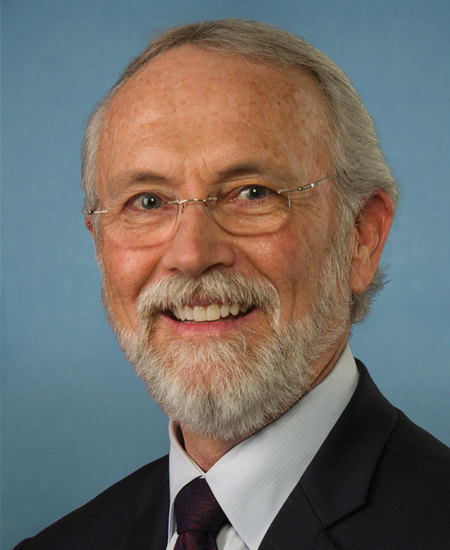
Rep. Dan Newhouse
Sponsored bills
Gas Prices Relief Act of 2022 This bill prohibits federal agencies from finalizing any regulations that would cause (1) a decrease in domestic oil, gas, or biofuels production; (2) an increase in gasoline prices; or (3) any negative effects on domestic energy production, domestic electricity generation, transmission of fuel or electricity, infrastructure development, or transportation fuels. The prohibition may not end until the earlier of January 1, 2023, or until the average gasoline price is $2.60 per gallon or less.
Save Americans from the Fentanyl Emergency Act of 2022 or the SAFE Act of 2022 This bill permanently places fentanyl-related substances as a class into schedule I of the Controlled Substances Act. A schedule I controlled substance is a drug, substance, or chemical that has a high potential for abuse; has no currently accepted medical value; and is subject to regulatory controls and administrative, civil, and criminal penalties under the Controlled Substances Act. It limits the application of mandatory minimum penalties for certain offenses involving fentanyl-related substances, establishes a process to deschedule or remove certain fentanyl-related substances that have a low potential for abuse, and allows a federal court to vacate or reduce the sentence for convictions of offenses involving a fentanyl-related substance that is descheduled or moved to a schedule other than schedule I or II. The bill establishes a new, alternative registration process for schedule I research. It also makes other changes to registration requirements for conducting research with controlled substances, including permitting a single registration for related research sites in certain circumstances, waiving the requirement for a new inspection in certain situations, and allowing a registered researcher to perform certain manufacturing activities with small quantities of a substance without obtaining a manufacturing registration. Finally, the bill requires the Government Accountability Office to analyze the implementation and impact of permanently placing fentanyl-related substances into schedule I of the Controlled Substances Act.
Midland Over Moscow Act This bill imposes sanctions related to the Nord Stream 2 pipeline and revises the expedited approval process for natural gas imports and exports in or out of the United States. (Nord Stream 2 is a pipeline constructed to increase the export of natural gas from Russia to Europe.) Within 10 days of this bill's enactment, the President must impose sanctions on any entity responsible for the planning, construction, maintenance, financing, or operation of Nord Stream 2, as well as any corporate officer or principal shareholder with a controlling interest in such an entity. The bill also revokes the President's authority to waive certain sanctions related to Nord Stream 2 and TurkStream, another Russian natural gas pipeline project. The bill also allows any nation, with specified exclusions, to use an expedited process to receive approval to import or export natural gas in or out of the United States (currently only a nation with a free trade agreement with the United States may use the expedited process). Specifically, the bill excludes any nation (1) subject to U.S.-imposed sanctions or trade restrictions, or (2) excluded by the President or Congress for national security reasons.

School Resource Officer Act of 2022 This bill reauthorizes through FY2026 the Community Oriented Policing Services (COPS) program and otherwise revises the program. Specifically, the bill revises the COPS program by restoring authority to make COPS grants for hiring and rehiring additional career law enforcement officers, allowing the federal cost share to be 75% for the duration of such grants, and specifying that at least 30% of the amount made available for such grants must be used for school resource officers.
Dignity for Immigrants while Guarding our Nation to Ignite and Deliver the American Dream Act or as the DIGNIDAD (Dignity) Act This bill addresses immigration-related issues, such as requiring the Department of Homeland Security (DHS) to resume construction of barriers along the U.S.-Mexico border and providing removal deferral for eligible non-U.S. nationals ( aliens under federal law). For example, the bill requires DHS to resume all barrier construction activities along the southern border that were underway or being planned prior to January 20, 2021; authorizes DHS to request National Guard support to secure the southern border; requires the hiring of additional U.S. Customs and Border Protection personnel; provides funding for border infrastructure and equipment; provides statutory authority for the Flores settlement, which established policies pertaining to the treatment of minors without lawful immigration status by DHS; requires employers to verify the immigration status of individuals using an electronic employment eligibility confirmation system modeled after the E-Verify system; provides a path to permanent resident status to eligible individuals without lawful immigration status who entered the United States as minors (commonly referred to as Dreamers); establishes the Dignity Program, which defers the removal of eligible individuals without lawful immigration status who meet various requirements, including paying into a fund to provide training to U.S. workers; establishes the Redemption Program, which provides a path to permanent resident status to individuals who complete the Dignity Program and meet various requirements, including making additional payments into the U.S. worker fund; and requires the Department of State to implement a strategy to address the key factors contributing to individuals from Central America traveling to the United States.
Law Enforcement Officers Preventing Drug Abuse Related Deaths Act This bill expands the allowable use of grant funds under the Comprehensive Opioid, Stimulant, and Substance Abuse Program administered by the Department of Justice. Specifically, the bill allows grants to be used for a pilot program for local law enforcement agencies in rural areas to purchase opioid receptor antagonists, including naloxone, for use by officers in the line of duty. The bill also requires at least 50% of grants under the program to be awarded to rural areas.
COPS on the Beat Grant Program Reauthorization and Parity Act of 2022 This bill reauthorizes through FY2031 and makes changes to the Community Oriented Policing Services grant program. Among the changes, the bill reduces the required matching contribution for certain rural communities during the first three years of a grant and eliminates the preference for agencies that exceed the matching requirements; allows grant funds to be used to increase wages of career law enforcement officers in states or localities that have a median household income of less than 70% of the national median household income and qualify for a reduced matching contribution; and provides statutory authority for the Office of Community Oriented Policing Services within the Department of Justice. Additionally, the bill requires the Government Accountability Office to report on whether law enforcement workforces are representative of the communities they serve, the percentage of law enforcement employees who live in the community they serve, the average pay of officers compared to the cost of living in the community they serve, and recommendations for improvements.
Upholding the Law at Our Border Act This bill requires the Office of Inspector General of the Department of Homeland Security (DHS) to periodically investigate and report on certain issues until there have been fewer than 35,000 apprehensions at the southwest border for three consecutive months. When required, the reports must address certain issues, including (1) the vetting procedures applicable to aliens seeking entry into the United States who were apprehended along the southwest border, (2) the total number of individuals not lawfully present who have been processed and released into the United States, (3) the number of such individuals who have received parole, and (4) an audit of the parole applications. The office must submit such reports (and provide briefings on the reports) to the President, Congress, DHS, and the Department of Justice.
Halt All Lethal Trafficking of Fentanyl Act or the HALT Fentanyl Act This bill places fentanyl-related substances as a class into schedule I of the Controlled Substances Act. A schedule I controlled substance is a drug, substance, or chemical that has a high potential for abuse; has no currently accepted medical value; and is subject to regulatory controls and administrative, civil, and criminal penalties under the Controlled Substances Act. Additionally, the bill establishes a new, alternative registration process for schedule I research that is funded by the Department of Health and Human Services or the Department of Veterans Affairs or that is conducted under an investigative new drug exemption from the Food and Drug Administration. The bill also makes several other changes to registration requirements for conducting research with controlled substances, including permitting a single registration for related research sites in certain circumstances, waiving the requirement for a new inspection in certain situations, and allowing a registered researcher to perform certain manufacturing activities with small quantities of a substance without obtaining a manufacturing registration.