This resolution expresses support for the Supreme Court's holding in Dobbs v. Jackson Women's Health Organization (that there is no constitutional right to abortion). The resolution also applauds the courage of the Justices for standing by their allegiance to the Constitution and the legitimacy of the Supreme Court, and it expresses a commitment to supporting policies that continue to protect all life.
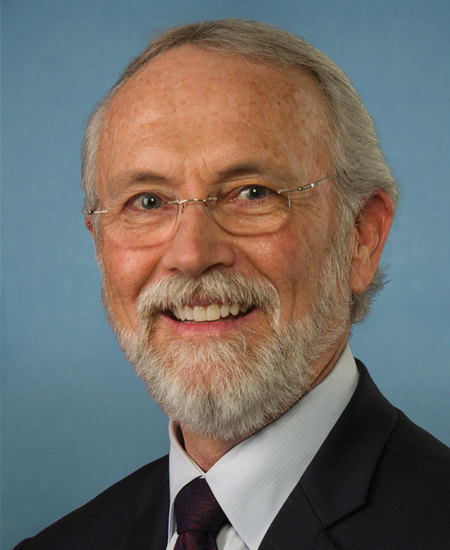
Rep. Dan Newhouse
Sponsored bills
This resolution urges the Biden Administration to expeditiously restore the Migrant Protection Protocols, a policy requiring many asylum seekers arriving at the southern border to wait in Mexico while their cases are being adjudicated. It also urges the Administration to use certain public health powers, commonly referred to as Title 42 authority, to promptly expel migrants.
Visitor Visa Wait Time Reduction Act This bill requires the Department of State to report to Congress on the average waiting time to get a visitor visa interview at each diplomatic or consular post. For each post where the average waiting time is longer than 300 days, the State Department must temporarily reassign personnel at that post to shorten the waiting time.
Bridging Agency Data Gaps and Ensuring Safety for Native Communities Act or the BADGES for Native Communities Act This bill revises federal policies and procedures related to information sharing, reporting, and investigating cases of missing, unidentified, or murdered Indians. Among other elements, the bill requires the Department of Justice to (1) establish a grant program for specified entities (e.g., tribes) to implement changes to enhance their responses to missing person cases and death investigations of interest to tribes, and (2) work with the Department of Health and Human Services to ensure that federal training resources and culturally appropriate mental health and wellness programs are available to tribal and Bureau of Indian Affairs (BIA) law enforcement officers experiencing occupational stress. The Department of the Interior must establish a five-year demonstration program for the purpose of conducting or adjudicating personnel background investigations for applicants for law enforcement positions in the BIA. The bill also requires the Government Accountability Office to conduct specified studies, including a study on the evidence collection, handling, and processing procedures and practices of federal law enforcement agencies.

Protecting Kids from Candy-Flavored Drugs Act This bill establishes enhanced criminal penalties for certain federal drug offenses involving the manufacture or distribution of candy-flavored controlled substances or similar products for minors. Specifically, the bill imposes enhanced criminal penalties for a federal drug offense that involves manufacturing, creating, distributing, dispensing, or possessing with intent to distribute a controlled substance listed in schedule I or II that is combined with a candy or drink, marketed to appear similar to a candy or drink, or modified by flavoring or coloring to appear similar to a candy or drink. To be subject to an enhanced penalty, the individual must have knowledge or reasonable cause to believe that the controlled substance will be distributed, dispensed, or sold to an individual who is under 18 years of age.
Parity for Tribal Law Enforcement Act This bill treats certain tribal law enforcement officers as federal law enforcement officers under specified circumstances. Specifically, the bill authorizes the law enforcement officers of any Indian tribe that has contracted or compacted any or all federal law enforcement functions through the Indian Self-Determination and Education Assistance Act to enforce federal law within the tribe's jurisdiction if those officers meet certain qualifications. These qualifications include completing training and passing an adjudicated background investigation. Further, the bill deems a tribal law enforcement officer who is acting under an authorized contract or compact as a federal law enforcement officer for the purposes of certain federal laws, including for injury and death, retirement, and pension benefits. The Department of the Interior must (1) develop procedures for credentialing tribal officers to confirm these officers meet minimum certification standards and training requirements for Indian country peace officers, and (2) promulgate guidance to implement this bill. The bill also requires the Department of Justice to coordinate and provide oversight for its functions and programs to ensure a coordinated approach for public safety in Indian communities.
Sanctioning Supporters of Slave Labor Act This bill expands existing sanctions on foreign individuals and entities responsible for human rights abuses (e.g., such as torture or forced labor) against members of Muslim minority groups or other persons in the Xinjiang Uyghur Autonomous Region in China. Specifically, this bill requires sanctions on foreign individuals and entities that knowingly (1) provide material support to the parties subject to the existing sanctions for human rights abuses in Xinjiang, or (2) engage in a significant transaction relating to such human rights abuses.
School Watch and Tactics Act of 2022 This bill directs the Department of Justice to develop, disseminate, and publish best practices for occupation-specific education for school resource officers.
School Resource Officer Assessment Act of 2022 This bill requires the Department of Justice and the Department of Education to conduct and submit to Congress a survey of the assignment of school resource officers at public elementary and secondary schools.
Protecting Gun Owners in Bankruptcy Act of 2022 This bill modifies federal bankruptcy law to allow an individual debtor to exempt from their bankruptcy estate one or more firearms up to a total maximum value of $3,000. The bill also specifies that such firearms are household goods that are not subject to liens in bankruptcy.