

Maddy summaryThe HELP Copays Act (HR 830) changes how health insurance plans calculate patient cost-sharing. It requires that payments made by third parties (like pharmacies, charities, or discount programs) toward medical costs count toward a patient's deductible, copay, or out-of-pocket limit. This directly affects insured individuals who receive financial assistance, discounts, or product vouchers for healthcare expenses. The law ensures these external payments reduce the patient's actual out-of-pocket costs more quickly, aligning with existing Affordable Care Act and Public Health Service Act requirements.
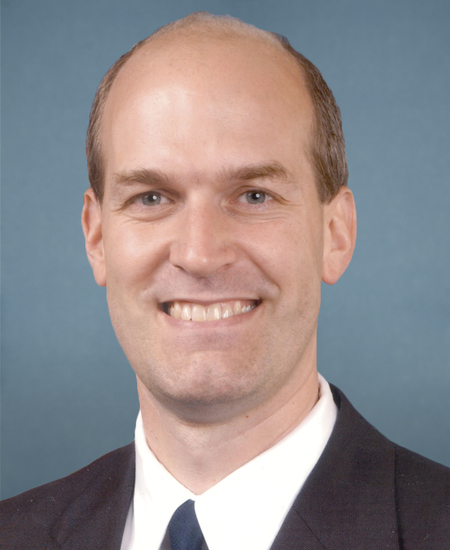
Rep. Rick Larsen
Sponsored bills
Maddy summaryHRES 125 allocates up to $21.77 million in funding for the Committee on Transportation and Infrastructure during the 118th Congress. This resolution covers the committee's staff salaries and operational expenses, with $10.88 million designated for 2023-2024 and another $10.88 million for 2024-2025. Payments require approval from the committee chair and follow House Administration Committee regulations. As a procedural funding resolution, it does not create new policy or affect constituents.
Maddy summaryThis bill expands health care coverage under TRICARE for military dependents. It eliminates a separate premium for young adults aged 21-26 enrolled in the TRICARE Young Adult Program, meaning they will no longer pay an extra fee for coverage. The bill also removes an eligibility restriction that previously limited coverage for some dependents in this age group. These changes directly affect military service members' adult children and spouses who rely on TRICARE Young Adult coverage. The policy update simplifies enrollment and reduces out-of-pocket costs for these beneficiaries.
Maddy summaryThis bill authorizes a single Congressional Gold Medal to honor all U.S. Army Dustoff crews who served during the Vietnam War (1962-1973). It recognizes their critical role in evacuating nearly 900,000 wounded personnel, including U.S., South Vietnamese, and allied forces, under extreme combat conditions. The medal, designed with input from the Secretary of Defense, will be presented to the U.S. Army Medical Department Museum for permanent display. Duplicate bronze medals may be sold to cover costs, but the primary action is the commemorative recognition of these crews' service.
Maddy summaryHR 1002, the "Saving the Civil Service Act," restricts how federal government positions can be moved between competitive hiring (where most federal jobs are filled through merit-based exams) and non-competitive "excepted service" positions. The bill prevents agencies from moving positions out of the competitive service unless they fit specific schedules in place as of September 2020, requires Office of Personnel Management (OPM) approval for certain transfers, and mandates employee consent for any position transfer between service types. It also limits the number of employees that can be moved from competitive to excepted service during a presidential term - capping it at 1% of an agency's workforce or five employees, whichever is greater. The bill directly affects federal employees and agencies by making it harder to shift positions out of the competitive hiring system without strict oversight.
Maddy summaryHR 782 prohibits state officials from interfering with abortion services provided across state lines. It specifically blocks states from restricting: (1) out-of-state patients traveling for legal abortions, (2) providers offering such services, (3) assistance for travel or care, or (4) the interstate shipment of FDA-approved abortion drugs. The bill allows the federal Attorney General or affected individuals to sue violators for injunctions, damages, and attorney fees. It directly affects patients seeking care in other states, healthcare providers, transportation services, and pharmacies handling FDA-approved abortion medications. The law focuses on preventing state laws from blocking access to legally permitted abortion services.
Maddy summaryThis bill directs federal agencies to improve mental health support for educators and school staff, including teachers, administrators, and support personnel. It requires the Department of Health and Human Services to share evidence-based practices for preventing suicide and promoting mental wellness, and to run a national awareness campaign reducing stigma around seeking care. The bill creates new grant programs for schools and colleges to fund mental health initiatives and training, with $35 million annually for 2024-2026. Additionally, it mandates a federal review of mental health challenges in the education workforce and a GAO report on existing federal grant programs addressing these issues.
Maddy summaryHR 927, the Supreme Court Ethics Act, establishes new ethics rules and oversight for Supreme Court justices. It requires the Judicial Conference to create a binding code of conduct within one year and mandates the appointment of an Ethics Investigations Counsel to receive public complaints, investigate potential violations, and issue annual public reports. The bill also requires justices to publicly disclose their reasons for recusing themselves or denying recusal motions in cases. These provisions directly affect Supreme Court justices by creating a formal process for handling ethics concerns and increasing transparency around their conduct.
This resolution expresses that the House of Representatives recognizes the Ukrainian famine of 1932-1933, known as the Holodomor, as a genocide; remembers the atrocities of the Holodomor and extends deepest sympathies to the victims, survivors, and families of this tragedy; condemns the systematic violations of human rights, including the starvation, repression, and persecution of the Ukrainian people by the Soviet Union; recognizes the findings of the Commission on the Ukraine Famine as submitted to Congress on April 22, 1988; and is resolute that Ukraine remain independent and sovereign to protect the people from future genocide.
Maddy summaryHRES 107 is a symbolic resolution recognizing Tribal colleges and universities (TCUs) and proposing the week beginning February 5, 2023, as "National Tribal Colleges and Universities Week." It highlights that TCUs - 35 accredited institutions serving over 230 federally recognized tribes - provide culturally grounded education, access to higher learning in underserved communities, and workforce preparation for American Indian, Alaska Native, and other students. The resolution calls on the House to support the designation and urges the public to observe the week with activities demonstrating support for TCUs. As a non-binding resolution, it does not create new laws but aims to raise awareness of TCUs' national importance.