

John R. Lewis Voting Rights Advancement Act of 2021 This bill establishes new criteria for determining which states and political subdivisions must obtain preclearance before changes to voting practices may take effect. Preclearance is the process of receiving preapproval from the Department of Justice (DOJ) or the U.S. District Court for the District of Columbia before making legal changes that would affect voting rights. A state and all of its political subdivisions shall be subject to preclearance of voting practice changes for a 10-year period if 15 or more voting rights violations occurred in the state during the previous 25 years; 10 or more violations occurred during the previous 25 years, at least 1 of which was committed by the state itself; or 3 or more violations occurred during the previous 25 years and the state administers the elections. A political subdivision as a separate unit shall also be subject to preclearance for a 10-year period if three or more voting rights violations occurred there during the previous 25 years. States and political subdivisions that meet certain thresholds regarding minority groups must preclear covered practices before implementation, such as changes to methods of election and redistricting. Further, states and political subdivisions must notify the public of changes to voting practices. Next, the bill authorizes DOJ to require states or political subdivisions to provide certain documents or answers to questions for enforcing voting rights. The bill also outlines factors courts must consider when hearing challenges to voting practices, such as the extent of any history of official voting discrimination in the state or political subdivision.
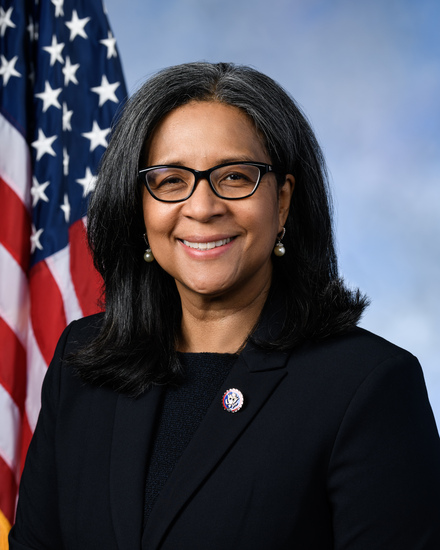
Rep. Marilyn Strickland
Sponsored bills
This resolution expresses the sense of the House of Representatives that the United States shall recognize kind actions in our country, encourage kindness, spread love, and foster a culture of being kind to one another.
Fair COLA for Seniors Act This bill bases cost-of-living adjustments for certain benefits available through federal and military retirement programs, Social Security, and specified programs for veterans on a price index that tracks the spending patterns of older consumers. The Bureau of Labor Statistics of the Department of Labor must publish that price index on a monthly basis.
Voices for Veterans Act This bill expands the membership of the Advisory Committee on Minority Veterans to include veterans who are lesbian, gay, bisexual, transgender, gender diverse, gender non-conforming, intersex, or queer. Among other responsibilities, the committee advises the Department of Veterans Affairs on the administration of benefits and provision of health care, benefits, and services to minority veterans.
Major Medical Facility Authorization Act of 2021 This bill authorizes the Department of Veterans Affairs to carry out specified major medical facility projects during FY2021. The bill also indicates the maximum amount that can be spent on each project.
Access to Contraception Expansion for Veterans Act or the ACE Veterans Act This bill directs the Department of Veterans Affairs to authorize veterans to fill prescriptions for a year's supply of contraceptive pills, transdermal patches, vaginal rings, or other hormonal contraceptive products.
Improving Medicare Coverage Act This bill temporarily expands eligibility for Medicare. It also temporarily establishes a premium and cost-sharing assistance program for low-income beneficiaries. Specifically, the bill lowers the age of eligibility for Medicare from 65 to 60. The Centers for Medicare & Medicaid Services must establish procedures to provide for automatic enrollment of qualifying individuals. Enrollment must be completed within 11 months of the bill's enactment. The bill also establishes a program under Medicare to assist low-income Medicare beneficiaries with premiums, coinsurance, deductibles, and other costs. Currently, such assistance is provided through Medicare Savings Programs, which are administered by state Medicaid programs. The bill also establishes a related special enrollment period under Medicare, expands eligibility for assistance to beneficiaries with income up to 200% of the federal poverty line, and provides for joint eligibility determinations with respect to the bill's program and the low-income subsidy program under the Medicare prescription drug benefit. The bill's provisions generally take effect six months after the bill's enactment and terminate five years later.
This resolution expresses support for historically Black colleges and universities (HBCUs) and recognizes National HBCU Conference Week.
Pediatric Access to Critical Healthcare Act This bill requires the Health Resources and Services Administration (HRSA) to award grants to children's hospitals and other providers that predominately treat individuals under 21 for improving pediatric health care infrastructure. In awarding the grants, HRSA must prioritize recipients that serve significant numbers of patients receiving medical assistance through Medicaid or the Children's Health Insurance Program or children from other underserved groups.
Harlem Hellfighters Congressional Gold Medal Act This bill provides for the award of a Congressional Gold Medal to the 369th Infantry Regiment, commonly known as the Harlem Hellfighters, in recognition of their bravery and outstanding service during World War I.