

Maddy summaryHR 5433, the Child Care Stabilization Act, provides $16 billion annually from 2024 to 2028 to stabilize the child care sector through grants administered by the Health and Human Services Secretary. It directly affects licensed child care providers by offering stable funding to cover operating costs, while supporting higher wages for early educators without raising family fees. Key provisions include expanding access to high-quality, affordable care - especially for infants/toddlers, rural communities, and children with disabilities - and addressing shortages in underserved areas. The funding builds on existing American Rescue Plan resources, aiming to strengthen the child care workforce and increase available options for working families.
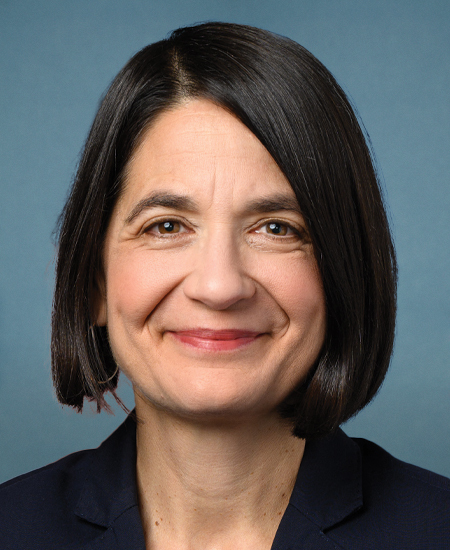
Rep. Becca Balint
Sponsored bills
No Biometric Barriers to Housing Act of 2023 This bill prohibits owners of certain federally assisted rental units from using facial recognition, physical biometric recognition, or remote biometric recognition technology in any units or in any building or on any grounds containing such a unit for the purpose of surveillance or any other use that has an adverse effect on a tenant's fair access to affordable housing that is free from bias and discrimination. Within one year, the Department of Housing and Urban Development must report on any known use of such technology in federally assisted rental units in the preceding five years.
Maddy summaryHR 5322, the Time Off to Vote Act, requires most private employers (with 25+ employees) to provide two consecutive hours of paid leave for employees to vote in federal elections. Employers must grant this leave upon request, can schedule it during early voting periods if permitted by state law, and cannot include lunch breaks in the leave period. The bill prohibits retaliation against employees who take this leave and ensures it does not affect accrued employment benefits. Violations could result in civil penalties up to $10,000 per offense, enforced by the Department of Labor.
Maddy summaryThe Unhoused Voter Opportunity Through Elections Act (HR 5294) protects voting rights for people experiencing homelessness by prohibiting states from denying voting access based on living in a "nontraditional abode" like shelters, public spaces, or locations where someone is considered homeless under federal law. Key provisions require election officials to make ballot drop boxes accessible to unhoused individuals, accept written attestations of residence instead of traditional proof, allow homeless shelters to be used as voting addresses, and mandate outreach to shelters about registration deadlines and election dates. The bill also creates a grant program to fund mobile voting centers and direct outreach services specifically for unhoused individuals. These changes would directly affect homeless individuals and election officials across all states, implementing concrete policy changes to improve voting access for a population often excluded from the electoral process.
Maddy summaryHR 5295, the Expanding the VOTE Act, modifies Section 203 of the Voting Rights Act to expand language access for voters. It requires states and localities to provide voting materials (including ballots and instructions) in the language of covered language minority groups, with new provisions for American Indian and Alaska Native languages requiring tribal government consultation for unwritten languages. The bill creates $15 million in grants to help jurisdictions provide voting materials in languages that don’t currently trigger Section 203 coverage, while mandating continued provision for those groups in future elections. It also directs a study to evaluate lowering population thresholds for language protections and expanding the definition of covered languages.
Maddy summaryThis bill prohibits landlords from charging renters application fees, tenant screening fees (including credit checks), and most late fees. It also bans the use of credit scores for tenant screening and requires landlords to disclose total monthly costs, past tenant litigation, ongoing maintenance issues, and 10 years of rent increases before a lease is signed. The law applies specifically to rental properties with federal housing assistance or federally backed mortgages (like FHA or VA loans). Key regulators - HUD, VA, USDA, or FHFA - will enforce these rules for covered properties.
Maddy summaryThis bill establishes the Connecticut River Watershed Partnership program (Section 3) to coordinate restoration and protection efforts across the 5-state watershed (Connecticut, Maine, Massachusetts, New Hampshire, Vermont). It creates a competitive grant program (Section 4) providing up to 90% federal funding for eligible entities - including states, tribes, nonprofits, and local groups - to carry out projects that improve water quality, restore habitats, and support environmental justice communities. The program requires the Secretary of the Interior to collaborate with Tribal governments, state agencies, and conservation organizations to develop a unified strategy. It mandates annual reporting to Congress and prioritizes projects advancing nature-based solutions, public access, and equitable outcomes in communities facing environmental health risks.
Maddy summaryThe TREATS Act amends the Controlled Substances Act to allow healthcare providers to use telehealth for the initial evaluation when prescribing certain medications for opioid use disorder. Specifically, it replaces the requirement for an in-person medical evaluation with an option for a telehealth evaluation for medications in schedules III, IV, or V (excluding methadone) that are FDA-approved to treat opioid use disorder. The telehealth evaluation must be conducted via real-time audio or video communication meeting federal and state requirements, as defined by the bill. This change directly affects providers prescribing these medications and patients seeking treatment for opioid use disorder in these categories.
Maddy summaryThe CHARGE Act of 2023 modernizes U.S. electricity transmission planning and cost allocation to better support renewable energy integration and grid reliability. It requires transmission providers to conduct interregional planning every five years, allocate costs based on multiple benefits (including reduced consumer costs, renewable energy access, and grid resilience), and make hourly operational data publicly available. The bill establishes an Office of Transmission within the Federal Energy Regulatory Commission (FERC) and creates an Independent Transmission Monitor to oversee planning processes. These changes aim to reduce costs for consumers, improve grid reliability, and support the transition to cleaner energy sources through concrete regulatory reforms.
Maddy summaryHJRES 84 designates August 20 as "Slavery Remembrance Day" to commemorate the arrival of the first enslaved Africans in what is now Virginia on August 20, 1619. The resolution urges the President to issue an annual proclamation encouraging Americans to observe the day with ceremonies and activities reflecting on slavery's history. It specifically honors 21 Black Congress members from the Reconstruction Era as honorary cosponsors and calls for acknowledging the enduring impacts of slavery. As a symbolic resolution, it does not create new laws or directly affect any group beyond establishing an annual observance.