

Maddy summaryHR 5191, the Renewable Energy for U.S. Territories Act, establishes a federal grant program administered by the Secretary of Agriculture to fund renewable energy projects in U.S. territories (Puerto Rico, Guam, U.S. Virgin Islands, American Samoa, and Northern Mariana Islands). Covered entities - defined as eligible not-for-profit organizations - can use grants to develop renewable energy systems, improve energy efficiency, build storage or microgrids, or train local residents, but cannot fund fossil fuel or nuclear projects. The bill also mandates a GAO study on renewable energy potential in territories, focusing on grid modifications, microgrid expansion, and energy resiliency, with findings to be reported to Congress. This program aims to directly support territorial energy infrastructure upgrades and workforce development through concrete funding mechanisms.
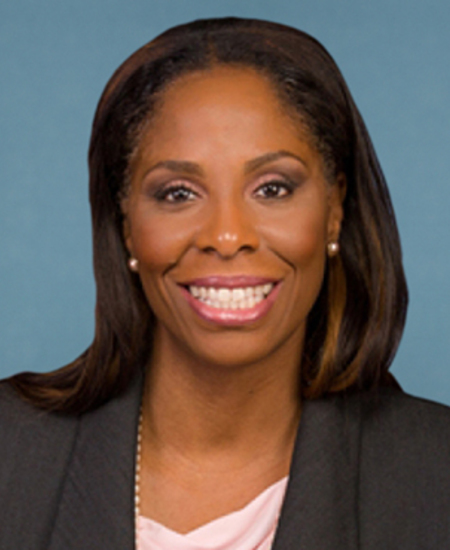
Rep. Stacey E. Plaskett
Sponsored bills
Maddy summaryHRES 692 designates September 2023 as "Sickle Cell Disease Awareness Month" to promote education about sickle cell disease (SCD) across the U.S. It directly affects communities impacted by SCD - estimated at 100,000 people in the U.S., with higher prevalence among African and Hispanic Americans - and encourages broader public awareness. The resolution calls for educational events focused on early detection, effective treatments, preventative care, and complications related to SCD. It also urges federal agencies to address barriers to equitable access to SCD therapies and supports efforts by organizations like the Sickle Cell Disease Association of America. This is a symbolic resolution without new legal requirements, aiming to raise public knowledge and support for SCD-related initiatives.
Maddy summaryHRES 703 is a symbolic resolution supporting the designation of September 2023 as "National Voting Rights Month" to raise awareness about voting access. It encourages all U.S. citizens to uphold voting rights, urges Congress to pass specific voting rights legislation (like the Freedom to Vote Act and Democracy Restoration Act), and recommends that schools teach about voting history and current voter access issues. The resolution does not create new laws or directly affect specific groups, but it aims to promote broader public engagement with voting rights through education and advocacy. As a non-binding resolution, it expresses support for these goals without implementing any concrete policy changes.
Maddy summaryThe John R. Lewis Voting Rights Advancement Act of 2023 would strengthen the Voting Rights Act of 1965 by updating the criteria for which states and localities must obtain federal preclearance before changing voting practices. It would establish new standards for proving vote dilution and vote denial by requiring courts to consider historical discrimination, racial polarization in voting, and whether voting practices disproportionately burden minority voters. The bill would also require states and localities to provide public notice of voting changes and share demographic data about polling locations. These changes would primarily affect jurisdictions with a history of voting rights violations, aiming to prevent discriminatory voting practices before they take effect.
Equality in the Halls of Congress Act This bill authorizes the President to invite each U.S. territory to provide and furnish no more than two statues for placement in National Statuary Hall.
Maddy summaryThis resolution supports designating August as National Black Business Month to honor the economic contributions of Black-owned businesses across the U.S. It recognizes that Black businesses, which contributed $83.6 billion in receipts in 2023 and employed over 1.3 million people, continue to face barriers like limited access to capital and higher loan denial rates. The resolution does not create new laws or programs but symbolically acknowledges their historical and current impact on the economy. It is a non-binding House resolution passed to raise awareness, not to mandate policy changes.
Maddy summaryThe Sustaining Our Democracy Act creates a federal program to provide states with annual funding to improve election administration and increase voting access. It allocates $2 billion each year from 2024-2033 through the State Election Assistance and Innovation Trust Fund to support activities like upgrading voting equipment, training election workers, and expanding voting access for underserved communities, people with disabilities, and voters on Indian lands. States must submit detailed plans for using funds, which cannot be used for activities that restrict voting access or target election officials. The Act establishes an Office of Democracy Advancement and Innovation to administer the program, monitor fund usage, and oversee compliance with its requirements.
This bill increases from 20% to 25% the value of the total assets represented by securities of one or more taxable Real Estate Investment Trust (REIT) subsidiaries (thus restoring the REIT subsidiary asset test).
Maddy summaryHR 5295, the Expanding the VOTE Act, modifies Section 203 of the Voting Rights Act to expand language access for voters. It requires states and localities to provide voting materials (including ballots and instructions) in the language of covered language minority groups, with new provisions for American Indian and Alaska Native languages requiring tribal government consultation for unwritten languages. The bill creates $15 million in grants to help jurisdictions provide voting materials in languages that don’t currently trigger Section 203 coverage, while mandating continued provision for those groups in future elections. It also directs a study to evaluate lowering population thresholds for language protections and expanding the definition of covered languages.
Agricultural Representation for the United States Territories Act This bill increases agricultural representation for U.S. territories on the National Agricultural Research, Extension, Education, and Economics (NAREEE) Advisory Board. Specifically, the bill increases the advisory board membership to 16 members (from the current 15). The additional member must represent the agricultural interests of Puerto Rico, the U.S. Virgin Islands, American Samoa, the Northern Mariana Islands, and Guam. The bill also extends the advisory board through FY2028. (The NAREEE Advisory Board advises the Department of Agriculture, land-grant colleges and universities, and Congress on top priorities and policies for food and agricultural research, education, extension, and economics.)