

Maddy summaryThis bill increases the annual cap for foreign nurses working in the U.S. from 500 to 20,000 visas, specifically for roles in areas designated as having nursing shortages by the Health Resources and Services Administration. It requires healthcare facilities hiring these nurses to maintain a documented provider-to-patient staffing ratio policy. The bill mandates that the Health and Human Services and State Departments issue implementing regulations within one year of enactment. This directly affects foreign nurses seeking U.S. work visas, healthcare facilities in shortage areas, and federal agencies responsible for visa processing.
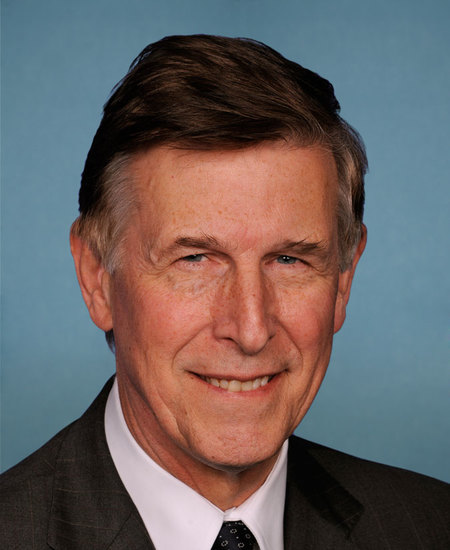
Rep. Donald S. Beyer, Jr.
Sponsored bills
Maddy summaryThis bill creates a new federal tax credit for commercial and public building owners who improve indoor air quality. Property owners can claim credits of $1 per square foot for air quality assessments, $5 per square foot for air filter upgrades, and up to $50 per square foot for HVAC system upgrades. To qualify, improvements must meet ASHRAE air quality standards and use high-efficiency filters (MERV 13+), with credits capped at 50% of eligible spending annually. The credit applies to offices, schools, hospitals, and similar public or nonprofit properties, not residential buildings. A new certification program for compliance must be established within one year of the bill's enactment.
Maddy summaryThe Revitalizing Downtowns and Main Streets Act creates a 20% tax credit for converting non-residential buildings into affordable housing. To qualify, buildings must be at least 20 years old and nonresidential, with conversion costs exceeding 50% of the building's adjusted basis or $100,000. The converted housing must be rent-restricted for 30 years for residents earning 80% or less of area median income (60% in certain designated areas), with a $12 billion national credit limit. Special provisions apply for economically distressed areas and rural historic preservation projects, primarily affecting developers who convert vacant commercial buildings in downtown or main street areas into affordable housing.
Maddy summaryThis bill requires NASA to update its acquisition policies for space systems and services to include stronger cybersecurity controls, directly affecting NASA and its contractors who develop or manage spacecraft. It mandates an implementation plan within 270 days, including specific milestones, regular cybersecurity policy reviews, and resource estimates. The plan must align with existing federal guidance (Space Policy Directive-5) and address gaps identified in a 2024 GAO audit. NASA must also brief relevant congressional committees within 30 days of completing the plan. The focus is on updating existing policy frameworks, not creating new technology or funding.
Maddy summaryThis bill changes the Higher Education Act to allow participants in specific Fulbright programs to count their service toward federal student loan forgiveness for public service workers. It directly affects borrowers with federal student loans who have completed the Fulbright Teacher Exchange Program or Fulbright English Teaching Assistant Program. The key provision adds these Fulbright roles to the list of qualifying "public service jobs" under the existing Public Service Loan Forgiveness program. This means Fulbright participants can now have their service counted toward the required 10 years of public service needed to qualify for loan forgiveness. The change applies to current and future Fulbright participants who are enrolled in the loan forgiveness program.
Maddy summaryThis bill, the Virginia Plan to Reduce Gun Violence Act of 2024, establishes new requirements for firearm transfers, limits handgun purchases to one per 30 days for unlicensed individuals, and creates a national framework for extreme risk protection orders (ERPOs). It requires licensed dealers to facilitate transfers between unlicensed individuals, mandates reporting of lost or stolen firearms within 48 hours, restricts access to firearms by children under 14, and prohibits stalkers from possessing firearms. The bill also makes it unlawful for caregivers to enable children to gain access to firearms when they know the child poses a risk of violence. These provisions would directly affect firearm sellers, law enforcement agencies, individuals with firearm access issues, and caregivers of children.
Overseas Americans Financial Access Act This bill modifies tax reporting requirements that apply to foreign financial institutions and individuals with foreign financial assets to create exceptions for the foreign accounts of certain U.S. residents or citizens living abroad.
Maddy summaryThis bill creates a federal framework for "extreme risk protection orders" (ERPOs) that temporarily remove firearms from individuals who pose a risk of harming themselves or others. Family members or law enforcement officers can petition a federal court for a temporary order (up to 14 days) based on probable cause, followed by a hearing within 72 hours to determine if a longer-term order (up to 180 days) is warranted. The bill requires clear and convincing evidence of risk at the hearing and mandates respondents to surrender firearms to law enforcement within 48 hours. It also includes provisions for reporting, training law enforcement on ERPOs, and a federal grant program to support state ERPO implementation, without preempting state laws.
Maddy summaryHRES 901 is a U.S. House resolution expressing support for democracy and human rights in Pakistan. It calls on the U.S. President and Secretary of State to collaborate with Pakistan to uphold democratic processes, human rights, and the rule of law. The resolution urges Pakistan to protect freedoms of speech, assembly, and press, and to avoid arbitrary detention or suppression of political participation. It also condemns efforts to undermine Pakistan's electoral or judicial systems, including harassment of citizens during protests or interference with elections.
Maddy summaryHR 8800 designates the bald eagle as the national bird of the United States, amending Title 36 of the U.S. Code to formally state this. The bill directly affects official federal designations but does not change existing policies or government actions. It includes findings about the bald eagle's historical, cultural, and symbolic significance, including its role in Indigenous traditions and government imagery. The bill explicitly states that this designation cannot be used to alter any current government plans or regulations.