

Maddy summaryHR 5917 allows the President to extend "normal trade relations" (most-favored-nation) treatment to products from specific countries by ending the application of Title IV of the 1974 Trade Act to those nations. The bill enables the President to determine that Title IV no longer applies to a "covered country" (excluding Belarus, Cuba, and North Korea) and then officially proclaim the extension of nondiscriminatory trade treatment for that country's products. This change directly affects importers and exporters dealing with goods from these covered countries, as it would remove tariffs or restrictions tied to Title IV. The key mechanism is the President's unilateral determination and proclamation, which would formally end Title IV's application to the designated country.
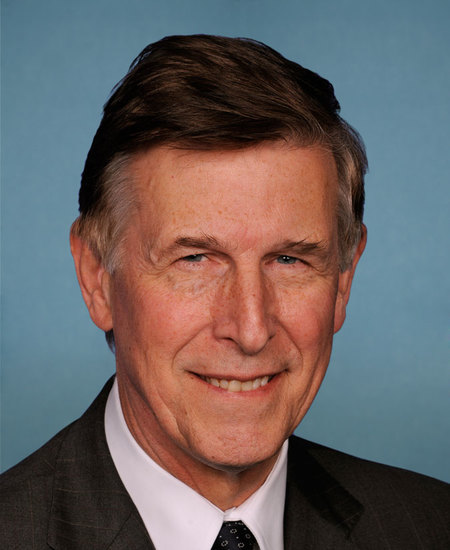
Rep. Donald S. Beyer, Jr.
Sponsored bills
Maddy summaryHRES 854 is a non-binding House resolution commemorating the seventh anniversary of Jamal Khashoggi's murder in 2018 and calling for accountability. It acknowledges U.S. sanctions against 17 Saudi officials involved in his killing and urges Saudi Arabia to: (1) ensure accountability for those responsible, (2) release wrongfully detained individuals like Nourah al-Qahtani and Abdulrahman Alsadhan, and (3) respect freedoms of press and assembly. The resolution directly addresses the Saudi government and indirectly supports Saudi dissidents in the U.S. facing transnational repression. As a commemorative measure, it does not create new laws but formally expresses congressional concern over ongoing human rights abuses.
Maddy summaryThe American Energy Independence and Affordability Act extends multiple clean energy tax credits that were set to expire between 2025 and 2026. It specifically extends residential clean energy credits through 2034, clean electricity investment credits for wind and solar through 2032, and clean vehicle credits for electric vehicles through 2032. The bill also reinstates special rates for sustainable aviation fuel and modifies requirements for energy-efficient home improvements. These provisions directly affect homeowners installing solar panels, businesses investing in clean energy infrastructure, and manufacturers producing clean energy equipment.
Maddy summaryHRES 824 is a ceremonial House resolution recognizing the religious and historical significance of Diwali, the festival of lights. It acknowledges Diwali’s meaning across Hindu, Sikh, and Jain traditions - symbolizing light over darkness, good over evil, and marking spiritual milestones like Guru Hargobind’s release and Lord Mahavira’s Nirvana. The resolution expresses respect for Indian-Americans and the global Indian diaspora, highlighting Diwali’s role in U.S. religious diversity. As a non-binding recognition, it does not create new laws, policies, or funding, but formally honors the cultural observance.
Maddy summaryThis bill makes federal funding for the WIC program mandatory by requiring Congress to appropriate necessary funds annually for fiscal year 2026 and each subsequent year. It removes discretionary language from WIC funding requirements and clarifies that eligible participants must be served without participation limits. The bill directly affects low-income pregnant women, new mothers, and young children who rely on WIC for nutrition assistance, ensuring continued access to critical food, health, and education services.
Maddy summaryHR 5720, the Federal Worker Childcare Protection Act of 2025, would provide reimbursement to federal employees who face a pay gap during a government funding lapse (starting October 1, 2025) while paying for childcare. It directly affects federal workers who are furloughed or working without pay during such a lapse. Employees would receive reimbursement for childcare costs if they provide documentation, such as receipts from a childcare provider, to the General Services Administration. This reimbursement is subject to available congressional appropriations and does not guarantee payment.
Maddy summaryHR 5689, the "Shutdown Guidance for Financial Institutions Act," requires federal banking regulators (like the Fed and FDIC) to issue guidance within 180 days of enactment. The guidance directs financial institutions to help consumers and businesses affected by government shutdowns - such as furloughed federal workers, District of Columbia employees, or contractors with reduced income - by offering flexible payment options, modifying loan terms, and preventing temporary payment difficulties from harming credit scores. Regulators must also issue a press release within 24 hours of a shutdown starting to notify institutions and the public. The bill mandates a post-shutdown report to Congress within 90 days and potential guidance updates if issues arise.
Maddy summaryThis bill provides tax relief for workers affected by federal government shutdowns. It allows federal contractors, their employees on unpaid leave during shutdowns, and related workers (like those for federal grantees, states, or DC government) to withdraw up to $30,000 from retirement accounts without the usual 10% early withdrawal penalty. Withdrawals can be repaid within 3 years to avoid tax consequences, and income from the withdrawal is spread over 3 years if elected. The $30,000 limit adjusts annually for inflation.
Maddy summaryThis bill allows federal employees who are furloughed or working without pay during a government shutdown (defined as a funding lapse of at least two weeks) to withdraw up to $30,000 from their Thrift Savings Plan (TSP) retirement savings without the usual 10% early withdrawal penalty. The $30,000 limit adjusts annually for inflation and applies per shutdown period. It also ensures missed TSP loan payments during a shutdown are not treated as taxable distributions, and employees can later contribute back up to the withdrawn amount without penalty. The bill directly affects federal workers facing financial hardship due to funding lapses, providing immediate relief through modified TSP rules.
Maddy summaryHRES 778 is a non-binding House resolution expressing support for recognizing September 29, 2025, as "International Day of Awareness of Food Loss and Waste." It does not create new laws or programs but formally acknowledges the issue through congressional resolution. The resolution cites statistics on global food waste (including $1 trillion in annual losses and 8-10% of greenhouse gas emissions from food waste) and aligns with the existing 2024 National Strategy for Reducing Food Loss and Waste. It serves only as symbolic support for raising awareness, with no direct policy changes or obligations for individuals or entities.