

Maddy summaryHR 497, the Freedom for Health Care Workers Act, eliminates a federal requirement for healthcare workers in Medicare and Medicaid programs to be vaccinated against COVID-19. The bill directly affects healthcare providers who treat patients under these federally funded programs by preventing the enforcement of the November 2021 HHS rule mandating staff vaccinations. Its key provision prohibits the Department of Health and Human Services from implementing, enforcing, or creating a similar rule regarding vaccination for these workers. This bill changes the policy by removing a specific vaccine mandate for providers in Medicare and Medicaid programs.
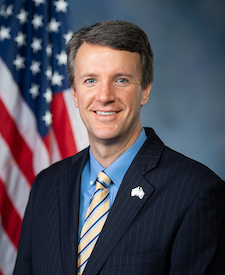
Rep. Ben Cline
Sponsored bills
Maddy summaryHR 407, the "Protect the UNBORN Act," prohibits federal agencies from implementing or enforcing two specific executive orders issued by President Biden in 2022 (Executive Orders 14076 and 14079), which aimed to protect access to reproductive healthcare services. The bill bans the use of federal funds, including those from the 2022 Consolidated Appropriations Act, to carry out, administer, or enforce these executive orders. It directly affects federal agencies and programs that would otherwise comply with the Biden administration's policies on reproductive healthcare access. The bill does not create new healthcare rules but blocks the implementation of existing executive actions.
Maddy summaryThis bill bans federal funding for abortions in most cases, prohibiting the use of taxpayer money for abortion services or health insurance plans covering abortion. Exceptions allow funding for abortions resulting from rape, incest, or when a pregnancy endangers a woman's life. It requires health insurance plans sold through the Affordable Care Act (ACA) marketplaces to clearly disclose any separate costs for abortion coverage and prohibits ACA subsidies from being used for plans that cover abortion (except in the specified exceptions). The law directly affects federal programs like Medicaid, ACA marketplace plans, and insurers offering health coverage to individuals using federal subsidies.
Maddy summaryHR 152, titled the "Hearing Protection Act," actually addresses firearm silencers (suppressors), not hearing protection. The bill removes federal registration requirements for silencers by directing the Attorney General to destroy all existing silencer records within 365 days. It also preempts state laws that tax, register, or impose recordkeeping requirements on silencers, making such state rules unenforceable. Additionally, the bill updates tax codes to include silencers as taxable items and clarifies their definition in firearm laws.
Maddy summaryThis bill requires the Congressional Budget Office (CBO) to provide at least two annual updates to the budget baseline, with one update including the economic data used in its calculations. It also mandates that the President submit technical budget data to Congress by February 1 each year, covering current/prior year estimates and credit reestimates for the upcoming fiscal year. These updates aim to improve the timeliness and transparency of budget information available to Congress. The bill directly affects the CBO and the Executive Branch in their annual budget reporting processes.
Maddy summaryThis bill adds export controls for specific battery recycling materials ("black mass" and "swarf") to prevent their export to China and other designated foreign adversaries. It requires U.S. exporters to obtain licenses for these materials when the end-user is a foreign adversary (including China, Russia, Iran, North Korea, and Cuba), with automatic license denial for China. "Black mass" is defined as processed material from spent lithium-ion batteries containing lithium, cobalt, nickel, manganese, and graphite, excluding intact batteries. The law directly affects U.S. companies exporting these materials and Chinese entities seeking to import them.
Maddy summaryThis bill authorizes the U.S. Secretary of the Interior to establish international agreements with designated "partner foreign countries" to share earth science data and resources. It prioritizes cooperation with nations having defense treaties, strategic mineral partnerships, or existing agreements, focusing on mineral assessments, geoscience data analysis, and training for sustainable resource management. The legislation allocates $3 million for fiscal year 2025, requiring at least 70% of funds to directly support these agreements and their activities. It affects U.S. agencies (via the Geological Survey) and partner countries through new frameworks for collaborative critical mineral resource data sharing.
Maddy summaryHR 7438 directs the U.S. Treasury to mint commemorative coins for the 2026 FIFA World Cup, including 100,000 $5 gold coins, 500,000 $1 silver coins, and 750,000 half-dollar coins. The coins will be sold to the public at face value plus surcharges ($35, $10, and $5 per coin, respectively), with all surcharge revenue paid to FWC2026 US, Inc. for U.S. soccer programs. These funds must support soccer initiatives, particularly in underserved communities and youth development, as specified in the bill. The coins are legal tender but will only be issued during 2026, with no net cost to the U.S. government.
Maddy summaryThis bill reinstates a pre-American Rescue Plan Act (ARP) tax reporting rule for gig economy platforms. It requires third-party payment platforms (like Uber or DoorDash) to report transactions to the IRS only if a gig worker earns over $20,000 in total or completes more than 200 transactions in a year. This directly affects gig workers whose income falls below these thresholds, exempting them from the reporting requirement. The provision effectively reverses a change made by the ARP, reducing administrative burden for both platforms and lower-earning gig workers. The bill amends IRS Code Section 6050W to restore these specific de minimis payment thresholds.
Maddy summaryHR 9151 establishes a new Department of Justice task force within 120 days to investigate and prosecute international trade crimes like tariff evasion, smuggling, and trade-based money laundering. The task force will hire specialized prosecutors, coordinate with U.S. Customs and Border Protection and Homeland Security, and focus on violations under specific U.S. Code sections including smuggling (18 U.S.C. 545) and fraud (18 U.S.C. 1001). It authorizes $20 million for fiscal year 2025, with 80% dedicated to criminal prosecutions, and requires annual congressional reports detailing case statistics, funding use, and future needs. The bill directly affects importers/exporters engaging in trade violations and DOJ agencies handling cross-border enforcement.