

Maddy summaryThis bill, known as the Bulletproof Law Enforcement Vehicles Act, directs the Department of Homeland Security to allow funding for upgrading law enforcement vehicles with security features like bulletproof windows. By amending an existing law, it expands the types of vehicle enhancements that can be financed with current federal assistance programs. The change specifically authorizes the use of these funds for protective upgrades without creating new budgetary requirements. Law enforcement agencies that receive federal financial assistance would be the primary beneficiaries of this expanded eligibility.
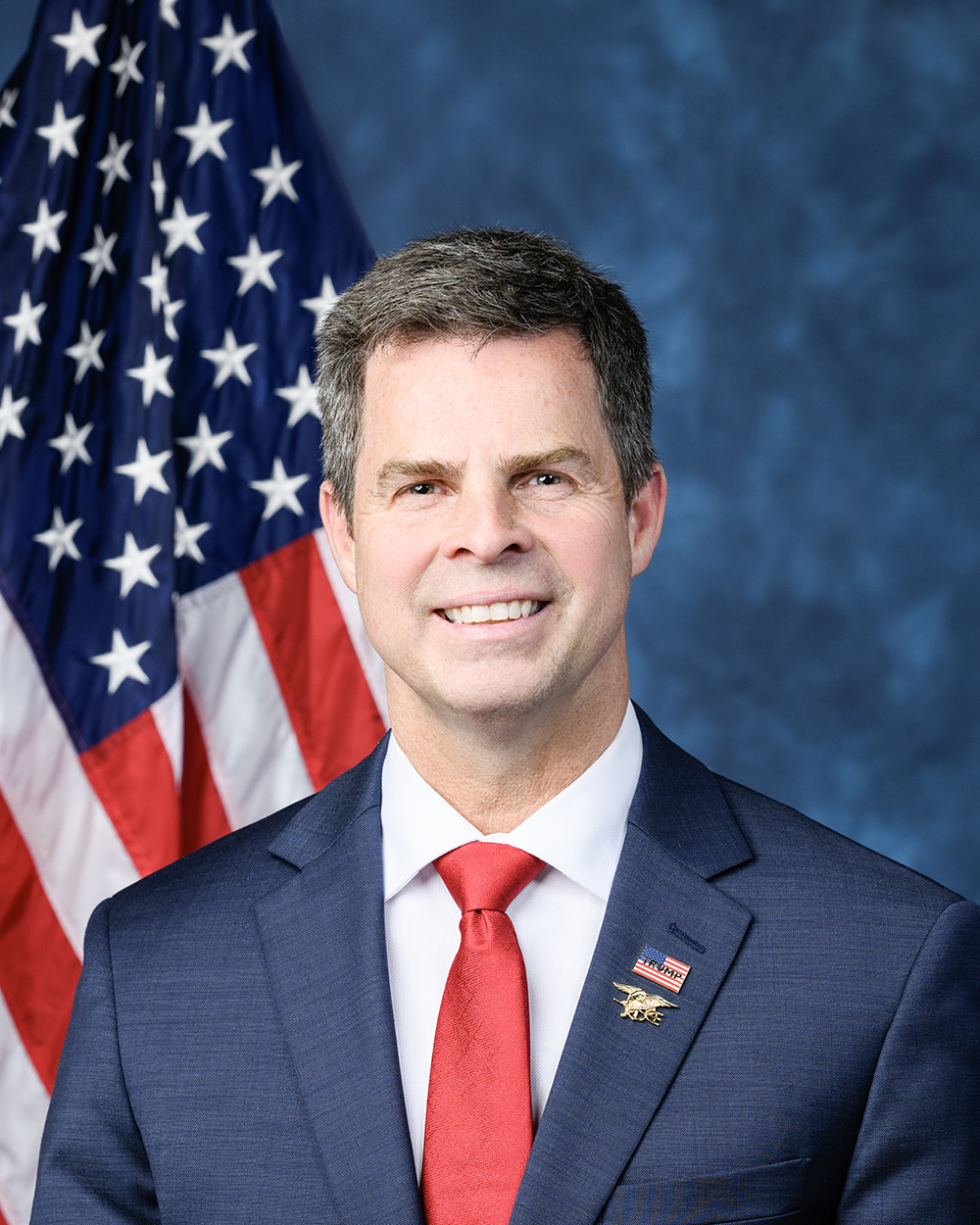
Rep. John J. McGuire III
Sponsored bills
This resolution expresses support for police officers and other law enforcement personnel. The resolution further recognizes law enforcement officers across the United States in the pursuit of preserving safe and secure communities; the need to ensure that such officers have the equipment, training, and resources necessary to protect their health and safety while they are protecting the public; and the law enforcement community for acts of sacrifice and heroism. The resolution expresses condolences and appreciation to the loved ones of each law enforcement officer who has made the ultimate sacrifice in the line of duty.
Maddy summaryThis bill would amend federal law to strengthen penalties for organized retail crime by expanding definitions of theft to include digital goods, gift cards, and setting a $5,000 aggregate value threshold for charges over a 12-month period. It would establish a new "Organized Retail and Supply Chain Crime Coordination Center" under Homeland Security to coordinate Federal, State, local, and Tribal law enforcement efforts against cross-jurisdictional theft groups. The Center would share information with retailers, transportation companies, and law enforcement agencies, track crime trends, and produce annual reports on organized retail crime. This legislation directly affects retailers, supply chain businesses, and law enforcement agencies, while targeting organized crime groups responsible for a 93% increase in larceny incidents and rising safety concerns for retail employees. The bill aims to address significant financial losses and supply chain disruptions noted in the National Retail Federation's 2023 data.
Maddy summaryThe Connected Vehicle Security Act of 2026 restricts the importation, sale, and manufacture of vehicles and related technology from specific countries, including China, Russia, Iran, and North Korea, to address national security concerns. The law defines prohibited items as connected vehicles, their software, and hardware components and sets different effective dates, with vehicle bans starting in 2027 and hardware restrictions beginning in 2030. A government official can grant exceptions for specific items after reviewing security risks and notifying Congress, while the agency must publish annual reports on enforcement actions and compliance.
Maddy summaryThis resolution expresses support for designating the week of May 3 through May 9, 2026, as "National Small Business Week." It aims to honor the contributions of small businesses and entrepreneurs across the United States, acknowledging their role in supporting millions of jobs. The bill does not create new laws or regulations but serves as a formal statement of appreciation from the House of Representatives.
Maddy summaryThe Armed Forces Carry Rights Protection Act of 2026 modifies federal law to make it easier for military personnel to carry personal firearms on military bases when they are not on duty. Under this bill, commanders would face a legal presumption in favor of approving such requests, shifting the default stance toward allowing carry rather than restricting it. If a commander does deny a request, the law requires them to provide a written explanation that is specific to the individual and based on objective criteria. This change directly affects active-duty service members and the commanders who evaluate their requests for firearm authorization on installation.
Maddy summaryThis bill, titled the "Special Operations Forces Concealed Carry Act," amends federal law to allow current and honorably discharged military special operations personnel to carry concealed firearms nationwide. It directly affects those who served in specific special operations roles across the Army, Navy, Marine Corps, and Air Force. The bill expands the existing Law Enforcement Officers Safety Act (LEOSA) to include these "qualified special operators," granting them similar concealed carry privileges. Unlike law enforcement officers under LEOSA, these individuals would not be subject to annual firearms qualification requirements, and their authority would be permanent, contingent on maintaining honorable discharge status and federal firearm eligibility. To exercise this authority, they must carry proof of identity and qualification, which can include a new Department of Defense or Veterans Affairs photo identification or official service documentation.
Maddy summaryThe FAIR Labels Act of 2026 establishes new labeling requirements for cell-cultivated protein products and plant-based alternatives designed to look like meat or poultry. It mandates that labels for these products prominently display the terms "cell-cultivated" or "plant-based alternative protein product" and include clear disclaimers stating the items are not derived from live animals or birds. Additionally, the bill updates regulatory oversight by requiring the USDA and FDA to revise their agreement, assigning the USDA primary responsibility for regulating cell-cultivated meat and poultry while the FDA oversees production safety and facility compliance. The legislation also directs these agencies to create common standards of identity for these products within 180 days of enactment.
New Source Review Permitting Improvement Act This bill modifies terminology for purposes of the New Source Review (NSR) permitting program of the Environmental Protection Agency (EPA). In order for a change to a stationary source to be a modification (a change to a stationary source that increases the air pollutant emissions or results in new pollutants) for purposes of the NSR permitting program, the maximum hourly emission rate achievable by such source must be higher than the maximum hourly rate achievable by such source during any hour in the 10-year period preceding the change. A change at a stationary source is not considered to be a modification under the bill if it is designed to (1) reduce the amount of any air pollutant emitted; or (2) restore, maintain, or improve the reliability of operations at, or safety of, the source. However, such changes are not excepted if the EPA determines the increase in the maximum achievable hourly emission rate from such change would cause an adverse effect on human health or the environment. Construction , in connection with a major emitting facility (a type of stationary source), does not include a change at such a facility that does not result in a significant emissions increase or a significant net emissions increase. In relation to major emitting facilities in nonattainment areas, the terms modifications and modified do not include changes at such facilities that do not result in a significant emissions increase or a significant net emissions increase.
Maddy summaryThe VA Home Loan Affordability Act updates the Department of Veterans Affairs' home loan program to make it easier and more affordable for veterans to buy or refinance homes. Key changes include removing the requirement for third-party verification of lender fees, allowing refinancing without an appraisal in certain cases, and lowering the minimum interest rate cap for adjustable-rate mortgages from 200 to 75 basis points. The bill also expands loan guarantees for condominiums, caps closing costs and seller fees at 1.5% and 6% of the loan amount respectively, and mandates regular reviews of debt-to-income ratios. Additionally, it requires appraisers to hold state licenses, directs the VA to update property suitability regulations, and sets a deadline for submitting a plan to modernize the agency's loan administration technology.