

Maddy summaryHRES 1032 is a symbolic resolution designating the week of February 26-March 1, 2024, as "Public Schools Week" in the U.S. House of Representatives. It expresses congressional support for public education, highlighting its role in preparing students and communities. The resolution has no legal effect or funding provisions - it solely serves as a formal expression of backing for public schools. It directly affects no individuals or entities but aims to raise awareness about public education. This is a non-binding gesture, not a policy change.
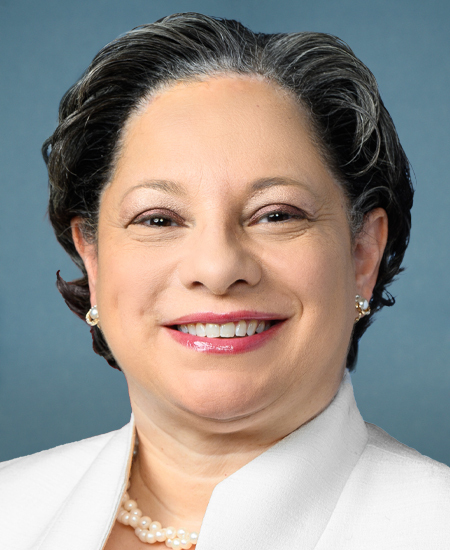
Rep. Jennifer L. McClellan
Sponsored bills
Climate and Health Protection Act This bill provides statutory authority for the Climate and Health Program within the Centers for Disease Control and Prevention.
Maddy summaryThis bill establishes an Interagency Task Force on Black Women and Girls, requiring the Attorney General and Health Secretary to create a group within 180 days of enactment. The Task Force will examine systemic issues affecting Black women and girls - including school discipline, economic opportunities, healthcare access, justice system involvement, and housing - and make policy recommendations across these areas. It mandates the U.S. Commission on Civil Rights to annually study specific disparities like maternal mortality rates, the school-to-prison pipeline, and housing barriers, then report findings to Congress. The bill directly targets policies impacting Black women and girls as defined in the legislation, with recommendations due within two years.
Maddy summaryHR 7378, the Frederick Douglass Congressional Gold Medal Act, authorizes Congress to posthumously award a gold medal to honor Frederick Douglass's legacy as a pivotal abolitionist, writer, and advocate for civil rights. The medal, designed by the Treasury Secretary, will be presented to the National Museum of African American History and Culture for display, with bronze duplicates available for sale to cover costs. This ceremonial bill does not create new laws or affect current policies - it solely commemorates Douglass's historical contributions to ending slavery and advancing equality.
Maddy summaryHR 7355, the Early Childhood Workforce Advancement Act of 2024, establishes a federal grant program to fund career and technical education programs in early childhood education. It directly supports partnerships between institutions of higher education, child care providers, and community stakeholders to expand training and career pathways for early childhood educators. Key provisions include funding for curriculum development, educator recruitment/retention, professional development, and support services like childcare assistance for students pursuing credentials (such as Child Development Associate) or degrees. The grants aim to improve workforce readiness, address regional shortages, and enhance outcomes for students - particularly in underserved communities - by aligning training with industry needs and State strategic plans.
Maddy summaryHR 7288, the Armenian Protection Act of 2024, repeals the waiver authority that allows the President to bypass restrictions on U.S. aid to Armenia. Specifically, it prevents the waiver of Section 907 of the Freedom Support Act for fiscal years 2024 and 2025, which currently blocks U.S. assistance to Armenia due to historical disputes. This bill directly affects Armenia's eligibility for certain U.S. foreign aid programs by removing the possibility of executive branch waivers for those years. The key mechanism is the permanent removal of the waiver option under the specified appropriations law, changing the policy landscape for U.S.-Armenia aid relations.
Maddy summaryHR 7272, the Shining a Spotlight on Safer Communities Act, requires the Attorney General to submit annual reports to Congress starting in 2024, detailing how the Bipartisan Safer Communities Act's provisions (specifically sections 932 and 933 of title 18) are being implemented. These reports must include data on investigations, prosecutions, demographic information of defendants, and seized firearms or assets related to gun trafficking and straw purchasing. The bill mandates these reports for fiscal years 2024 through 2027, with a funding limit of $2 million annually for this reporting. It is a procedural bill focused solely on transparency and accountability for existing gun safety measures, not creating new policies.
Maddy summaryThe JOBS Act of 2023 would expand Federal Pell Grant eligibility to cover certain short-term job training programs that prepare students for high-demand careers. It defines "eligible job training programs" as those offering 150-600 hours of instruction over 8-15 weeks, aligned with in-demand industry sectors, and leading to recognized credentials that help students meet hiring requirements and take licensure exams. The bill would allow students in these programs to receive Pell Grants under standard terms, with the minimum Pell Grant amount reduced from 10% to 5% of the maximum. It also requires accrediting agencies to evaluate these programs and creates data-sharing between Education and Labor departments to track program effectiveness.
Maddy summaryHRES 990 is a non-binding resolution expressing the House of Representatives' support for fair treatment of paraprofessionals (like instructional assistants) and education support staff (such as clerical, custodial, and food service workers) in schools. It states these over 3 million frontline workers deserve livable wages, affordable health care, job security, paid leave, professional development, and safe working conditions. The resolution lists specific recommendations, including eligibility for family medical leave and protections against retaliation for reporting workplace issues. It does not create new laws but formally recognizes these staff as essential to school success and calls for policies addressing their current challenges.
Maddy summaryHR 7127, the FAIR Act, establishes pay adjustments for federal employees in 2025. It increases base pay by 4% for most federal workers under statutory pay systems and for "prevailing rate" employees (like those in specific geographic areas), while raising locality pay rates by 3.4%. The bill directly affects all federal employees receiving pay under these systems, as it modifies their 2025 salary calculations. These changes are based on statutory formulas under Title 5 of the U.S. Code, with no new policy mechanisms beyond the specified percentage increases. The adjustments apply to pay rates in effect as of the end of fiscal year 2024.