

Maddy summaryThis bill requires states to prohibit physicians from performing specific non-emergency surgeries on foster children under age 6 who have variations in sex characteristics (commonly called intersex traits), unless the procedure addresses an immediate life threat. It targets procedures like clitoral reduction, gonadectomy, and vaginoplasty that are often done without consent on infants. States must enforce this through licensing penalties, and it applies only to children in foster care as a condition for receiving federal foster care funding. The bill explicitly states it does not restrict medically necessary surgeries or procedures for transgender youth.
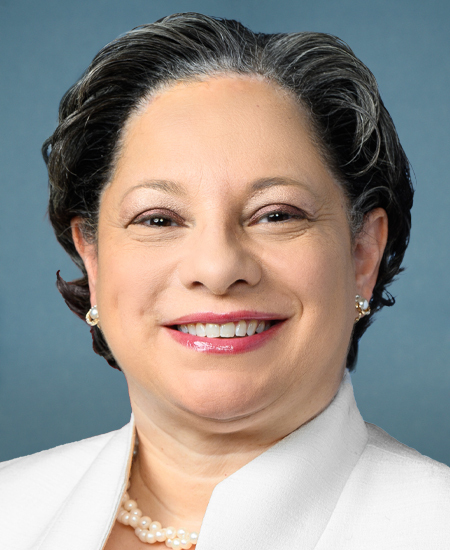
Rep. Jennifer L. McClellan
Sponsored bills
Maddy summaryHR 9811, the Child Care Infrastructure Act, provides $10 billion in federal funding to improve child care facilities across the U.S. It requires the government to conduct immediate and long-term assessments of facility conditions, prioritizing pandemic-impacted centers serving low-income families, infants/toddlers, rural communities, and non-traditional-hour programs. The bill funds grants for states to renovate, build, or improve facilities (up to $35 million per state annually) and awards grants to intermediary organizations like community development groups to support financing and technical assistance. These grants must be used to address specific needs identified in the assessments, with labor standards requiring prevailing wage rates for construction work. The funding is authorized for fiscal years 2025-2029, with 3% reserved for tribal nations and territories.
Maddy summaryHR 8796, the "Stop Comstock Act," removes outdated restrictions from federal law that previously banned the distribution of materials related to contraception and abortion as "obscene" or "indecent." The bill amends Title 18 and the Tariff Act by deleting references to "indecent," "immoral," "unlawful abortion," and "procuring abortion" from provisions governing obscene materials. It clarifies that the law only prohibits "obscene materials" in commerce, eliminating broad restrictions on reproductive health information. This directly affects internet platforms, healthcare providers, and individuals sharing reproductive health resources by removing legal barriers to their distribution.
Maddy summaryThis bill requires the federal government to reduce paperwork for state and tribal child welfare agencies receiving funds under the Social Security Act. It directs the Secretary of Health and Human Services to eliminate duplicate reporting, aim for a 15% reduction in required paperwork hours, and adjust requirements based on agency input. Agencies must be notified of changes within two years, and the Secretary must report progress to Congress within three years. The law directly affects child welfare programs managing federal grants, aiming to free staff time for direct service work.
Maddy summaryThis bill requires Medicare Advantage plans to implement electronic prior authorization systems by 2027 and publish detailed data on their approval and denial rates for medical services by 2026. It directly affects Medicare Advantage plans (private insurers offering Medicare coverage) and their enrollees (seniors 65+), mandating transparency about prior authorization decisions, processing times, and appeal outcomes. Key provisions include requiring plans to report annual statistics on request approvals/denials, average processing times, and use of technology, with this data published publicly by the Centers for Medicare & Medicaid Services. The bill also sets timelines for plan responses to prior authorization requests and mandates reports to Congress on implementation and impacts.
Maddy summaryThis bill requires Medicare to provide clear outreach and education so Medicare beneficiaries (enrolled in Part A, Part B, or Medicare Advantage plans) can authorize family caregivers to access their health information via 1-800-MEDICARE. It mandates the inclusion of a specific authorization form (CMS-10106) in Medicare notices and on Medicare.gov, along with training for call center staff. The Secretary must also share best practices to prevent fraud related to caregiver access and make materials available in non-English languages. It directly affects beneficiaries, their family caregivers, healthcare providers, and Medicare call center operators.
Maddy summaryHR 6417 amends the existing "Ending Importation of Russian Oil Act" to ban imports of energy products (classified under Harmonized Tariff Schedule chapter 27) produced at any refinery using crude oil originating in Russia. This directly affects U.S. importers and companies bringing in such refined petroleum products. The key provision prohibits these imports regardless of where the refinery is located, targeting oil that has been "laundered" through foreign processing. The bill updates the existing law by adding this origin-based import ban as a new section.
Maddy summaryThe ARCC Act provides $100 million in federal funding to help apprentices and pre-apprentices in job training programs cover childcare costs. It authorizes competitive grants to 10 states, which must distribute monthly stipends of at least $500 per dependent child directly to eligible childcare providers on behalf of participants in these programs. The bill prioritizes individuals from historically underrepresented groups (based on race, ethnicity, or gender) and ensures stipends are tax-free while not affecting eligibility for other federal benefits. States must report on participation, program completion rates, and demographic data, with the Secretary later summarizing program impacts for Congress.
Maddy summaryThis bill directs the Architect of the Capitol to create a time capsule for the U.S. Semiquincentennial (250th anniversary of independence). Congressional leadership will determine its contents, including representative materials about the Semiquincentennial, copies of key legislative milestones, and a message to future Congress. The capsule will be sealed on the Capitol's West Lawn by July 4, 2026, and remain unopened until July 4, 2276, when it will be presented to the 244th Congress for their consideration. The bill is procedural and does not affect citizens or change existing laws.
Maddy summaryHR 5581, the Child Care Assistance for Maternal Health Act, authorizes competitive grants to states, tribes, and community organizations to fund short-term child care (like crisis nurseries) during pregnancy, childbirth, and the postpartum period. The program prioritizes serving vulnerable families - including low-income households, those experiencing homelessness, and areas with high maternal mortality rates - and requires grantees to provide outreach, assess community needs, and report on maternal/child health outcomes. Grants must support projects lasting at least three years, with at least 10 grants awarded annually (subject to funding), and $5 million per year allocated for fiscal years 2024-2026. The bill mandates evaluation of the program’s effectiveness and reports to Congress on outcomes related to maternal and child health.