

Maddy summaryHR 507, the Veterans Member Business Loan Act, amends the Federal Credit Union Act to explicitly include loans made to veterans as qualifying "member business loans" under credit unions. This change directly affects veterans seeking business financing through federal credit unions, allowing them to access these loans under the same framework as other small business borrowers. The key mechanism is adding a new definition category ("made to a veteran") to the existing eligibility criteria for business loans, using the standard military definition of "veteran" from Title 38, U.S. Code. The bill does not create new funding or programs but expands existing credit union lending options to include veterans. This definition change takes effect six months after the bill's enactment.
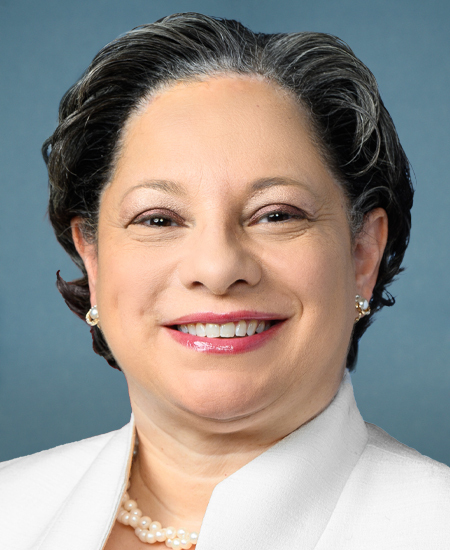
Rep. Jennifer L. McClellan
Sponsored bills
Maddy summaryHRES 45 is a ceremonial resolution honoring Alpha Kappa Alpha Sorority, Inc. for its 117 years of community service. It commends the sorority’s founding in 1908, its global membership of over 120,000 members, and its current service initiatives focused on social justice, community uplift, and economic empowerment. The resolution has no legal effect and serves solely to recognize the organization’s contributions to communities. It was introduced by multiple House members and referred to the Education and Workforce Committee.
Maddy summaryThe Prevent Tariff Abuse Act amends the International Emergency Economic Powers Act to prohibit the President from using emergency powers to impose tariffs or import quotas on goods entering the U.S. It adds a specific provision stating the President cannot impose duties, tariffs, or quotas under this law. This directly limits the executive branch's authority during emergencies, preventing the use of emergency powers for trade restrictions. The bill does not affect other trade policies or the President's other emergency authorities.
Maddy summaryHR 429, the Rosie the Riveter Commemorative Coin Act, authorizes the U.S. Treasury to mint and sell three types of commemorative coins ($5 gold, $1 silver, and half-dollar) to honor women who worked on the U.S. home front during World War II. The coins will be sold at face value plus surcharges ($35 for gold, $10 for silver, $5 for half-dollar), with all surcharge revenue directed to the Rosie the Riveter Trust to support the Rosie the Riveter WWII Home Front National Historical Park and related educational programs. The coins must be issued between January 1, 2028, and December 31, 2028, in specified quantities (50,000 gold, 400,000 silver, 750,000 half-dollar), with all costs covered by the sales revenue to avoid net government expense.
Maddy summaryHR 433, the Department of Education Protection Act, prohibits the use of federal funds to reorganize the Department of Education. Specifically, it blocks any spending from current fiscal year appropriations on activities that would decentralize the department, reduce staffing, or alter its structure, responsibilities, or authority relative to its organization as of January 1, 2025. The bill directly affects the Department of Education by preventing structural changes to its existing offices and operations. This is a procedural measure focused solely on preserving the current departmental framework, not on changing education policy or funding.
Maddy summaryThe LNG Public Interest Determination Act of 2025 requires the Secretary of Energy to approve natural gas exports only if they meet a public interest standard. This standard mandates three specific assessments: climate impact (including effects on global warming and clean energy investment), economic impact on U.S. consumers (with focus on low-income households and businesses), and environmental justice (assessing burdens on vulnerable communities). The Secretary must complete these assessments within one year of receiving environmental data and make a public finding. The bill also requires public participation in the process and treats export approvals as major federal actions under environmental law.
Maddy summaryHRES 35 is a ceremonial resolution recognizing the 112th anniversary of Delta Sigma Theta Sorority, Incorporated. It honors the sorority's founding on January 13, 1913, at Howard University and its century of service through community programs. The resolution acknowledges the sorority’s global network of over 350,000 members across 1,050 chapters worldwide and its focus on education, economic development, and community support. As a non-binding resolution, it does not create new laws or affect any policies. The House formally recognizes the sorority’s anniversary and applauds its service to communities in the U.S. and internationally.
Maddy summaryThe Proxy Voting for New Parents Resolution (HRES 23) would allow U.S. House Members who have given birth or whose spouse has given birth to appoint another Member as a proxy to cast their vote or record their presence in the House and committees for up to 12 weeks after childbirth. To use this, the new parent must submit a signed letter to the Clerk detailing the birth or medical condition and naming the proxy; the proxy must vote exactly as instructed and announce the vote as "by proxy." The proxy vote does not count toward quorum, and the new parent can revoke the proxy at any time by submitting a new letter or casting their own vote. This resolution applies to all House Members, including Delegates and the Resident Commissioner, though they cannot cast votes for the House itself.
This resolution honors the life, achievements, legacy, and distinguished public service of former President Jimmy Carter. The resolution also (1) acknowledges President Carter's contributions to the state of Georgia, the United States, and the world; and (2) establishes his legacy as one of the great leaders and statesmen of the United States.
Maddy summaryThis bill increases healthcare affordability for low- and middle-income people by expanding eligibility for premium tax credits under the Affordable Care Act. It removes the previous 400% of poverty level cap for subsidy eligibility and replaces it with a new sliding scale based on income tiers, ranging from 0% to 8.5% of household income for coverage costs. The scale adjusts linearly across income levels, with households earning 300-400% of poverty paying 6.0%-8.5% of income (up from the prior fixed 400% cap), while lower-income households pay progressively less. These changes apply to tax years beginning after December 31, 2025, directly affecting individuals purchasing health insurance through marketplace plans.