

Maddy summaryHR 3266, the Mental Health Infrastructure Improvement Act of 2025, provides federal loans and loan guarantees to help build or upgrade mental health and substance use disorder treatment facilities. It directly affects eligible entities like hospitals, clinics, and community facilities - especially those serving pediatric or adult patients in underserved rural areas or communities with insufficient psychiatric bed capacity. Key provisions include requiring borrowers to cover 25% of project costs, prioritizing projects that increase bed availability in high-need areas, and capping annual funding at $200 million (2026-2030). The bill establishes specific terms for loans, such as 20-year maximum terms and a 25% set-aside for pediatric facilities, to expand access to inpatient and outpatient care.
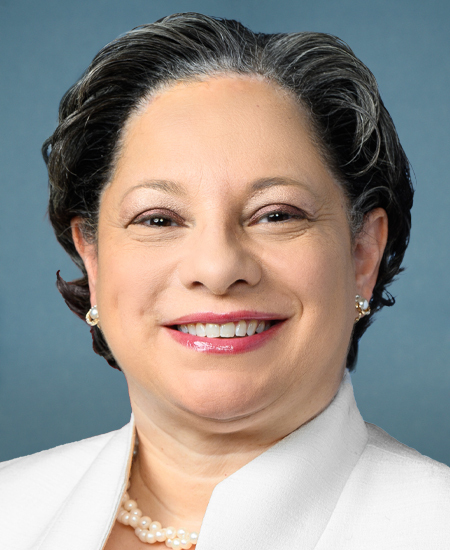
Rep. Jennifer L. McClellan
Sponsored bills
Maddy summaryThis bill prohibits federal officials from reducing, eliminating, or suspending funding for land-grant colleges and universities without specific authorization from Congress. It directly affects public institutions designated as land-grant colleges under the 1977 National Agricultural Research, Extension, and Teaching Policy Act. The key provision requires that any change to their funding must be explicitly approved by an Act of Congress, preventing unilateral federal action. This creates a clear legal barrier against unexpected funding cuts to these institutions. The bill focuses on preserving existing funding streams rather than creating new programs.
Maddy summaryThe Child Care Infrastructure Act (HR 3274) allocates $10 billion to improve safety and infrastructure at child care facilities, primarily benefiting providers serving low-income families, infants/toddlers, rural communities, and nontraditional-hour programs. It requires states to conduct needs assessments (including pandemic impacts on capacity and costs) and use grants for facility renovations, construction, or safety upgrades, with a 10% state match requirement. Intermediary organizations, such as community development groups, can also receive grants to provide technical assistance and financing for child care facilities. The bill mandates prevailing wage standards for construction work and requires annual reports on how improvements affect access, quality, and pandemic-related challenges, with final outcomes due by 2030.
Maddy summaryThis bill prohibits corporal punishment in schools receiving federal funding, defining it as any physical force causing pain for discipline. It requires schools to notify parents within 24 hours of any corporal punishment incident and mandates states to submit school climate reports detailing efforts to reduce exclusionary discipline practices like suspensions and expulsions. The bill establishes a grant program to help schools implement positive behavioral interventions, such as restorative justice and trauma-informed care, while requiring staff training on these approaches. The bill applies to public schools and other schools receiving federal funds but does not affect private schools or home schools that don't receive federal funding.
Maddy summaryHR 3243, the Therapeutic Fraud Prevention Act of 2025, bans the provision of paid conversion therapy aimed at changing a person's sexual orientation or gender identity, and prohibits advertising such therapy as effective, safe, or without risk. It directly affects LGBTQ+ individuals and their families who might be targeted by these practices, as professionals have determined conversion therapy is ineffective and harmful. The law treats violations as deceptive acts under consumer protection laws, empowering the Federal Trade Commission and state attorneys general to enforce it through civil actions. It explicitly excludes legitimate gender transition support and non-discriminatory counseling from the ban.
Maddy summaryHRES 380 is a symbolic resolution supporting the designation of May 5-9, 2025, as "Teacher Appreciation Week." It does not create new laws or funding but formally recognizes teachers' contributions to education. The resolution affirms teachers' role in shaping students' futures and calls for including teachers in education policymaking at all levels. It highlights teacher survey data showing broad support for policies like equitable school funding and culturally responsive teaching, though the resolution itself only expresses support for the week's designation. This is a non-binding gesture with no direct impact on affected individuals or policies.
Maddy summaryThis resolution urges the Secretary of Health and Human Services (HHS) to withdraw a March 2025 Federal Register notice (90 Fed. Reg. 11029) that would have reduced public notice and comment periods for proposed regulations. It specifically asks HHS to restore the pre-February 27, 2025 process, which required public input on rulemaking. The resolution emphasizes that public participation in HHS rulemaking - impacting millions through health and human services regulations - is essential for fair policy. As a non-binding resolution, it does not change law but expresses congressional preference for maintaining transparency in the regulatory process.
Maddy summaryThis bill expands OSHA safety protections to cover public employees, including teachers, police, and sanitation workers, who were previously excluded from federal workplace safety regulations. It directly affects state and local government workers by amending the Occupational Safety and Health Act to explicitly include "the United States, a State, or a political subdivision of a State" under OSHA coverage. The key mechanism is a technical amendment to the law’s definition of covered employees, ensuring public service workers fall under the same safety standards as private-sector employees. The bill takes effect 90 days after enactment for most workplaces, with a 36-month delay for state/local governments without existing OSHA plans.
Maddy summaryHR 3112, the Better CARE for Animals Act of 2025, strengthens enforcement of the federal Animal Welfare Act by requiring dealers and exhibitors to hold valid licenses for animal sales or transport (Section 4). It expands enforcement authority by allowing the Attorney General to sue violators for up to $10,000 per day, seize animals, and seek injunctions (Section 20), while clarifying that courts can address violations of related rules and regulations. The bill directly affects animal dealers, exhibitors, the USDA, and the Department of Justice, creating clearer pathways for holding violators accountable. Key provisions include updating definitions, broadening inspection powers to cover all regulations, and directing penalty funds toward temporary animal care costs during legal proceedings.
Assault Weapons Ban of 2025 This bill makes it a crime to knowingly import, sell, manufacture, transfer, or possess a semiautomatic assault weapon (SAW) or large capacity ammunition feeding device (LCAFD). The prohibition does not apply to a firearm that is (1) manually operated by bolt, pump, lever, or slide action, except for certain shotguns; (2) permanently inoperable; (3) an antique; (4) only capable of firing rimfire ammunition; or (5) a rifle or shotgun specifically identified by make and model. The bill also exempts from the prohibition the following, with respect to a SAW or LCAFD: importation, sale, manufacture, transfer, or possession related to certain law enforcement efforts, or authorized tests or experiments; importation, sale, transfer, or possession related to securing nuclear materials; and possession by a retired law enforcement officer. The bill permits continued possession, sale, or transfer of a grandfathered SAW, which must be securely stored. A licensed gun dealer must conduct a background check prior to the sale or transfer of a grandfathered SAW between private parties. The bill permits continued possession of, but prohibits sale or transfer of, a grandfathered LCAFD. Newly manufactured LCAFDs must display serial number identification. Newly manufactured SAWs and LCAFDs must display the date of manufacture. The bill also allows a state or local government to use Edward Byrne Memorial Justice Assistance Grant Program funds to compensate individuals who surrender a SAW or LCAFD under a buy-back program.