

Maddy summaryThe Pell Grant Preservation and Expansion Act of 2024 would double Federal Pell Grants, increasing the maximum award to $10,000 for the 2025-2026 academic year with annual inflation adjustments, and make Pell Grants a fully mandatory program rather than requiring annual appropriations. It would expand eligibility for students with negative student aid indexes (those with the lowest expected family contributions), provide Pell Grant eligibility for "Dreamer" students protected under DACA, and restore eligibility for students who previously lost it due to academic progress issues. The bill would also increase the total semesters of Pell Grant eligibility from 12 to 18. These changes would directly affect millions of undergraduate students, particularly students of color who currently rely on Pell Grants, with 3 in 5 African American students and half of Latino students depending on these grants. The bill would take effect for the 2025-2026 academic year.
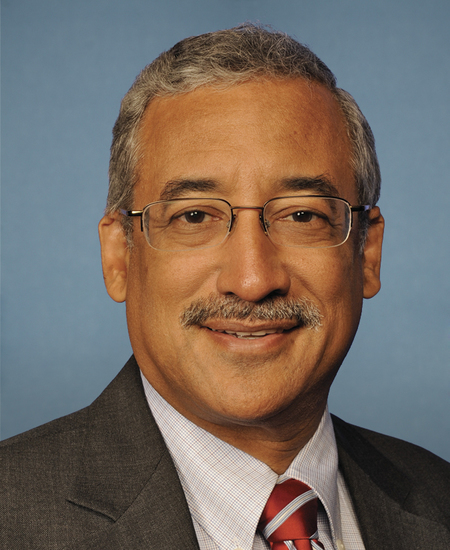
Rep. Robert C. "Bobby" Scott
Sponsored bills
Maddy summaryHR 537 authorizes a Congressional Gold Medal to honor 60 diplomats who saved Jewish lives during the Holocaust by issuing visas and passports against their governments' orders, risking expulsion and personal danger. The medal will be presented to the next of kin of these diplomats, alongside representatives from their home countries, and permanently displayed at the United States Holocaust Memorial Museum. The bill also permits the sale of bronze duplicates to cover production costs, with proceeds going to the U.S. Mint. This legislation recognizes the diplomats' humanitarian actions without creating new government programs or altering existing laws.
Maddy summaryHRES 1290 is a symbolic resolution recognizing June 12, 2024, as "Philippines Independence Day" to commemorate the 126th anniversary of the Philippines' independence from Spain on June 12, 1898. It honors the historical significance of this date and reaffirms the longstanding U.S.-Philippines relationship, including support for Filipino American contributions and cooperation. The resolution has no legal effect or policy changes - it is purely a commemorative gesture by the U.S. House of Representatives.
Maddy summaryHR 8691, the Restoring Justice for Workers Act, prohibits employers from requiring workers to sign arbitration agreements before any dispute arises (predispute agreements) or retaliating against workers who refuse them. It also sets strict requirements for postdispute arbitration agreements, mandating written consent after a 45-day waiting period, clear disclosure of workers' rights, and proof the agreement wasn't forced. The bill directly affects all workers (including independent contractors) and employers covered under the Fair Labor Standards Act, ensuring collective claims and concerted activity cannot be barred through forced arbitration. Key provisions make predispute arbitration agreements void and require voluntary, informed postdispute agreements with specific safeguards.
Maddy summaryHRES 1260 is a non-binding resolution expressing the U.S. House of Representatives' support for designating May 2024 as "Progressive Supranuclear Palsy Awareness Month." It recognizes progressive supranuclear palsy (PSP) as a rare neurodegenerative disease affecting approximately 30,000 Americans, with no known cure and symptoms including cognitive decline, balance issues, and speech difficulties. The resolution specifically supports raising public awareness, encourages research for better treatments and a cure, and commends efforts by patients, families, and organizations working to improve PSP care. As a symbolic gesture, it does not create new laws or allocate funding but aims to increase visibility for this under-recognized condition.
Maddy summaryThe George Floyd Justice in Policing Act of 2024 establishes a National Police Misconduct Registry to track complaints and disciplinary actions against officers, requiring all federal, state, and local law enforcement agencies to report use-of-force incidents with racial, gender, and age data. It bans chokeholds and carotid holds in police encounters, prohibits no-knock warrants in drug cases, and reforms qualified immunity to make it harder for officers to avoid accountability for misconduct. The bill mandates body cameras for federal officers, requires independent investigations of officer-involved shootings, and creates new data collection systems to monitor racial profiling and use-of-force patterns. It also includes provisions for civilian oversight boards, improved officer training on de-escalation and implicit bias, and restrictions on military equipment transfers to local police departments. This law affects all law enforcement agencies receiving federal funding under programs like Byrne and COPS grants.
Maddy summaryThe SCREENS for Cancer Act of 2024 reauthorizes and expands the National Breast and Cervical Cancer Early Detection Program (NBCCEDP), which provides free screenings and care coordination to low-income, uninsured, or underinsured women. It increases annual funding from $275 million (2024) to $500 million (2028) and explicitly adds "prevention" to the program’s mission, requiring it to reduce racial and ethnic disparities in cancer outcomes. The bill mandates the program to address barriers like social determinants of health and implement evidence-based strategies to boost screenings, particularly for underserved communities disproportionately affected by pandemic-related screening declines. This directly benefits millions of women, especially Black, Hispanic, and Asian women, who face higher cancer death rates and reduced access to care.
Maddy summaryHR 8521, the Joan Trumpauer Mulholland Congressional Gold Medal Act, authorizes the presentation of a gold medal to Joan Trumpauer Mulholland in recognition of her civil rights activism during the 1960s. The bill directly honors her as a key figure who participated in sit-ins, Freedom Rides, and the Jackson Movement, risking arrest and personal danger to challenge segregation. The key mechanism requires the Treasury Secretary to strike a gold medal and sell bronze duplicates to cover costs, with proceeds going to the U.S. Mint. This is a ceremonial honor with no policy changes or direct effects on legislation or constituents.
Maddy summaryHRES 1217 is a symbolic House resolution supporting the designation of May 10, 2024, as "National Asian American, Native Hawaiian, and Pacific Islander Mental Health Day." It directly affects the AANHPI community, which faces significant mental health disparities (including 63.7% of those needing care not receiving it and higher youth suicide rates). The resolution does not create new policies or funding but encourages federal, state, and local agencies to improve mental health awareness and culturally appropriate services for this community. It emphasizes recognizing cultural heritage as beneficial to mental health and aligns with existing May observances for AANHPI Heritage and Mental Health Awareness.
Maddy summaryThis bill expands compensation options for individuals filing discrimination lawsuits under federal civil rights law. It allows victims to claim damages for emotional harm - including mental anguish, loss of enjoyment of life, and non-financial suffering - alongside financial losses. The bill also adds a right to a jury trial for damages in these cases. For age discrimination claims specifically, it aligns available remedies with those under the Civil Rights Act of 1964, including all legal or equitable relief previously available for race-based discrimination.