

Maddy summaryHR 7032, the Congressional Budget Office Data Sharing Act, amends the 1974 Congressional Budget Act to give the Congressional Budget Office (CBO) clearer authority to quickly obtain data from executive branch agencies. The bill removes barriers to CBO requests by allowing data sharing "with or without written agreement," while requiring the CBO to maintain required confidentiality levels. It also prevents future laws from limiting this authority unless specifically referenced. The law directly affects the CBO and federal agencies that provide budget-related data, aiming to improve the CBO's ability to analyze government spending.
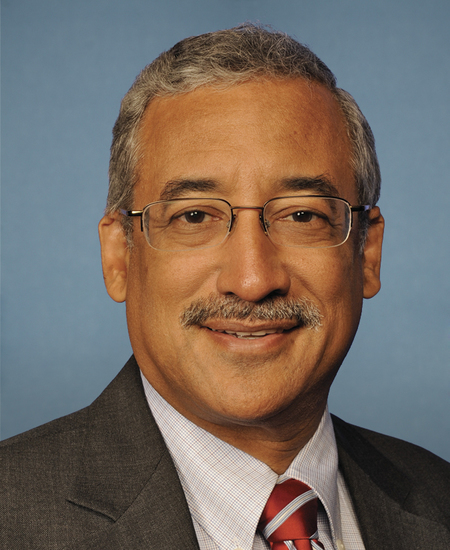
Rep. Robert C. "Bobby" Scott
Sponsored bills
Maddy summaryThis resolution formally censures Representative Glen Clay Higgins (LA-03) for a September 25, 2024, social media post containing racist remarks and false claims about Haitians. The bill requires Higgins to appear in the House chamber to receive the censure, with the resolution publicly read by the Speaker. It specifically references his post describing Haiti as "the nastiest country," falsely accusing Haitians of eating pets, and labeling them "slapstick gangsters and thugs." The censure is a formal disciplinary action by the House, not a policy change.
Maddy summaryHRES 1504 designates October 2024 as Filipino American History Month to celebrate the history, culture, and contributions of Filipino Americans to the United States. The resolution urges the American public to observe the month through educational programs and activities highlighting the community's early settlements, military service (including World War II veterans' contributions), and roles in healthcare, labor movements, and other fields. As a non-binding congressional resolution, it formally recognizes Filipino American heritage without creating new legal obligations or policy changes.
Maddy summaryHRES 1473 is a non-binding resolution passed by the U.S. House of Representatives that condemns racism, bigotry, and misinformation targeting Haitian people and their descendants. It celebrates the historical contributions of Haitian Americans to U.S. society, including founding cities (like Chicago via Jean Baptiste Point du Sable), advancing civil rights (W.E.B. Du Bois), and enriching healthcare, education, and culture. The resolution specifically calls on all Americans to reject racist tropes and misinformation, and urges elected officials to promote inclusivity and responsible communication. It was introduced in response to recent false claims that fueled threats against Haitian communities, such as the bomb threats in Springfield, Ohio.
Maddy summaryHR 9647, the President Jimmy Carter Congressional Gold Medal Act, authorizes Congress to award a single gold medal to former President Jimmy Carter in recognition of his service. The bill directs the Treasury Secretary to design and strike the medal, with bronze duplicates available for sale to cover costs. It does not create new policies or affect any government programs or individuals beyond this ceremonial honor. The medal is intended to commemorate Carter's presidency, humanitarian work through the Carter Center, and his Nobel Peace Prize. This is a procedural bill with no substantive legislative impact.
Maddy summaryHRES 1461 is a symbolic resolution designating September 2024 as "National Voting Rights Month" to raise awareness about voting access. It encourages all U.S. citizens to uphold voting rights, supports existing voting rights legislation like the Freedom to Vote Act, and recommends schools teach about voting history and current restrictions. The resolution specifically aims to highlight efforts to address historical and ongoing barriers affecting historically marginalized groups, including Black, Latino, and disabled voters. It does not create new laws but promotes educational initiatives and media campaigns about registration deadlines and election access.
Maddy summaryThe LET'S Protect Workers Act increases civil penalties for employers who violate labor and workplace safety laws. It significantly raises fines for child labor violations (up to $700,000 for serious injuries/deaths), wage and hour violations (up to $50,000 per violation for repeated/willful violations), and workplace safety violations (up to $800,000). The bill also increases penalties for farmworker protections (to $30,000), mine safety violations, and unfair labor practices (up to $100,000). New provisions require employers to pay penalties, with withdrawal orders for mines that fail to pay fines. These changes apply to violations occurring on or after January 1, 2025, with some provisions taking effect immediately.
Maddy summaryThis bill (HR 2365, Public Law 118-66) directs the U.S. Department of Health and Human Services (HHS) to establish the National Parkinson’s Project. It requires HHS to create and update a coordinated national plan for preventing, diagnosing, treating, and researching Parkinson’s disease and related disorders (including multiple system atrophy and progressive supranuclear palsy), while coordinating federal research and care efforts across agencies like the NIH, CDC, and VA. The law mandates annual progress assessments, an advisory council with patient advocates and diverse experts, and annual reports to Congress on federal Parkinson’s programs and recommendations for improvement. It affects federal agencies managing Parkinson’s-related programs and aims to improve care coordination and research efficiency for patients and caregivers, with the law sunsetting in 2035.
Maddy summaryThis bill, the Virginia Plan to Reduce Gun Violence Act of 2024, establishes new requirements for firearm transfers, limits handgun purchases to one per 30 days for unlicensed individuals, and creates a national framework for extreme risk protection orders (ERPOs). It requires licensed dealers to facilitate transfers between unlicensed individuals, mandates reporting of lost or stolen firearms within 48 hours, restricts access to firearms by children under 14, and prohibits stalkers from possessing firearms. The bill also makes it unlawful for caregivers to enable children to gain access to firearms when they know the child poses a risk of violence. These provisions would directly affect firearm sellers, law enforcement agencies, individuals with firearm access issues, and caregivers of children.
Maddy summaryThis bill creates a federal framework for "extreme risk protection orders" (ERPOs) that temporarily remove firearms from individuals who pose a risk of harming themselves or others. Family members or law enforcement officers can petition a federal court for a temporary order (up to 14 days) based on probable cause, followed by a hearing within 72 hours to determine if a longer-term order (up to 180 days) is warranted. The bill requires clear and convincing evidence of risk at the hearing and mandates respondents to surrender firearms to law enforcement within 48 hours. It also includes provisions for reporting, training law enforcement on ERPOs, and a federal grant program to support state ERPO implementation, without preempting state laws.