

Maddy summaryThe AADAPT Act reauthorizes and expands the Project ECHO grant program to specifically address Alzheimer's disease and dementia care. It provides $1 million annually (2026-2031) for grants to eligible health care entities - such as rural clinics, tribal organizations, or community health centers - to develop online training programs for primary care providers working in underserved areas (including rural, frontier, or medically underserved communities). These programs aim to improve provider retention, increase early diagnosis of dementia, and enhance quality care. The bill requires grantees to report on outcomes and ensures funding supplements, rather than replaces, existing resources.
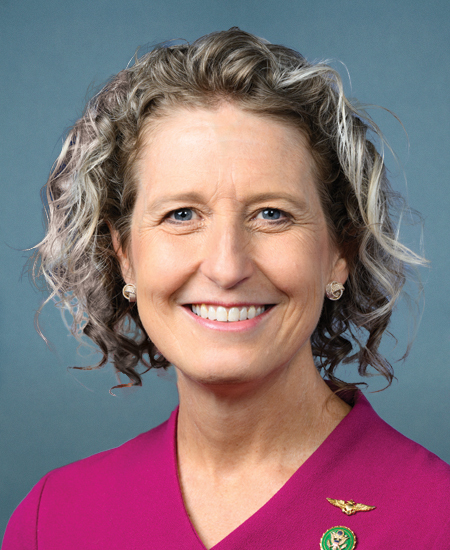
Rep. Jennifer A. Kiggans
Sponsored bills
Maddy summaryHR 7504, the Rural Veterans Transportation to Care Act, expands a VA transportation grant program to specifically assist rural veterans and tribal organizations. The bill modifies eligibility by adding "rural or highly rural" to program criteria, allows tribal organizations to apply for grants, and sets a maximum grant amount of $60,000 (up to $80,000 for ADA-compliant vehicles). It defines "rural" using USDA's RUCA system and "tribal organization" per the Indian Self-Determination Act, ensuring grants directly support transportation access for veterans in remote areas and tribal communities.
Maddy summaryHR 7770, the Rosie the Riveter Commemorative Coin Act, authorizes the U.S. Mint to produce and sell three commemorative coins honoring women who worked on the U.S. home front during World War II. It specifies $5 gold coins (max 50,000), $1 silver coins (max 400,000), and half-dollar coins (max 750,000), all to be issued between January 1, 2025, and December 31, 2025. Each coin sale includes a surcharge ($35 for gold, $10 for silver, $5 for half-dollar), with all surcharge funds directed to the Rosie the Riveter Trust for maintaining the Rosie the Riveter WWII Home Front National Historical Park and educational programs. The coins will feature designs reflecting the legacy of diverse women workers and must meet specific weight, diameter, and composition standards.
Maddy summaryThis bill prohibits the U.S. State Department from acquiring, leasing, or authorizing construction on overseas diplomatic facilities (like embassies and consulates) where the People’s Republic of China or its entities have ownership control (defined as 25% or more). It applies to all new building acquisitions, leases, and construction contracts after the law’s enactment. The law defines "covered construction" to include all building work, repairs, and essential systems like electrical or plumbing. Violations require the Secretary of State to notify relevant congressional committees within seven days.
Maddy summaryHR 4278, the Restore VA Accountability Act of 2023, establishes new disciplinary procedures for VA supervisors and management officials (excluding senior executives and political appointees). It requires the VA Secretary to use "substantial evidence" for removal, demotion, or suspension, sets strict timelines (15 business days total for decisions), and creates a new internal grievance process. The bill limits judicial review to procedural errors, not penalty severity, and strengthens whistleblower protections by requiring Office of Special Counsel approval for disciplinary actions involving disclosures. This directly affects VA supervisors and managers whose performance or misconduct leads to disciplinary action.
Maddy summaryThe FISH Wellness Act requires fishing vessel operators and crews to receive safety training addressing mental health, substance use disorders, and fatigue risks. It increases annual funding for health services from $3 million to $6 million (for 2024-2025) to support programs addressing behavioral and physical health risks in the commercial fishing industry. Grants will be awarded competitively by the Department of Health and Human Services, with criteria developed alongside the Coast Guard. The bill updates vessel safety standards to integrate health training into operational requirements.
Maddy summaryThis non-binding resolution expresses the House's support for in vitro fertilization (IVF) access, noting that 19% of women in the U.S. face infertility challenges. It states IVF is necessary for those unable to conceive naturally, emphasizes policies enabling family growth, and recognizes "life is precious." The resolution does not create new laws or change regulations but symbolically affirms the House's position on IVF as a vital medical option for individuals struggling with infertility. It was introduced by Rep. Chavez-DeRemer and others on February 29, 2024.
Maddy summaryHRES 1043 is a non-binding congressional resolution expressing support for continued access to fertility care and in vitro fertilization (IVF) following a February 2024 Alabama Supreme Court ruling that threatened IVF services. The resolution condemns the Alabama ruling, which caused clinics to suspend IVF care and raised concerns about legal liability for providers. It urges federal and state officials to protect access to IVF and other assisted reproductive technologies, calling for legislative action to prevent further restrictions. The resolution directly addresses the immediate impact on Alabama patients and providers but does not create new laws or alter existing regulations.
Maddy summaryHR 7566, the CARTEL Act of 2024, requires U.S. Customs and Border Protection (CBP) to publish monthly public reports on border statistics, including encounters with individuals in the terrorist screening database (both attempts and apprehensions) and those affiliated with transnational criminal organizations. The bill mandates specific data points like total encounters, drug seizures, gang affiliations, and whether apprehended individuals were released or removed. Additionally, it requires the Secretary of Homeland Security to submit an annual report to Congress assessing foreign terrorist organizations and transnational criminal organizations attempting to enter the U.S. through border regions. This bill directly affects CBP (as the reporting entity) and provides the public and Congress with detailed, monthly border enforcement data.
Maddy summaryHR 7361, the Flowers for Fallen Heroes Act of 2024, requires the American Battle Monuments Commission to establish a low-cost program allowing the public to order flowers for military gravesites at Commission-managed cemeteries. The bill mandates the Commission to partner with third-party florists (without excess fees) and create a user-friendly website and phone system for ordering by one year after enactment. It also authorizes credit card and electronic payment processing for these orders, with customers responsible for any third-party processing fees, and requires annual reports to Congress detailing program implementation, including order data and florist engagement. This bill directly affects the public seeking to honor fallen service members and the Commission’s operations at 25 overseas military cemeteries.