

Maddy summaryHR 6649, the Fit Vets Act, establishes a 3-year pilot program allowing eligible veterans enrolled in VA healthcare to access senior fitness programs like SilverSneakers. It directly affects veterans meeting VA enrollment criteria under 38 U.S.C. §1705 who qualify for the program. The VA will provide this fitness access as part of healthcare services, with the program running nationally or regionally at the VA's discretion. After the pilot, the VA must report participation rates, costs, health outcome analysis, and recommendations on making the program permanent.
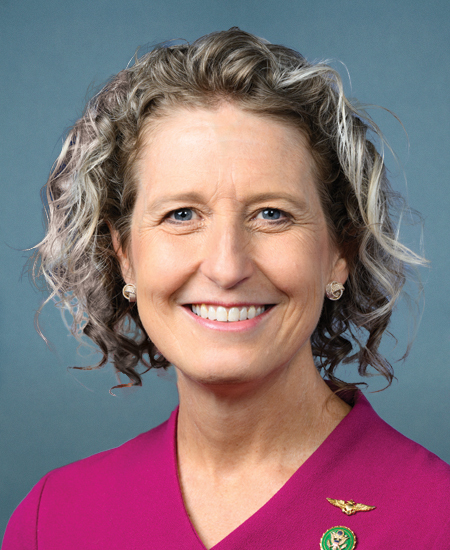
Rep. Jennifer A. Kiggans
Sponsored bills
Maddy summaryThe Veterans Career Connection Act establishes a "Veterans Transition Talent Hub" to help veterans and service members transitioning from military service find civilian jobs. The program, run by the VA Secretary, allows eligible participants (veterans or service members eligible for preseparation counseling) to opt into sharing their discharge date, military skills/certifications, location preferences, and resume with approved employers. Employers can search this database to connect with qualified candidates. The hub requires consultation with Defense, Labor, employers, and veterans' organizations during implementation.
Next Generation 9–1–1 Act This bill establishes a grant program to support implementation of next generation 9-1-1 (NG9-1-1) systems by state, territorial, and tribal governments and requires other related activities. NG9-1-1 means a secure, interoperable, Internet Protocol-based (IP-based) system for receiving 9-1-1 requests for emergency assistance. (IP-based 9-1-1 systems have capabilities that legacy telephone systems do not, including enhanced location-finding and the ability to receive text and multimedia messages.) Under the bill, the National Telecommunications and Information Administration (NTIA) must provide grants to state, territorial, and tribal governments (and entities established by those governments) to support the implementation and maintenance of NG9-1-1 systems. Grant funds may also be used for public outreach on NG9-1-1, implementation of cybersecurity measures, and, subject to certain limits, training and administrative costs. Entities applying for grants must submit a plan for NG9-1-1 coordination and implementation that ensures interoperability and reliability, incorporates cybersecurity tools, and meets other requirements related to technology and procurement. Applicants must also certify that they have established, or will establish within a specified time frame, a sustainable funding mechanism to support NG9-1-1 and effective cybersecurity resources. The NTIA must advise applicants on the preparation of implementation plans and provide technical assistance to grant recipients. Further, the NTIA must establish (1) an advisory board to provide recommendations with respect to the grant program and other topics related to NG9-1-1; and (2) a cybersecurity center to coordinate with state, local, and regional governments on the sharing of cybersecurity information related to NG9-1-1.
Maddy summaryThis resolution (HRES 998) is a symbolic House of Representatives commendation honoring President Trump, U.S. military/intelligence agencies, and Justice Department personnel for the alleged success of "Operation Absolute Resolve" in apprehending Venezuelan leader Nicolás Maduro. It cites Maduro's charges (including narcoterrorism conspiracy) and the Maduro regime's alleged dismantling of Venezuelan democracy, state-sponsored drug trafficking, and human rights abuses. The resolution expresses support for Venezuela's democratic transition but contains no new policy, funding, or legal changes. As a procedural resolution, it does not directly affect any individuals or alter laws.
Maddy summaryHR 7074 requires the Secretary of the Interior to join the Committee on Foreign Investment in the United States (CFIUS) when reviewing transactions involving land or resources near federal lands managed by agencies like the Bureau of Land Management, National Park Service, or Bureau of Indian Affairs. It specifically targets acquisitions by foreign entities from China, North Korea, Russia, or Iran, mandating CFIUS to assess whether such transactions - reported by the Interior Secretary - constitute a "covered transaction" requiring review. The bill creates a new process for evaluating these land deals, with the review ending for a specific country once it’s removed from the U.S. list of "foreign adversaries." This directly affects foreign buyers from those four nations seeking to acquire land adjacent to federally protected areas.
Maddy summaryThis symbolic House resolution expresses U.S. congressional support for Iranian protesters demanding democracy and human rights. It condemns the Iranian regime's violent suppression of protests, including killings, mass arrests, and internet restrictions, while urging the regime to release political prisoners and restore communication access. The resolution reaffirms the Iranian people's right to self-determination through free elections and echoes a 2023 resolution (HCR 7) that similarly praised protesters. As a non-binding expression of support, it does not impose new policies or alter U.S. government actions.
Maddy summaryHR 6526, the Clarity on Care Options Act, requires the Department of Veterans Affairs (VA) to annually ask healthcare providers in VA-administered networks whether they accept CHAMPVA (Civilian Health and Medical Program for veterans' dependents) coverage. The VA must then create and maintain a public directory listing providers who accept CHAMPVA, making this information easily accessible to beneficiaries. The bill also mandates an annual report to Congress detailing provider acceptance rates by state and Veterans Integrated Service Network, including areas where beneficiaries lack nearby CHAMPVA-accepting providers. This bill directly affects CHAMPVA beneficiaries (veterans' dependents) by improving transparency about provider availability. The key mechanism is the annual provider query and public directory, with implementation required within 180 days of enactment.
Maddy summaryHR 4509, the NOPAIN for Veterans Act, requires the Department of Veterans Affairs (VA) to add FDA-approved non-opioid pain medications to its national formulary within one year of their approval for pain management. These medications must reduce pain without acting on opioid receptors, directly affecting veterans receiving VA care who need pain treatment. The bill mandates the VA include such drugs in its formulary and drug standardization list, expanding access to non-opioid options. It also prohibits using funds from the Cost of War Toxic Exposures Fund to implement these changes, with implementation required within 90 days of the bill's enactment.
Maddy summaryHR 909, the Crime Victims Fund Stabilization Act of 2025, modifies how funds from the False Claims Act are deposited into the Crime Victims Fund. It specifies that from 2025 through 2029, certain False Claims Act proceeds (specifically those for qui tam plaintiff payments and government damage reimbursements) cannot be deposited into the fund. This change directly affects the composition of the Crime Victims Fund by excluding these specific revenue streams during the specified period. The bill does not create new benefits or alter victim services; it only adjusts fund allocation rules for existing False Claims Act revenues.
Maddy summaryHRES 984 is a symbolic resolution designating January 9, 2026, as "National Law Enforcement Appreciation Day." It directly honors all federal, state, local, and tribal law enforcement officers across the United States for their service and sacrifices. The resolution expresses the House's support and gratitude, encourages public observance through ceremonies, and recognizes officers who have made the ultimate sacrifice. As a non-binding resolution, it does not create new laws or policies but serves as a formal expression of appreciation.