

Maddy summaryThe Helping Ensure Reliable Opportunities in Child Care for Military Families Act aims to improve child care services for military families by addressing staffing and data challenges at military child development centers. It expands the pool of eligible child care providers, including national service volunteers, and establishes a "preclearance" system for background checks and health screenings for prospective child care employees. The bill also authorizes job-sharing arrangements and allows the Department of Defense to offer limited benefits like commissary access and tuition assistance to child care employees to aid recruitment and retention. Finally, it mandates a unified data system to monitor child care capacity, staffing, and waitlists, and requires reports analyzing child care availability's impact on military readiness.
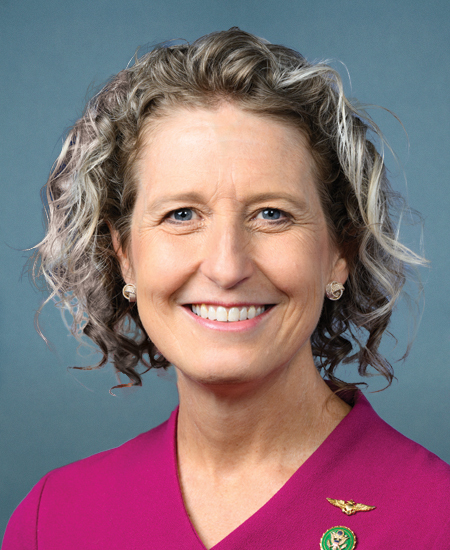
Rep. Jennifer A. Kiggans
Sponsored bills
Maddy summaryThe Maverick Act authorizes the Secretary of the Navy to transfer three F-14D Tomcat aircraft to the U.S. Space and Rocket Center Commission in Huntsville, Alabama, without charge to the Commission. The Commission would be responsible for all costs associated with the aircraft, including conveyance, operation, and maintenance. The bill requires the aircraft to be demilitarized and used exclusively for public display, airshows, or commemorative events to preserve naval aviation heritage. The Commission must also comply with all Federal Aviation Administration regulations, and if these conditions are violated, ownership of the aircraft would revert to the United States.
Maddy summaryThe CERTAIN Act aims to expedite federal permitting and environmental reviews for infrastructure projects by imposing strict timelines on federal agencies. It limits an agency's ability to revoke existing project authorizations unless specific conditions are met, such as a court order or immediate harm. The bill mandates deadlines for agencies to process applications, determine completeness, and conduct environmental reviews, with routine authorizations automatically approved if agencies miss their deadlines.
Maddy summaryThe Supporting VA Families Act grants unpaid parental leave to Department of Veterans Affairs employees. This provision allows employees to take four weeks of unpaid leave within a 12-month period for the birth of a child or for adoption and foster care placements. The leave is designed to supplement existing leave policies rather than replace them, ensuring employees can balance family needs with their work responsibilities. The act defines eligible employees and children according to existing federal definitions found in Title 5 of the United States Code.
Maddy summaryThe ALERT Act (HR 7613) requires the Federal Aviation Administration to improve aviation safety through several key measures. It mandates the evaluation and potential implementation of enhanced collision avoidance systems (ACAS-Xa) for commercial aircraft and ACAS-Xr for rotorcraft, with specific deadlines for rulemaking and installation. The bill establishes committees to develop recommendations for safety technology requirements, requires safety risk assessments for air traffic controllers, and addresses operational procedures at high-traffic airports like Ronald Reagan Washington National. These provisions affect air carriers, air traffic controllers, rotorcraft operators, and Department of Defense aircraft operations. The act aims to enhance situational awareness and reduce midair collision risks through technology upgrades and improved safety protocols.
Maddy summaryThe SACRED Act adds a new federal crime to protect access to places of religious worship by prohibiting intimidating or harassing conduct within 100 feet of religious buildings. It directly affects individuals who engage in disruptive behavior near religious sites and those seeking to enter or exit them. The law defines prohibited actions as conduct that causes reasonable fear for physical safety or intentionally harasses people within 8 feet, with penalties ranging from fines up to $10,000 for nonviolent first offenses to potential life imprisonment if death results. The bill also establishes civil remedies allowing aggrieved individuals or religious organizations to sue for damages and injunctive relief, while permitting state and federal attorneys general to bring civil actions on behalf of affected persons. Importantly, the legislation explicitly preserves the right to peaceful expressive conduct like picketing and does not override existing state or local laws.
Maddy summaryThis bill, known as the Moral Injury Recognition and Restitution Act, changes how the Department of Veterans Affairs handles compensation claims for veterans affected by military sexual trauma. It allows veterans who receive approved claims for mental health conditions or physical injuries caused by such trauma to receive back pay starting from the day after their military discharge rather than from the date their claim was filed. The legislation defines military sexual trauma according to existing legal standards and includes both mental health conditions and physical disabilities resulting from or worsened by the trauma. This change applies retroactively to eligible veterans who have already been approved for compensation benefits.
Maddy summaryThis bill directs the Secretary of Agriculture to create a pilot grant program that funds Food is Medicine initiatives, which connect community organizations with healthcare providers to help people manage diet-related diseases through nutrition-focused services. The program would provide grants for activities such as medically tailored grocery deliveries, cooking classes, and emergency food operations, with priority given to projects using local foods and involving nutrition professionals. Funding of up to $20 million is authorized for fiscal years 2027 through 2031, and the Secretary must submit reports to Congress on how the program affects participant health outcomes and system costs.
Representing our Seniors at VA Act of 2025 This bill expands the membership of the Geriatrics and Gerontology Advisory Committee within the Veterans Health Administration by requiring the addition of one representative from the National Association of State Veterans Homes who holds a professional license in nursing home administration. Additionally, the committee must consult with the National Association of Veterans State Homes with respect to matters concerning the association.
Maddy summaryThis bill, the Precision Brain Health Research Act of 2026, expands the Department of Veterans Affairs' existing precision medicine initiative to specifically include research on repetitive low-level blast exposure, dementia, and other brain and mental health conditions affecting veterans. It requires the VA and Department of Defense to establish a data-sharing partnership within one year to combine relevant military health data for research purposes. The legislation mandates specific research studies on blast exposure impacts, including assessments of clinical interventions, implementation studies of proven treatments, and quality improvement efforts to enhance diagnosis and care. Additionally, the bill directs the VA to contract with the National Academies of Sciences, Engineering, and Medicine to validate brain health biomarkers and authorizes $5 million annually through fiscal year 2030 to fund these expanded research efforts.