

Maddy summaryThis bill, the REHIRE Act (HR 3093), creates a hiring preference for certain federal employees who were involuntarily separated between January 1, 2025, and January 1, 2027. It directly affects career federal employees removed during that period who were not in political positions or separated for misconduct or poor performance. The key provision gives these employees 5 additional points in their hiring rating (under 5 U.S.C. §3309) and deems them "preference eligible" for competitive service positions. The preference expires 5 years after the bill becomes law and does not apply to political appointees, those fired for misconduct, or those with documented poor performance reviews.
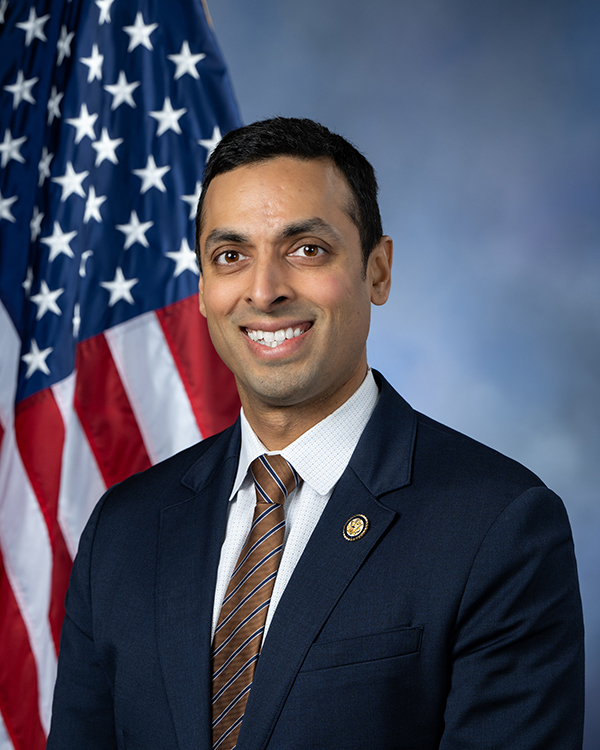
Rep. Suhas Subramanyam
Sponsored bills
Maddy summaryThe Equality Act (HR 15) amends federal civil rights laws to explicitly prohibit discrimination based on sexual orientation and gender identity in employment, housing, public accommodations, credit, and jury service. It expands existing protections under the Civil Rights Act of 1964 by adding sexual orientation and gender identity as protected characteristics under sex discrimination prohibitions. The bill clarifies that discrimination against LGBTQ people is a form of sex discrimination, consistent with the Supreme Court's Bostock decision, and adds specific definitions for gender identity and sexual orientation. This legislation directly affects businesses, employers, housing providers, financial institutions, and government entities that serve the public. The bill creates a more comprehensive legal framework to address discrimination that LGBTQ people face in multiple aspects of daily life.
Maddy summaryHR 3045, the West Bank Violence Prevention Act of 2025, imposes U.S. sanctions on foreign individuals and entities responsible for violence, displacement, or property destruction in the West Bank. It targets those directly involved in attacks on civilians, forced displacement, or property seizures, including settler leaders or officials of groups engaged in such activities. Key provisions require freezing assets of sanctioned individuals within U.S. jurisdiction and blocking their entry into the United States via visa restrictions. The law applies to foreign nationals meeting specific criteria outlined in the bill, not U.S. citizens or entities.
Maddy summaryHRES 345 is a symbolic resolution expressing the U.S. House of Representatives' support for designating April 2025 as "Parkinson's Awareness Month." It highlights that Parkinson's disease affects over 1 million people in the U.S., is the second most common neurodegenerative disease, and requires increased research and support for patients and caregivers. The resolution does not create new laws or funding but aims to raise public awareness and recognize ongoing efforts to improve quality of life for those impacted. It underscores the disease's growing prevalence and annual costs, urging continued focus on research and community support.
Maddy summaryThis bill limits how much Social Security can withhold from monthly benefits to recover overpayments. It sets a 10% cap on withholdings for cases without fraud (unless the recipient requests a higher rate), affecting Social Security beneficiaries who received more than they were entitled to. The key provision prevents excessive deductions from monthly payments, ensuring recipients retain at least 90% of their benefit for non-fraudulent overpayments. The law applies to overpayments existing after the bill's effective date.
Maddy summaryHR 3011 allows the U.S. Postal Service to mail alcoholic beverages under specific conditions, primarily affecting licensed alcohol businesses (like wineries, breweries, and retailers) that register with the USPS. The bill requires shipments to be for personal use only (not resale), include age verification (21+ with ID), and comply with state delivery rules. It explicitly states that state, local, or tribal laws prohibiting alcohol shipments remain in effect and cannot be overridden by this federal law. The USPS must create regulations to implement these rules, and states can sue the USPS for violations under local alcohol laws.
Maddy summaryHR 2947, the Deafblind DATA Act, requires the U.S. Census Bureau to publish an annual data table starting in 2026 showing individuals who reported both hearing and vision loss in the American Community Survey. The table will include demographic details (sex, race, age) and economic factors (employment, education, income, poverty status) for people in each state, without revealing personal identifiers. This bill directly addresses the lack of centralized data on the deafblind population (estimated at 10,000 children and 40,000 adults by the National Center on Deafblindness), which currently prevents accurate service planning. The Census Bureau must also report to Congress within 180 days on feasibility of expanding such data collection. The Act does not change existing services but aims to improve understanding of this population's needs through better data.
Maddy summaryThe DRIVE Act of 2025 requires the Department of Veterans Affairs (VA) to set mileage reimbursement rates for veterans at the federal government's current standard rate for employees using personal vehicles on official business, replacing the previous fixed rate of 41.5 cents per mile. It also mandates that the VA process and pay these reimbursements within 90 days of a veteran's valid request. This directly affects veterans who travel for VA medical appointments or services using their personal vehicles. The bill aligns veteran travel reimbursements with federal employee standards and ensures timely payments.
Maddy summaryHRES 324 is a symbolic resolution designating April 2025 as "Esophageal Cancer Awareness Month." It does not create new laws or allocate funding but expresses congressional support for raising public awareness about esophageal cancer. The resolution encourages federal, state, local, and nonprofit entities to promote education on symptoms (like persistent heartburn), risk factors (such as GERD), and the importance of early screening for Barrett’s esophagus. It highlights that early detection significantly improves survival rates (up to 49% for early-stage cases) but does not directly affect individuals or healthcare policies.
Maddy summaryHR 2837 establishes an Advisory Council under the Department of Health and Human Services to improve access to existing resources for victims of gun violence. The council, composed of federal agency heads and appointed victims/support professionals, will assess needs, identify effective programs, and compile a public resource hub with contact information for medical, financial, mental health, legal, and government support services. It requires a detailed report within 180 days of enactment and a follow-up report within two years, focusing on gaps in current assistance and coordination. The bill directly affects individuals defined as victims of gun violence (including those wounded, threatened, witnessing incidents, or related to victims) and aims to connect them to existing federal, state, and nonprofit resources without authorizing new funding. The council will sunset after five years.