

Maddy summaryHRES 1371 is a House resolution condemning the Biden Administration and Vice President Kamala Harris for failing to secure the U.S. border. It cites statistics including over 9.7 million illegal immigration encounters since 2021 and the end of the Remain in Mexico program as evidence. As a symbolic resolution with no policy changes, it publicly expresses the House's disapproval of current border policies without altering any laws or enforcement actions.
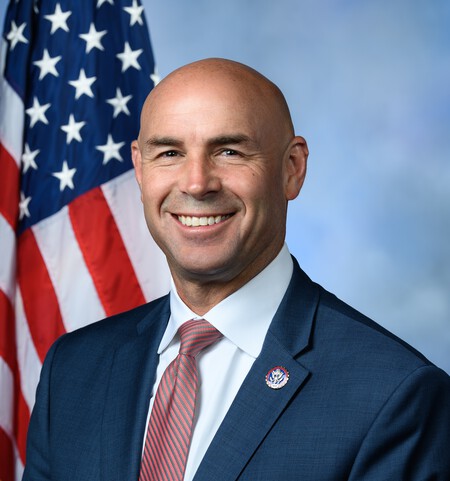
Rep. Jake Ellzey
Sponsored bills
Maddy summaryThe SAVE Act (HR 8281) requires U.S. citizens to provide documentary proof of citizenship when registering to vote in federal elections. It defines acceptable proof as documents like passports, REAL ID-compliant IDs, military IDs, or birth certificates, and mandates that states verify citizenship using information from government agencies like DHS and Social Security. States must establish processes for voters without required documentation to provide an attestation under penalty of perjury. The law also requires states to remove noncitizens from voter rolls when verified evidence shows they're not citizens. This bill directly affects all applicants registering to vote in federal elections and state election officials who must implement these requirements.
Maddy summaryHJRES 182 is a joint resolution that disapproves a rule issued by the Department of Health and Human Services (HHS) regarding placement requirements for LGBTQI+ children in foster care. The rule, published in the Federal Register on April 30, 2024, would have set specific standards for how foster care agencies must place these children. If enacted, this resolution would make the HHS rule unenforceable, blocking its implementation nationwide. The bill directly targets the HHS rule, preventing it from affecting foster care systems and related policies.
Maddy summaryThis bill prohibits federal funding for elementary and secondary schools that partner with Chinese government-funded programs, including Confucius Institutes, Confucius Classrooms, or other entities receiving support from China's government (e.g., through teaching materials, personnel, or funds). It directly affects schools with these specific ties to the People's Republic of China. The prohibition takes effect one year after enactment, with the Education Secretary required to notify schools and provide compliance guidance within 90 days of enactment. The policy change blocks federal education funds for schools meeting the defined criteria, without altering existing educational content or curriculum standards.
Maddy summaryThis concurrent resolution (HCONRES 113) is a symbolic congressional tribute honoring former President George H.W. Bush on the occasion of his 100th birthday. It recognizes his life, public service, and legacy without creating any new laws or affecting specific individuals or groups. The resolution formally acknowledges his career achievements, including his military service, presidency, and contributions to policy like the Americans with Disabilities Act, while expressing Congress's gratitude to him and his family. As a commemorative resolution, it has no binding effect or policy impact.
Maddy summaryHR 537 authorizes a Congressional Gold Medal to honor 60 diplomats who saved Jewish lives during the Holocaust by issuing visas and passports against their governments' orders, risking expulsion and personal danger. The medal will be presented to the next of kin of these diplomats, alongside representatives from their home countries, and permanently displayed at the United States Holocaust Memorial Museum. The bill also permits the sale of bronze duplicates to cover production costs, with proceeds going to the U.S. Mint. This legislation recognizes the diplomats' humanitarian actions without creating new government programs or altering existing laws.
Maddy summaryHR 8693, the "No American Land for Communist China Act," prohibits U.S. citizens or entities from purchasing real estate adjacent to specific federal lands if owned by the Chinese government or businesses with 25%+ Chinese government ownership. It directly affects Chinese government entities and Chinese-owned businesses operating in the U.S., restricting their ability to buy land near protected federal areas. The bill requires the President to take necessary actions to block such purchases, covering lands managed by Interior, Defense, Agriculture (Forest Service), or designated Indian country. This is a policy restriction, not a funding measure, targeting land transactions near sensitive federal properties.
Maddy summaryHJRES 166 is a joint resolution seeking congressional disapproval of a Department of Labor rule that would have changed overtime exemption standards for certain salaried workers. The rule, published in April 2024, aimed to redefine how executive, administrative, professional, outside sales, and computer employees are classified for overtime pay under federal law. If enacted, this resolution would block the rule from taking effect, preserving the existing classification system for these workers.
Maddy summaryHR 192 prohibits noncitizens from voting in all District of Columbia elections, including for public office and ballot initiatives. It directly affects noncitizen residents of Washington D.C. who currently have voting rights under the repealed Local Resident Voting Rights Amendment Act of 2022. The bill's key mechanism is repealing that 2022 amendment, restoring the requirement that only U.S. citizens may vote in DC elections. This changes the voting eligibility rules for noncitizens living in the District. The law would take effect upon enactment, removing noncitizens from the voter rolls for all local elections.
Maddy summaryHR 5403, the CBDC Anti-Surveillance State Act, prohibits the Federal Reserve from issuing or facilitating central bank digital currency (CBDC) directly or indirectly to individuals through financial institutions. It specifically bans Federal Reserve banks from offering digital products to individuals, maintaining individual accounts, or using CBDC for monetary policy implementation. The bill also clarifies that its restrictions do not apply to existing physical cash or private, permissionless digital payment systems. This bill directly affects the Federal Reserve's ability to develop or deploy a government-run digital dollar. The law aims to prevent the Federal Reserve from creating a digital currency that could enable transaction tracking or government oversight of personal financial activity.