

Maddy summaryHR 4860, the PROTECT the Second Amendment Act, prevents landlords in specific federally assisted housing from banning or restricting residents' lawful possession of firearms in their private units or during travel between units and common areas. It directly affects tenants in housing funded by HUD or USDA programs, including public housing, Section 8 vouchers, and housing for veterans or people with disabilities. The bill prohibits landlords from imposing firearm bans or additional conditions on residents who lawfully carry firearms within their dwelling units or while moving through common areas to reach their units. This changes current policies in these housing programs by explicitly allowing firearm possession where state law permits.
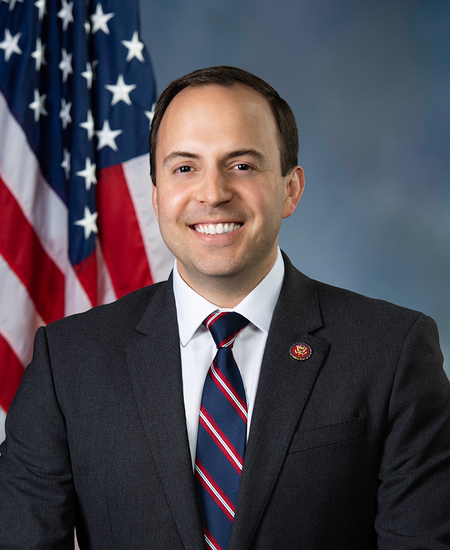
Rep. Lance Gooden
Sponsored bills
Migrant Child Safety Act This bill requires actions relating to placing unaccompanied alien children with a sponsor, such as requiring the Department of Health and Human Services (HHS) to collect and share specified information about prospective sponsors. Before placing such a child with a prospective sponsor, HHS must gather and provide to the Department of Homeland Security (DHS) specified information about the prospective sponsor, including (1) proof of address for the residence where the child will be placed; (2) results of background checks for the sponsor and any adult household members, (3) the sponsor's immigration status, if known; and (4) any evidence to prove any claimed relationship between the child and the sponsor. HHS may not waive any part of this requirement. After receiving this information, if DHS determines that the sponsor is unlawfully present in the United States, the sponsor must be placed in removal proceedings. No later than 30 days after placing the child, HHS must also provide this information and any other relevant information to the appropriate state or local health or welfare agency. If HHS cannot contact the sponsor for a follow-up or well-being check during the 120 days after the child's placement, HHS must report the child as missing to the National Center for Missing and Exploited Children. HHS must attempt to contact the child's parents, to the extent practicable.
Maddy summaryThis bill would prohibit government employees from directing or encouraging social media platforms to censor protected speech. It defines "covered information" to include phone calls, digital communications, photos, shopping history, location data, and other user information. The bill creates a private right of action for people affected by government interference with their speech, requires government agencies to report communications with platforms about content moderation, and terminates the Disinformation Governance Board. It directly affects government employees, social media platforms, and users whose speech might be impacted by government requests to moderate content.
Cease Animal Research Grants Overseas Act of 2023 or the CARGO Act of 2023 This bill prohibits the National Institutes of Health from awarding support for any research that uses live animals unless the research occurs in the United States (including U.S. territories and possessions).
Maddy summaryHR 4776, the Protecting Free Speech Act, ends a specific Department of Homeland Security (DHS) program called the Disinformation Governance Board and prevents federal funding for any similar entity. The bill directly affects DHS by terminating the board's operations and prohibiting the use of federal funds to create or support any replacement program with comparable functions. It does not create new free speech protections but formally removes this particular DHS initiative and blocks future funding for equivalent efforts. The bill focuses on eliminating an existing program rather than changing broader speech policies.
Stopping Teachers Unions from Damaging Education Needs Today Act or the STUDENT Act This bill revises the federal charter for the National Education Association. The bill specifies that the corporation and its state and local affiliates may only accept payment of membership dues or fees from a state or local government employee if the employee (1) has been notified of the employee's right under the First Amendment to refrain from membership and payment of associated dues or fees, (2) has clearly and affirmatively consented to membership and payment of associated dues or fees, and (3) has authorized the transmittal of membership dues or fees without the use of payroll deduction. Further, the corporation and its state or local affiliates must process and honor cancellation requests for membership or payment of dues as soon as practicable following receipt of the request. The bill also outlines requirements for the corporation, such as prohibiting the corporation or its directors or officers from contributing to, supporting, or participating in political activities; requiring each officer of the corporation to be a U.S. citizen; requiring the corporation to submit annual reports to Congress; prohibiting the corporation and its affiliates from requiring staff, officers, affiliates, or members to affirm, adopt, or adhere to certain principles related to race or sex; and prohibiting the corporation and its affiliates from calling or participating in a strike, work stoppage, or slowdown affecting a state or local government. The bill repeals the corporation's exemption from District of Columbia property taxes.
Maddy summaryHR 4721, the Main Street Tax Certainty Act, makes a permanent the 20% tax deduction for eligible small business owners under Section 199A of the tax code. This provision directly affects pass-through business owners (like S-corps, partnerships, and sole proprietorships) who qualify for the deduction. The bill achieves this by removing the temporary expiration language (subsection (i)) from the existing tax code provision. The key change is ending the need for annual congressional extensions of this deduction, providing long-term tax certainty for small businesses.
Maddy summaryThis bill, HR 1282 (Major Richard Star Act), expands benefits for certain military retirees by allowing them to receive both veterans' disability compensation and military retirement pay simultaneously. It specifically affects combat-related disabled retirees under Chapter 61 of the military retirement system who have fewer than 20 years of service. The key change removes the automatic reduction of military retirement pay when these retirees also receive disability compensation, as amended in Section 1413a(b)(3) of Title 10. Technical updates to the law’s structure and effective date (starting after enactment) complete the provisions.
Maddy summaryHR 4610 amends federal tax law by changing a specific date in the Tax Reform Act of 1984 from October 9, 1969, to March 1, 1985. This adjustment aligns federal tax rules with the Texas Constitution, allowing the State of Texas to continue leveraging the Permanent University Fund (PUF) for public university funding without triggering federal tax penalties. The PUF, which supports Texas public universities, has historically benefited from a special tax rule enabling its financial investments, and this bill maintains that benefit. The change takes effect upon the bill's enactment.
Biometric Verification for Entry and Reconfirming Identity with Forensics Act of 2023 or the B-VERIFY Act of 2023 This bill addresses various immigration-related issues, including by imposing penalties on parents of unaccompanied alien children who arrive in the United States. Under this bill, any applicant for an immigration benefit, including a U.S. national applying for a non-U.S. national ( alien under federal law) beneficiary, must provide biometric information, including DNA. Furthermore, before the Department of Health and Human Services (HHS) may release an unaccompanied alien child to a sponsor, the potential sponsor must undergo a background check that includes certain searches, including a Federal Bureau of Investigation National Criminal History Check. (HHS currently conducts background checks of potential sponsors, but is not required to conduct all the checks required by this bill.) HHS must report a potential sponsor to U.S. Immigration and Customs Enforcement (ICE) if the potential sponsor (1) fails to prove a claimed familial relationship with the child, or (2) provides a false identity document. HHS may not use government funds to provide legal counsel to detained unaccompanied alien children. The bill also imposes penalties on the non-U.S. national parents of an unaccompanied alien child who arrives in the United States, including by deeming the parent inadmissible into the United States if the parent does not have lawful permanent resident status. Federal employees must promptly notify ICE if they receive an identification document indicating that an individual is unlawfully present. ICE must promptly place the individual in removal proceedings.