

Maddy summaryHR 357, the Ensuring Accountability in Agency Rulemaking Act, requires federal agencies to have rules signed by Senate-confirmed appointees (or senior appointees for initiation), aiming to increase oversight of regulatory decisions. It directly affects all federal agencies creating rules under standard procedures (covered by 5 U.S.C. § 553), ensuring higher-level accountability for rulemaking. Exceptions exist only if an agency head certifies that compliance would impede public safety/security, with required notifications to the OIRA Administrator and Federal Register publication. The Office of Information and Regulatory Affairs (OIRA) will monitor agency compliance with these requirements.
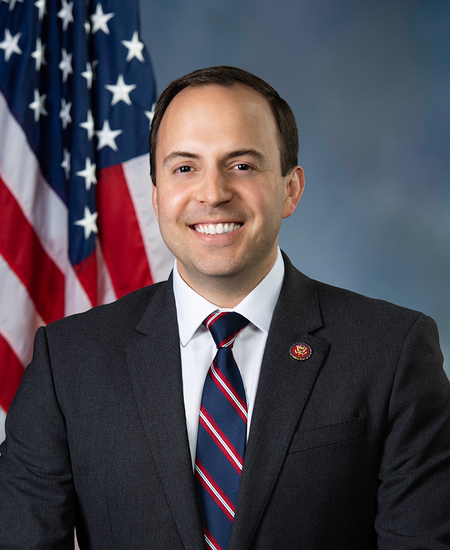
Rep. Lance Gooden
Sponsored bills
Maddy summaryHR 6619, the PATROL Act, prevents the federal government from suing states for building border barriers. It specifically blocks the Attorney General from filing civil lawsuits under the 1899 Act against states that construct physical barriers (like walls, fences, or buoys) along the border to stop illegal entry or protect state territory. The law directly affects states building such barriers and the federal government’s legal authority to challenge those actions. This is a procedural change that removes a legal obstacle for states pursuing border security measures.
Maddy summaryThis bill restricts warrantless surveillance of U.S. persons by amending the Foreign Intelligence Surveillance Act. It limits who can conduct queries of U.S. person data (capping at five personnel per FBI field office), prohibits using such queries for law enforcement without proper authorization, and requires documentation of all queries. The bill creates exceptions for emergencies, consent, and cybersecurity, but prohibits using metadata results to access protected communications. It also limits how information acquired under Section 702 can be used in criminal proceedings, requiring specific approvals for such use.
Maddy summaryHR 6573, the Protecting Military Servicemembers' Data Act of 2023, prohibits data brokers from selling, reselling, or sharing military servicemember lists to "covered nations" (as defined in federal law). It directly affects military members by preventing their personal information - contained in specialized lists created for compiling military service details - from being sold to specific foreign governments. The key mechanism bans the commercial transfer of these lists, with enforcement handled by the Federal Trade Commission and state attorneys general. The law takes effect within one year of enactment or when the FTC issues final rules, whichever comes first. This is a concrete policy change targeting data brokers' practices, not a procedural measure.
Maddy summaryHR 6588, the International Financial Institution Counter Terrorism Accountability Act, requires the U.S. Treasury Secretary to submit a detailed report to Congress within 180 days of enactment. The report must list countries supported by the World Bank and IMF, detail their anti-terrorism financing and money laundering programs, disclose spending on these efforts (including U.S. government funds over 10 years), and evaluate program effectiveness. Within 90 days of the report, the Treasury must develop recommendations to improve these efforts and direct U.S. representatives at the World Bank and IMF to advocate for their implementation. The bill directly affects the World Bank and IMF by mandating transparency and accountability in their counter-terrorism financing work.
Wings for Veterans Act This bill directs the Department of Transportation (DOT) to establish a pilot program to award grants to up to 10 flight schools to provide flight training for eligible veterans. Under the bill, an eligible veteran includes an individual who served in the active military, naval, air, or space service and who was honorably discharged, meets the requirements to obtain at least a second class medical certificate, and certifies an intent to pursue a career as a commercial pilot. Flight schools may use grants for (1) the provision of guidance and pilot training services (including tuition and flight training fees); (2) the provision of related books, training materials, and equipment; and (3) program administrative costs. DOT must submit a report to Congress on the program and related issues.
Maddy summaryHR 6578 establishes a 9-member bipartisan commission to study antisemitism in the United States. The commission will investigate current manifestations of antisemitism, evaluate government efforts to combat it, and report findings and recommendations to Congress within one year. It directly affects Jewish communities by examining incidents like the 300% surge in antisemitic activity reported by the Anti-Defamation League, and impacts federal, state, and local governments through its evaluation of existing policies. The commission terminates 120 days after submitting its report, with no predetermined conclusions or interference in ongoing law enforcement.
Maddy summaryHRES 905 is a House resolution commemorating the 200th anniversary of the Monroe Doctrine, first articulated by President James Monroe in 1823. The resolution formally recognizes the doctrine's historical significance in establishing U.S. policy against foreign colonization in the Western Hemisphere and its enduring influence on U.S. foreign policy. It resolves that the House will "commemorate" the anniversary, "reassert" the U.S. position against foreign malign influence threatening Western Hemisphere democracies, and "recognize" the doctrine's principles as a foundational element of U.S. foreign policy. This is a purely ceremonial resolution with no new policy or funding implications.
Maddy summaryThis bill requires U.S. Customs and Border Protection (CBP) to obtain fingerprints from noncitizen children under 14 years old if officers suspect they are trafficking victims upon entering the U.S. It also creates a new federal crime for adults (18+) who knowingly use a minor for entry without being a relative or guardian, punishable by fines or up to 10 years in prison. The bill mandates sharing fingerprints collected under this provision with the Department of Health and Human Services for unaccompanied minors and requires CBP to report monthly data on trafficking-related apprehensions and annual data on fingerprinting to Congress. These provisions directly affect CBP officers, unaccompanied children, and individuals suspected of exploiting minors for entry.
Maddy summaryThis bill reauthorizes the Never Again Education program, which funds Holocaust education initiatives in schools. It extends the program's funding authorization period from ending after four fiscal years to continuing annually through fiscal year 2030. The bill modifies the existing law (Public Law 116-141) by updating the funding timeline without changing program requirements or eligibility. It directly affects the existing grant program supporting educational materials and teacher training on the Holocaust. The change ensures continued federal funding for these specific educational efforts until 2030.