

Maddy summaryHR 7170, the Victims' VOICES Act, amends federal restitution law to require courts to reimburse specific expenses for individuals who assume a victim's legal rights (such as family members or advocates). It mandates that defendants pay for lost income, childcare, transportation, and related costs directly tied to attending court proceedings, participating in investigations, or accompanying victims to necessary medical care, therapy, or rehabilitation. The bill focuses on concrete reimbursement for out-of-pocket expenses incurred during legal and medical processes, rather than creating new programs. This change directly affects those stepping into a victim's role during criminal cases, ensuring they are financially supported for essential participation.
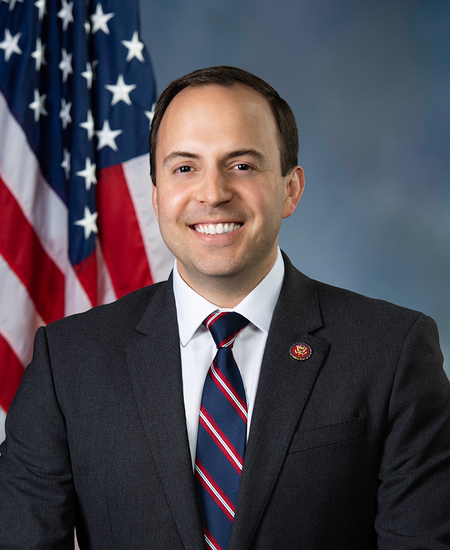
Rep. Lance Gooden
Sponsored bills
Maddy summaryThe Death Tax Repeal Act would eliminate the federal estate tax and generation-skipping transfer tax for estates of people who die on or after the bill's enactment date, and for generation-skipping transfers made after that date. It would also establish a new $10 million lifetime gift tax exemption (adjusted annually for inflation) and replace the existing gift tax rate schedule with a revised structure. These changes would primarily affect high-net-worth individuals and their heirs, as the estate tax and gift tax typically apply to large estates or gifts exceeding the new exemption threshold. The bill's provisions would take effect on the date of enactment, with transitional rules for the year the bill is signed into law.
Maddy summaryHR 788, the Stop Settlement Slush Funds Act of 2023, prohibits federal agencies from entering settlement agreements that direct payments to third parties (other than the U.S. government) unless the payment directly reimburses actual harm caused by the defendant or covers services related to the case. It requires agencies to report annually on such settlements to Congress and mandates annual audits by agency Inspectors General to ensure compliance. The law applies to all federal agencies entering settlements after its enactment and includes a 7-year sunset provision. This directly affects how federal agencies handle settlements in civil cases, limiting their ability to divert settlement funds to external entities without clear, direct justification.
Maddy summaryThe REMAIN in Mexico Act of 2024 would require the U.S. government to reinstate the Migrant Protection Protocols (MPP), a policy that forces certain asylum seekers to wait in Mexico while their U.S. immigration cases are processed. It directly affects asylum seekers from Mexico and Central America who are seeking entry to the United States and would be subject to the MPP under this law. The bill mandates implementation of the MPP as described in a 2019 policy memo by former Homeland Security Secretary Nielsen. This would reverse the current administration's decision to end the program, requiring asylum seekers to remain in Mexico during their immigration proceedings.
Maddy summaryHR 6941, the Criminalize Fleeing from Immigration Enforcement Act of 2024, would make it a federal crime for individuals to flee or evade law enforcement officers enforcing specific immigration laws, including unauthorized entry (INA §275), re-entry after deportation (INA §276), or document fraud (INA §274). It directly affects people who flee officers identified as enforcing these immigration provisions or flee immigration checkpoints. The bill would impose penalties of up to five years in prison or fines for fleeing, with up to eight years for fleeing in a vehicle exceeding the speed limit. This amendment to Title 18, U.S. Code, creates a new criminal offense without changing existing immigration enforcement procedures.
Maddy summaryHR 6934, the Families’ Rights and Responsibilities Act, protects parents' fundamental right to direct their child's upbringing, education, and health care without government interference. It prohibits government actions that substantially burden these parental rights - including withholding benefits, imposing penalties, or excluding families from programs - unless the government proves a "compelling interest" and uses the "least restrictive means." The bill explicitly applies to all federal laws and requires courts to consider parental rights as a fundamental right under the Constitution, with exceptions only for actions causing serious child injury or death. It also adds parental rights to existing legal frameworks for recovering attorney fees in court cases involving these protections.
Maddy summaryHRES 941 is a non-binding House resolution condemning the final agreement from the December 2023 UN Climate Change Conference in Dubai, which includes language urging a "transitioning away from fossil fuels." The resolution states that Congress believes the U.S. should not promote policies discouraging fossil fuels and urges the Biden administration not to implement policies aligned with the UN agreement. It references U.S. energy exports and economic benefits from fossil fuel production as context for its position. This resolution has no legal effect and serves only as a symbolic expression of congressional sentiment.
Maddy summaryThis bill would amend federal law to require the rejection of a state's electoral votes for president if a candidate nominated by a major political party did not appear on that state's ballot. It defines "major political party" using the IRS's criteria for "major party" status under the Internal Revenue Code. The change directly affects states' ability to certify presidential election results, as electoral votes from any state failing to include a major party candidate would be disqualified from counting. The bill does not alter voting procedures or ballot access but modifies the federal process for certifying electoral votes.
Maddy summaryHR 6760 prohibits U.S. federal agencies from using tax dollars to fund contributions to three specific United Nations climate programs: the Intergovernmental Panel on Climate Change (IPCC), the United Nations Framework Convention on Climate Change (UNFCCC), and the Green Climate Fund. The bill directly affects all federal departments and agencies that manage U.S. contributions to international climate initiatives. Its key mechanism is a strict ban on using any appropriated funds - whether for mandatory or voluntary payments - to support these organizations. This policy change would prevent the U.S. government from providing financial support to these entities through federal budgets.
Maddy summaryHR 6734 prohibits the use of federal funds to finalize, implement, or enforce the Bureau of Alcohol, Tobacco, Firearms, and Explosives' (ATF) proposed rule (2022R-17) defining "engaged in the business as a dealer in firearms." This bill directly affects the ATF by blocking funding for this specific regulatory rule, which was proposed in August 2023. The legislation does not create new requirements but prevents federal resources from being used to advance this particular ATF regulation.