Scope 3 Act This bill prohibits any securities law requirement that an issuer of securities must disclose the greenhouse gas emissions of its value chain (i.e., scope 3 emissions).
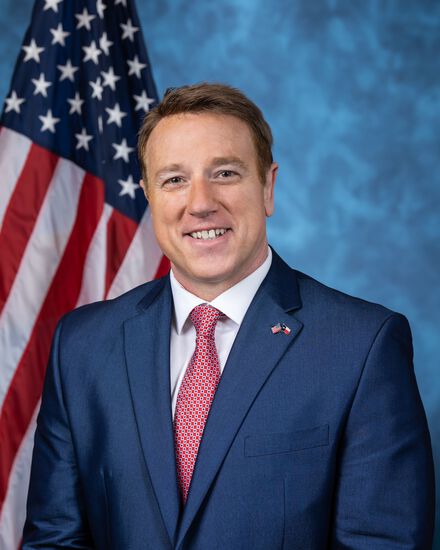
Rep. Pat Fallon
Sponsored bills
Maddy summaryThe Ukraine Human Rights Policy Act of 2023 requires the President to report to Congress within 60 days on whether a person meets criteria for sanctions related to human rights abuses in Ukraine and whether sanctions are imposed. It mandates the Secretary of State to include specific details in an annual report about human rights abuses by Russian forces in Ukraine and against forcibly relocated Ukrainians, including conditions in detention camps and the use of sexual violence as a weapon of war. The report must cover assessments of abuse methods, forced adoptions of Ukrainian children, efforts to renounce faith, and U.S. diplomatic efforts to address violations through sanctions. This bill establishes reporting requirements and congressional oversight for existing sanctions processes without creating new sanctions.
This bill prohibits the Federal Housing Finance Agency, the Federal National Mortgage Association (Fannie Mae) and the Federal Home Loan Mortgage Corporation (Freddie Mac) from implementing their January 2023-announced changes to the single-family pricing framework for fees on purchase, rate-term refinance, and cash-out refinance loans. The changes revise the fee charts that provide percentage adjustments based on a borrower's credit score and other factors.
Maddy summaryHRES 90 is a resolution demanding the Chinese government immediately release Mark Swidan, a U.S. citizen from Texas who has been detained since 2012 on drug trafficking charges. The resolution cites the UN Human Rights Council Working Group finding his detention arbitrary, with no evidence of drug offenses, passport records showing he wasn’t in China during the alleged crimes, and China denying his family contact and medical care. It specifically condemns China for blocking U.S. diplomatic access and calls on the U.S. government to prioritize Swidan’s release through diplomatic channels. The resolution focuses on the case’s documented legal and humanitarian issues, not broader policy implications.
Maddy summaryHR 2826, the Save Local Business Act, clarifies when multiple businesses can be held jointly responsible for labor laws. It amends the National Labor Relations Act and Fair Labor Standards Act to state that a business is only a joint employer if it directly controls key employment terms like hiring, pay, schedules, or discipline for another business's workers. This directly affects franchisors, contractors, and similar business models that might previously have been deemed joint employers under broader interpretations. The bill aims to limit joint employer liability to cases where one business has clear, day-to-day control over essential worker conditions.
Maddy summaryHR 734, the Protection of Women and Girls in Sports Act of 2023, amends Title IX to prohibit federally funded schools and athletic programs from allowing individuals assigned male at birth to participate in women's or girls' sports teams. The bill defines "sex" for this purpose as "reproductive biology and genetics at birth," making it a violation of federal law to permit such participation in designated women's or girls' programs. It allows males to train with women's teams only if no female is deprived of a roster spot, competition opportunity, scholarship, or other benefit tied to the team. This law directly affects public and private schools receiving federal financial assistance that operate athletic programs.
Maddy summaryHR 2743 prohibits large financial institutions (over $100 billion in assets) from denying banking services to lawful businesses based on subjective political reasons, industry type, or reputational concerns. It requires these institutions to use objective, risk-based assessments for service decisions and provide written justifications for denials. The law applies to banks, credit unions, and payment networks, with civil penalties for violations including fines up to $10,000 per incident. It specifically ensures businesses operating legally under federal law receive fair access to financial services without discrimination. The bill mandates that denials be based on documented risk factors, not political bias or category-based exclusion.

Homeland and Cyber Threat Act or the HACT Act This bill allows claims in federal or state court against foreign states that conduct or participate in cyberattacks against U.S. nationals.
Maddy summaryThe Freedom from Government Competition Act of 2023 requires federal agencies to obtain most goods and services from private companies through competitive bidding instead of providing them through government operations. Exceptions apply only when the law mandates government provision, for national defense or homeland security, for inherently governmental functions, or when no private source exists. Agencies must conduct competitive analyses to confirm private sector provision offers the best value to taxpayers and submit annual reports to Congress with a 5-year plan to transition commercial activities to private companies. This policy directly affects federal agencies and private sector providers by shifting procurement responsibilities away from government-run services.
Maddy summaryHR 2647, the Restore Public Health Institution Trust Act of 2023, requires the U.S. Comptroller General to produce a report within 120 days of enactment examining the Centers for Disease Control and Prevention's (CDC) public health messaging and guidance during the pandemic. The report must analyze the data used by the CDC, assess how inconsistent messaging affected public trust and vaccine uptake (including for school-age children), and evaluate potential influence from outside groups like teachers unions. It will also provide recommendations to improve the CDC's future communication and decision-making processes. This bill does not change CDC policies but mandates an independent review to address concerns about public health communication. The report will be submitted to specific congressional committees focused on health, education, and oversight.