

This resolution honors and recognizes the patriotism and contributions made by generations of veterans service organizations, veteran advocacy groups, and volunteers and commends the members of such organizations for their dedicated service to members of the Armed Forces, veterans, their families, and their communities. The resolution also encourages the people of the United States to promote awareness of the contributions and dedication of members of veterans service, organizations, veteran advocacy groups, and volunteers to members of the Armed Forces, veterans, and their families. Additionally, the resolution calls on citizens to follow the example of such groups and volunteer support and services to those who have served the country.
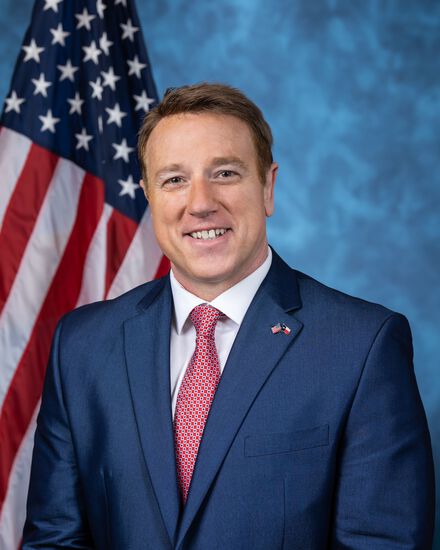
Rep. Pat Fallon
Sponsored bills
Maddy summaryHR 5084 designates the U.S. Postal Service facility at 1106 Main Street in Bastrop, Texas, as the "Sergeant Major Billy D. Waugh Post Office." This bill updates all official federal references - including laws, maps, and documents - to use the new name for the location. It directly affects the Bastrop post office and federal records referencing it, without altering postal services or policies. The change is purely ceremonial and procedural, honoring Sergeant Major Billy D. Waugh through the facility's name.
Maddy summaryHR 5073, titled the "Promoting Domestic Energy Production Act," is a tax code amendment affecting oil and gas companies. It changes how businesses calculate adjusted financial statement income by removing specific deductions related to intangible drilling and development costs from their financial reports. The bill requires companies to disregard depreciation and depletion expenses taken into account on their financial statements for these costs when computing taxable income. This applies to tax years beginning after December 31, 2022, directly impacting oil and gas producers who use these accounting methods. The bill does not create new energy policies but alters tax accounting rules for the industry.
Maddy summaryThe ACES Act of 2023 requires ByteDance (TikTok's Chinese parent company) to divest all U.S. assets related to TikTok - including user data collected in the United States - within 90 days of enactment, with possible 30-day extensions. It mandates weekly compliance reports to CFIUS, a final data destruction certification, and prohibits U.S. app stores or internet services from supporting TikTok operations after a 45-day grace period. The bill directly affects ByteDance and TikTok, forcing separation of U.S. operations from Chinese ownership to address national security concerns. CFIUS oversees verification, including facility inspections and audits, to ensure full compliance with the divestment requirements.
Maddy summaryHR 4859, the Strategic Petroleum Reserve Security Assessment Act, requires the U.S. Secretary of Energy to submit annual reports to Congress on physical or cybersecurity incidents at Strategic Petroleum Reserve (SPR) storage or related facilities. The reports must detail incident dates, resolution steps, and the local, state, and federal agencies involved in addressing each incident. This bill directly affects the Department of Energy (which must prepare the reports) and Congress (which receives them). The key provision mandates these assessments annually, beginning 180 days after the bill's enactment, to improve transparency about SPR security events. The bill does not change SPR operations but focuses on documenting and reporting security incidents.
This resolution condemns Iran for the 1988 massacre of political prisoners. It also urges the Biden Administration and U.S. allies to publicly condemn the massacre and to pressure Iran to provide information to the families of the victims.
Maddy summaryHR 4999, the ALYSSA Act, requires school districts receiving federal education funds to install silent panic alarms in every elementary and secondary school. These alarms, defined as manual devices for signaling life-threatening emergencies (like active shooters or lockdowns), must be used to alert law enforcement during security crises. The bill amends the Elementary and Secondary Education Act to make this requirement a condition for receiving federal funds, directly affecting all local educational agencies that receive such funding. It mandates that schools be prepared for security emergencies through these silent alarm systems, with no mention of funding specifics or implementation details beyond the basic requirement.
Maddy summaryHR 3933, the TAP Promotion Act, requires standardized presentations about Veterans Affairs (VA) benefits during military transition counseling for service members separating from the armed forces. These presentations must be approved by the VA, delivered by authorized veterans service organizations (VSOs), and include information on how VSOs assist with VA claims - without encouraging membership in specific organizations. The bill mandates a one-hour limit per presentation and requires the VA to submit annual reports to Congress detailing which VSOs presented, attendance numbers, and recommendations for improvement. This policy directly affects service members preparing for civilian life and the VSOs providing these transition resources.
Maddy summaryThis bill directs the U.S. Treasury to mint commemorative coins marking the Marine Corps' 250th anniversary in 2025. It authorizes three coin types: $5 gold coins (max 50,000), $1 silver coins (max 400,000), and half-dollar coins (max 750,000), with surcharges of $35, $10, and $5 respectively. The surcharge proceeds will fund the Marine Corps Heritage Center's educational programs, with no net cost to taxpayers as the Treasury must recover all minting costs through the surcharges. The coins can only be issued during 2025, and the Treasury must ensure all costs are covered before distributing funds to the Heritage Foundation.
Maddy summaryThe Taiwan Tax Agreement Act of 2023 authorizes the President to negotiate a tax agreement with Taiwan through the American Institute in Taiwan (AIT), aiming to reduce double taxation and prevent tax evasion for U.S. and Taiwanese businesses and investors engaged in cross-border trade and investment. The agreement must follow standard U.S. tax treaty practices (like the 2016 Model Convention), exclude entities based in China or without a U.S. tax treaty, and include anti-evasion measures. Before taking effect, Congress must approve the agreement via a specific concurrent resolution that simply states approval without debate or amendments.