

Medicare for America Act of 2019 [ sic ] This bill establishes several health insurance programs and otherwise modifies certain requirements relating to health care coverage, costs, and services. In particular, the bill establishes a national health insurance program to be administered by the Department of Health and Human Services (HHS). Among other requirements, the program must (1) cover all U.S. residents; (2) cover specified items and services, including hospital services, prescription drugs, dental services, and home- and community-based long-term care; and (3) be fully implemented in 2026. HHS must also offer a transitional public health option that provides certain minimum coverage through health insurance exchanges in 2024 and 2025. The bill also makes a series of other changes to health care and tax provisions. For example, the bill (1) allows federal funds to be used for abortions; (2) sunsets a specified tax reform law that, among other things, repealed the penalty for failing to maintain minimum essential health coverage; and (3) prohibits excessive prices for prescription drugs and medical devices, as determined by a newly established federal regulatory board.
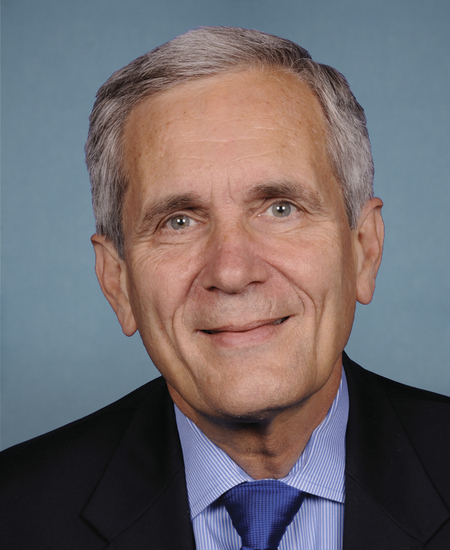
Rep. Lloyd Doggett
Sponsored bills
Expanding the Voluntary Opportunities for Translations in Elections Act or the Expanding the VOTE Act This bill expands access to voting materials for individuals with limited proficiency in the English language, including by establishing incentive grants for states and political subdivisions to provide translated voting materials. Additionally, the bill directs the Government Accountability Office to study the impact of (1) reducing the threshold requirement under Section 203 of the Voting Rights Act of 1965, and (2) expanding the definition of language minorities to include native speakers of additional languages.
Big Cat Public Safety Act This act revises requirements governing the trade of big cats (i.e., species of lion, tiger, leopard, cheetah, jaguar, or cougar or any hybrid of such species) under the Lacey Act to limit the possession, breeding, and exhibition of big cats. The Lacey Act prohibits any person from importing, exporting, buying, selling, transporting, receiving, or acquiring big cats across state lines or the U.S. border. However, some exemptions are provided for certain entities, such as universities and wildlife sanctuaries. (Sec. 3) The act expands the Lacey Act prohibitions to include a prohibition on possessing or breeding big cats. Breeding means facilitating propagation or reproduction (whether intentionally or negligently), or failing to prevent propagation or reproduction. Owners of big cats that were born before this act's enactment may keep their big cats, but the owners must register them with the U.S. Fish and Wildlife Service. The act modifies the list of entities that are exempt from prohibitions to export, buy, sell, transport, receive, acquire, possess, or breed big cats. The modified list includes exemptions for entities or facilities exhibiting animals to the public if they (1) hold a Class C license in good standing under the Animal Welfare Act, and (2) do not allow individuals to come into direct physical contact with big cats. However, direct contact is allowed if the individual is a trained professional, a veterinarian, or directly supporting conservation programs that do not involve commercial activities and meet other specified restrictions. (Sec. 4) A person who knowingly violates the act must be fined not more than $20,000, or imprisoned for no more than five years, or both. The act considers each violation to be a separate offense. The offense must be deemed to have been committed not only in the district where the violation first occurred, but also in any district in which the defendant may have taken or been in possession of the prohibited wildlife species. (Sec. 5) The act extends forfeiture provisions to fish, wildlife, or plants that are bred or possessed; thus, big cats bred or possessed in violation of the act are subject to forfeiture. (Sec. 6) The Department of the Interior must issue regulations to implement this act.
Puerto Rico Status Act This bill provides for a plebiscite to be held on November 5, 2023, to resolve Puerto Rico's political status. Specifically, such plebiscite shall offer eligible voters a choice of independence, sovereignty in free association with the United States, or statehood. The Puerto Rico State Elections Commission shall carry out a nonpartisan voter education campaign through traditional paid media and make available at all voting locations voter education materials related to the plebiscites, and invite national and international election observers to ensure transparency and confidence in the electoral process. All voter educational materials and ballots used to carry out this bill shall be made available in English and Spanish. The bill sets forth transition and implementation provisions for each choice offered in the plebiscite.
This bill authorizes the government of France to establish a commemorative work on federal land in the District of Columbia to honor the contributions of Jean Monnet in restoring peace between European nations and establishing the European Union. Such government shall be responsible for the acceptance of contributions for, and the payment of the expenses of, the establishment and maintenance of the commemorative work. Federal funds may not be used to pay any expense for the establishment of the commemorative work. The commemorative work shall be established in accordance with the Commemorative Works Act, with exceptions.
VA Employee Fairness Act of 2021 This bill repeals provisions excluding any matter or question concerning professional conduct or competence; peer review; or the establishment, determination, or adjustment of employee compensation from the applicability of collective bargaining rights for Veterans Health Administration employees.
Respect for Marriage Act This act provides statutory authority for same-sex and interracial marriages. Specifically, the act replaces provisions that define, for purposes of federal law, marriage as between a man and a woman and spouse as a person of the opposite sex with provisions that recognize any marriage between two individuals that is valid under state law. (The Supreme Court held that the current provisions were unconstitutional in United States v. Windsor in 2013.) The act also replaces provisions that do not require states to recognize same-sex marriages from other states with provisions that prohibit the denial of full faith and credit or any right or claim relating to out-of-state marriages on the basis of sex, race, ethnicity, or national origin. (The Supreme Court held that state laws barring same-sex marriages were unconstitutional in Obergefell v. Hodges in 2015; the Court held that state laws barring interracial marriages were unconstitutional in Loving v. Virginia in 1967.) The act allows the Department of Justice to bring a civil action and establishes a private right of action for violations. The act does not (1) affect religious liberties or conscience protections that are available under the Constitution or federal law, (2) require religious organizations to provide goods or services to formally recognize or celebrate a marriage, (3) affect any benefits or rights that do not arise from a marriage, or (4) recognize under federal law any marriage between more than two individuals.
International Violence Against Women Act of 2022 This bill requires a U.S. global strategy to prevent and respond to violence against women and girls. The bill establishes in the Department of State an Office of Global Women's Issues, which shall be headed by an Ambassador-at-Large for Global Women's Issues. The Ambassador-at-Large shall (1) coordinate U.S. government efforts regarding gender equality and the advancement of women and girls in foreign policy, and (2) develop or update periodically a U.S. global strategy to prevent and respond to gender-based violence. The bill establishes in the U.S. Agency for International Development the position of Senior Coordinator for Gender Equality and Women's Empowerment who shall coordinate policies, programs, and funding regarding gender equality and women's empowerment.
This concurrent resolution recognizes the disparity between wages paid to Latina women, and its impact on women, families, and the nation and reaffirms Congress' commitment to supporting equal pay and to narrowing the gender wage gap.
Maddy summaryHR 7075 designates a specific triangular area in Washington, D.C. (bounded by 22nd Street NW, P Street NW, and Florida Avenue NW) as "Ukrainian Independence Park," including National Park Service reservations 57D and 360 (which contains the Taras Shevchenko Memorial). The bill updates all federal references to this area to use the new name and authorizes signage highlighting Ukraine's independence and U.S.-Ukraine solidarity. This is a procedural designation bill with no substantive policy changes, solely renaming a park area.