

Maddy summaryThis bill amends the federal tax code to create a "safe harbor" for certain Texas school trust funds. It specifies that these state-created funds - which hold nonfinancial assets (like land or buildings) and are used solely to support public schools or essential government functions - will not be classified as "investment property" under tax law. The provision applies to funds already meeting strict criteria as of 1986, ensuring their tax-exempt status remains intact. It directly affects existing Texas perpetual trust funds that support public elementary and secondary schools. The bill does not address new construction costs or funding mechanisms, but rather clarifies the tax treatment of pre-existing school funding structures.
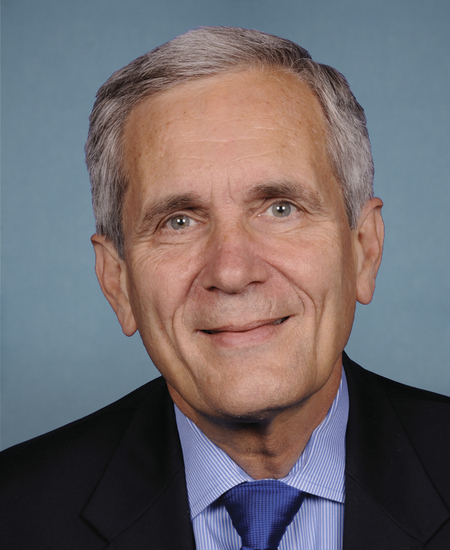
Rep. Lloyd Doggett
Sponsored bills
Cover Outstanding Vulnerable Expansion-eligible Residents Now Act or the COVER Now Act This bill establishes a demonstration program to allow local governments to provide health benefits to the Medicaid expansion population in states that have not expanded Medicaid. Under the program, local governments may provide coverage for individuals who are newly eligible for Medicaid under the Patient Protection and Affordable Care Act (i.e., the Medicaid expansion population) for a maximum of 10 years, or until their respective states expand Medicaid. The bill provides a 100% federal matching rate for the first three years of program participation. The bill prohibits states from taking certain actions against participating localities, such as withholding funding, increasing taxes, or restricting provider participation. States that violate these requirements are subject to certain funding penalties.
American Music Fairness Act of 2022 This bill establishes that the copyright holder of a sound recording shall have the exclusive right to perform the sound recording through an audio transmission and addresses other related issues. (Currently, the public performance right only covers performances through a digital audio transmission in certain instances, which means that nonsubscription terrestrial radio stations generally do not have to secure a license to publicly perform a copyright-protected sound recording.) Under the bill, a nonsubscription broadcast transmission must have a license to publicly perform such sound recordings. The Copyright Royalty Board must periodically determine the royalty rates for such a license. When determining the rates, the board must base its decision on certain information presented by the parties, including the radio stations' effect on other streams of revenue related to the sound recordings. Terrestrial broadcast stations (and the owners of such stations) that fall below certain revenue thresholds may pay certain flat fees, instead of the board-established rate, for a license to publicly perform copyright-protected sound recordings.
Environmental Justice For All Act This bill establishes several environmental justice requirements, advisory bodies, and programs and modifies the scope of environmental review under the National Environmental Policy Act of 1969. The bill sets forth provisions to address the disproportionate adverse human health or environmental effects of federal laws or programs on communities of color, low-income communities, or tribal and indigenous communities. It also prohibits disparate impacts on the basis of race, color, or national origin as discrimination. Aggrieved persons may seek legal remedy when faced with such discrimination. In addition, the bill directs agencies to follow certain requirements concerning environmental justice. For example, agencies must prepare community impact reports that assess the potential impacts of their actions on environmental justice communities under certain circumstances. It also raises coal, oil, and gas royalty rates to create a funding source to support fossil fuel-dependent communities and displaced workers as they transition away from fossil fuel industries. Additionally, the bill creates a variety of advisory bodies and positions, such as the White House Environmental Justice Interagency Council. Among other things, the council must issue an environmental justice strategy. It also establishes requirements and programs concerning chemicals or toxic ingredients in certain products. For example, the bill (1) requires certain products (e.g., cosmetics) to include a list of ingredients or warnings; and (2) provides grants for research on designing safer alternatives to chemicals in certain consumer, cleaning, toy, or baby products that have an inherent toxicity or that are associated with chronic adverse health effects. Finally, it creates a variety of funding programs, such as a grant program to enhance access to park and recreational opportunities in urban areas.
This act designates the facility of the United States Postal Service located at 651 Business Interstate Highway 35 North Suite 420 in New Braunfels, Texas, as the Bob Krueger Post Office.
This act designates the facility of the United States Postal Service located at 4110 Bluebonnet Drive in Stafford, Texas, as the Leonard Scarcella Post Office Building.
21st Century President Act This act revises the definition of immediate family for purposes of a criminal offense involving a threat to kill, kidnap, or inflict bodily harm on a former President or a member of the immediate family of a former President. Specifically, it replaces gender-specific references to a former President's wife and widow with the gender-neutral terms spouse and surviving spouse .
This act designates the facility of the United States Postal Service located at 4020 Broadway Street in Houston, Texas, as the Benny C. Martinez Post Office Building.
Presidential Tax Filings and Audit Transparency Act of 2022 This bill requires the Internal Revenue Service (IRS) to conduct an examination to determine the correctness of a Presidential income tax return as rapidly as practicable after it is filed. The IRS must disclose and make publicly available (on the internet) an initial report, periodic reports, and a final report on the examination of such tax returns. The final report must include the date on which the IRS examination of the return was completed, a list of audit materials, and a description of each proposed adjustment to a return and any controversy relating to its examination. This disclosure of tax return information is an exception to the general rule of confidentiality of taxpayer returns. The bill provides criteria for approving a request for an extension of the filing of a tax return and for failing to file a return within the required time period. The bill defines Presidential income tax return as any relevant income tax return of (1) a president while the president is in office, (2) the spouse of a president, (3) a corporation or partnership controlled by a president or a president's spouse, and (4) the estate of a president or a president's spouse.
Uyghur Forced Labor Prevention Act This bill imposes various restrictions related to China's Xinjiang Uyghur Autonomous Region, including by prohibiting certain imports from Xinjiang and imposing sanctions on those responsible for human rights violations there. Goods manufactured or produced in Xinjiang shall not be entitled to entry into the United States unless U.S. Customs and Border Protection (1) determines that the goods were not manufactured by convict labor, forced labor, or indentured labor under penal sanctions; and (2) reports such a determination to Congress and to the public. The President shall periodically report to Congress a list of foreign entities and individuals knowingly facilitating (1) the forced labor of Uyghurs, Kazakhs, Kyrgyz, and members of other Muslim minority groups in Xinjiang; and (2) efforts to contravene U.S. laws regarding the importation of forced labor goods from Xinjiang. The President shall impose property-blocking sanctions on the listed individuals and entities and impose visa-blocking sanctions on the listed individuals. Securities issuers required to file annual or quarterly reports with the Securities Exchange Commission shall disclose in such reports instances in which the issuer knowingly engaged in certain activities related to Xinjiang, such as working with an entity building detention facilities or surveillance systems there. After such a disclosure, the President shall determine whether to investigate if sanctions or criminal charges are warranted. The Forced Labor Enforcement Task Force and the Department of State shall report to Congress strategies to address forced labor in Xinjiang or any other part of China. The State Department shall also report to Congress a determination of whether the treatment of Muslim groups in Xinjiang constitutes crimes against humanity or genocide under U.S. law.