

Stopping Border Surges Act This bill modifies immigration law provisions relating to unaccompanied alien minors and to asylum seekers. The bill requires the Department of Homeland Security (DHS) to repatriate certain unaccompanied, inadmissible alien children, generally those not at risk of being trafficking victims nor having a fear of persecution. Currently, only inadmissible unaccompanied aliens from neighboring countries are subject to repatriation, and DHS has discretion whether to repatriate. When the Department of Health and Human Services releases an unaccompanied child to an individual, it shall provide DHS with certain information about that individual, including Social Security number and immigration status. The bill requires a stricter standard to find a credible fear of persecution and imposes additional rules on credible fear interviews. If an alien is granted asylum because of fear of persecution in a country, the alien shall be deemed to have renounced asylum status by returning to that country, if there has been no change in the country's conditions. The bill also (1) expands the definition of what constitutes a frivolous asylum application, (2) imposes additional limitations on eligibility for asylum, (3) shortens the deadline for applying for asylum, and (4) extends the time period an alien seeking asylum must wait before receiving employment authorization. Any individual who knowingly and willfully makes materially false statements or uses fraudulent documents in asylum-related proceedings shall be fined or imprisoned up to 10 years, or both.
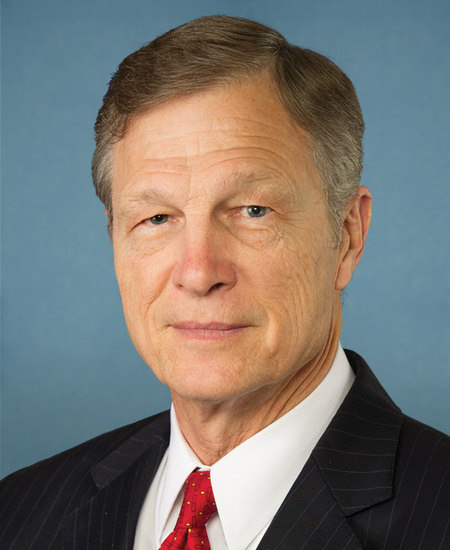
Rep. Brian Babin
Sponsored bills
Maddy summaryHR 103, the Congressional Border Security Assessment Act, grants members of Congress and their staff access to Indian reservations bordering Mexico that include at least 50 contiguous miles of the U.S.-Mexico border. This access is specifically for gathering information to assess national security, public safety, and border security needs. The bill allows entry onto reservation roadways and easements but does not alter existing border security policies or funding. It directly affects tribal lands along the border and establishes a procedural mechanism for congressional oversight.
Maddy summaryHR 45 (FIND Act) requires federal government contractors to certify they do not discriminate against firearm businesses (including manufacturers, dealers, and trade associations) in their policies or practices. The bill mandates that contractors and subcontractors (for contracts over 10% of the prime contract value) certify they have no discriminatory policies and will not adopt them during the contract term. Violations could lead to contract termination and potential debarment. This applies to all federal procurement contracts awarded after the bill's enactment, excluding sole-source contracts. The law aims to ensure firearm businesses are treated equally in government contracting without restricting legitimate business criteria like creditworthiness or legal compliance.
Maddy summaryThis bill requires Congress to approve major federal regulations before they take effect. It would mandate that agencies submit detailed reports including cost-benefit analyses, economic impact assessments, and other information to Congress before implementing significant regulations. Major rules - defined as those with at least $100 million annual economic impact or significant effects on costs, competition, or employment - would need a joint resolution of approval from Congress within 70 session days. Nonmajor rules would follow a less stringent disapproval process. The bill aims to increase legislative oversight of the regulatory process, requiring Congress to formally review and approve rules that significantly impact the economy or public regulations.
Maddy summaryThis bill (HR 6244) designates the U.S. Postal Service facility at 1535 East Los Ebanos Boulevard in Brownsville, Texas, as the "1st Lieutenant Andres Zermeno Post Office Building." It updates all federal references to the building to reflect this new name. The bill has no policy provisions or funding changes - it solely honors 1st Lieutenant Andres Zermeno through a commemorative name designation. The building will now be officially referred to by this name in all government documents and records.
Maddy summaryThis bill names the Department of Veterans Affairs community-based outpatient clinic in Plano, Texas, as the "U.S. Congressman Sam Johnson Memorial VA Clinic." It changes the facility's official designation in all government documents, maps, and references, honoring the late Congressman Sam Johnson. The bill does not alter the clinic's services, funding, or operations - only its name. This is a ceremonial designation with no policy or programmatic impact.
Maddy summaryThe ELITE Vehicles Act (HR 10516) repeals three federal tax credits for electric vehicles: one for new clean vehicles (Section 30D), one for previously-owned clean vehicles (Section 25E), and one for commercial clean vehicles (Section 45W). It also removes tax credit eligibility for electric vehicle recharging infrastructure under Section 30C. These changes take effect 30 days after the bill’s enactment, eliminating tax benefits for individuals and businesses purchasing or contracting for eligible electric vehicles or charging equipment after that date. The bill directly affects consumers, dealers, and manufacturers who previously claimed these credits.
Maddy summaryHR 7687, the NASA SPREES Act, allows other federal agencies to transfer existing funds designated for scientific or engineering research or education to NASA, subject to agency approval. The bill enables NASA to merge these transferred funds with its own appropriations for awarding grants or cooperative agreements focused on research, education, and facilities. It requires NASA to annually report on all such transfers - including the source agency, amounts, and intended uses - and submit a comprehensive report to Congress after three years detailing the program's effectiveness and challenges. This policy change directly affects NASA and other federal agencies that manage research funding, streamlining interagency collaboration without creating new spending.
Maddy summaryHR 2367, the Truck Parking Safety Improvement Act, creates a federal grant program to address commercial truck parking shortages on highways. It provides competitive grants (totaling $175M-$320M over three years) for projects like building new rest areas, expanding parking at ports or truck stops, or improving safety at existing facilities. The program requires all funded parking to be free, publicly accessible to all truck drivers, and maintained without user fees. This directly affects commercial truck drivers, motor carriers, and highway safety by aiming to improve parking access, reduce traffic congestion, and enhance safety on federal-aid highways.
Maddy summaryThis bill requires federal agencies to assess whether energy policies and rules disproportionately affect at-risk communities, including low-income, minority, rural, elderly, and Native American communities. Agencies must conduct studies before actions like leasing federal land or issuing new energy rules, and include an "energy poverty statement" certifying the policy won't cause energy poverty. Within one year, the Comptroller General and OMB must jointly report to Congress on how current policies impact these communities and recommend solutions to reduce energy poverty. The law aims to prevent energy poverty by mandating concrete evaluations of policy impacts on vulnerable groups.