Unnecessary Agency Regulations Reduction Act of 2021 This bill requires the Office of Information and Regulatory Affairs to annually report a list of major rules (i.e., rules with a significant economic impact, cost to consumers, or adverse effects on competition) that it recommends should be consolidated or repealed because they are outdated, duplicative, or incur excessive compliance costs. Congress must review the list to determine, and recommend by joint resolution, any such rules to consolidate or repeal.
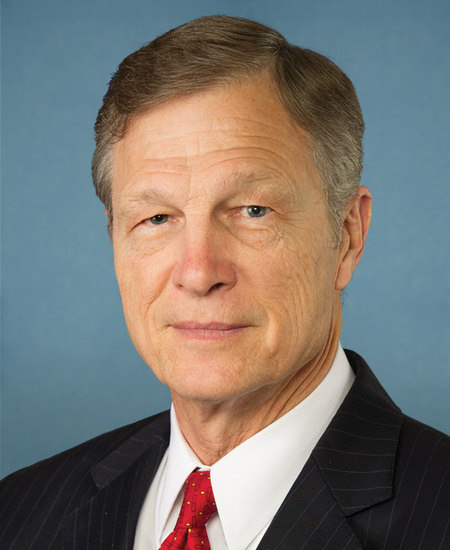
Rep. Brian Babin
Sponsored bills
Resident Education Deferred Interest Act or the REDI Act This bill allows borrowers in medical or dental internships or residency programs to defer student loan payments until the completion of their programs.
Foreign Gain-of-Function Research Prevention Act of 2021 This bill prohibits the use of federal funds to conduct or support gain-of-function research involving potential pandemic pathogens by China, Russia, Iran, North Korea, or other foreign adversaries. Gain-of-function research is any research that is anticipated to confer an attribute on a pathogen to enhance its pathogenicity or transmissibility in mammals. If the Department of State finds that an entity has used funds for prohibited research, the entity may not receive any federal funding for a period of five years.
Vote Outcome Transparency in Elections Act or the VOTE Act This bill establishes certain requirements for counting ballots in federal elections. Specifically, the bill requires the appropriate state or local election official, within one hour after the closure of a polling place on election day, to submit a report to the chief state election official. The report must document (1) the total number of voted ballots in the possession of the state or local official, and (2) the total number of voted ballots that have been tabulated for the election. Within one hour after the closure of polling places on election day, the chief state election official must (1) submit a final report to the chief executive of the state, and (2) make the final report publicly available on a government website. The bill also requires each state and local jurisdiction to ensure that voted ballots delivered by postal mail are postmarked, signed, or otherwise indicated as delivered by the U.S. Postal Service.
Telling Everyone the Location of data Leaving the U.S. Act or the TELL Act This bill requires online sellers or distributors of mobile applications that maintain and store information in China to conspicuously disclose to users that such information is stored in China and whether the information is accessible by the Chinese Communist Party or a Chinese state-owned entity.
Campus Free Speech Restoration Act This bill addresses expressive activities (e.g., peacefully assembling, distributing literature, or carrying signs) on college campuses. First, the bill generally prohibits a public institution of higher education (IHE) that participates in federal student-aid programs from restricting noncommercial expressive activities on campus. Further, the bill prohibits a public IHE from receiving federal funds if the Department of Education determines that the public IHE (1) maintains a policy that infringes upon the expressive rights of students; or (2) maintains or enforces time, place, or manner restrictions on expressive activities, except in limited circumstances. In addition, the bill prohibits retaliation against an individual because the individual reported or complained about restrictions on expressive activities or participated in an investigation or hearing. The bill also requires a private IHE that receives federal funds to provide students with its policies related to expressive rights. The bill also establishes a framework for investigating complaints and for IHEs to regain eligibility for federal funds.
No Student Exchanges with North Korean Schools Act This bill prohibits an institution of higher education (IHE) from receiving certain federal education funds if the IHE has an agreement in effect with an IHE or other organization that is directly funded by the North Korean government.
This bill prohibits the United States from rejoining the Joint Comprehensive Plan of Action (JCPOA) until the President makes specified certifications regarding Iran, including actions taken by Iran relating to its nuclear program. The JCPOA is an agreement, signed by Iran and several other world powers (including the United States), that places restrictions on Iran's nuclear program in exchange for certain sanctions relief. The United States withdrew from the JCPOA in 2018.
This bill provides for the award of Congressional Gold Medals to the U.S. Capitol Police and the Metropolitan Police Department of the District of Columbia in recognition of the law enforcement agencies that protect the U.S. Capitol.
Compensation for Americans Act of 2021 This bill requires the Department of State to negotiate with China to secure compensation for China's distortion of information related to the spread of COVID-19. The bill also contains other China-related provisions, such as those imposing sanctions on certain Chinese individuals and entities. As part of such negotiations, the President shall (1) freeze Chinese assets subject to U.S. jurisdiction; (2) suspend the required review of any proposed acquisition of a U.S. entity by a Chinese entity; (3) impose sanctions on Chinese entities in certain industries, such as artificial intelligence and pharmaceuticals; (4) impose sanctions on various individuals, including Chinese government officials and Chinese citizens responsible for stealing intellectual property from U.S. entities; and (5) prohibit using federal funds to procure goods manufactured or sourced from a Chinese company, if such goods pose a supply chain risk to U.S. national security. The President may terminate such prohibitions and sanctions if China and the United States come to an agreement regarding compensation related to COVID-19. The Department of the Treasury shall establish a public repository with information about entities that are owned, financed, or controlled by the Chinese government. Other provisions in this bill include (1) imposing export controls on telecommunications equipment that would help China carry out censorship or surveillance, (2) banning researchers affiliated with China's military from obtaining visas, and (3) requiring U.S. World Bank representatives to end China's eligibility for World Bank assistance.