

Balancing the Rights Of Web Surfers Equally and Responsibly Act of 2021 or the BROWSER Act of 2021 This bill establishes information privacy protections that require broadband internet access services and certain websites or mobile applications to provide users with the ability to opt-in or opt-out of the using, disclosing, or accessing of their user information depending on the sensitivity of the information. Covered service providers must provide opt-in approval through express user consent to use sensitive information such as financial data, health information, browsing history, or other specified personally identifiable information. Such service providers must obtain opt-out approval for the use of non-sensitive user information by a user failing to object to such use after being provided notice of the provider's privacy policies. Service providers also must allow users to opt-in or opt-out of such approval at any time. The bill permits service providers to use and disclose user information without approval for specified purposes, including for services necessary for provision of the service and to initiate, render, bill, and collect for the service. The bill further prohibits providers from conditioning access to service on users' agreeing to waive their privacy rights.
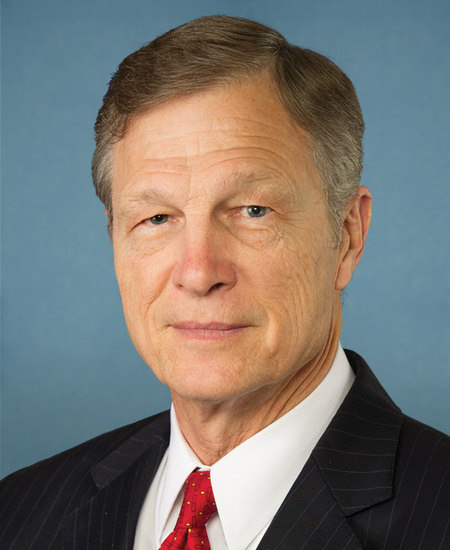
Rep. Brian Babin
Sponsored bills
Recognizing and Ensuring Taxpayer Access to Infrastructure Necessary for GPS and Satellite Communications Act of 2021 or the RETAIN GPS and Satellite Communications Act of 2021 This bill places conditions on entities that deploy commercial terrestrial operations in the 1525-1559 megahertz (MHz) band or the 1626.5-1660.6 MHz band of the electromagnetic spectrum. These frequency bands are traditionally used for satellite operations, including the global positioning system (GPS). On April 19, 2020, the Federal Communications Commission approved an application for a low-power 5G wireless network in such bands despite concerns about the network interfering with GPS and other operations on adjacent bands. In its application, the entity committed to update, repair, or replace federal devices, platforms, or systems affected by its operations. This bill requires an entity (including the previously approved entity) that deploys terrestrial operations in the designated bands to reimburse a federal agency or a person for certain costs if the entity's operations interfere with or otherwise affect the operations of the agency or person. These costs may include necessary upgrades, repairs, or replacements to satellite communication devices and related equipment, as well as expenses for engineering studies and labor. Reimbursable costs owed by the entity transfer to any assignee, successor, or purchaser of its license to deploy terrestrial operations in the designated bands. The bill also expressly authorizes federal agencies to directly accept from the entity reimbursements for incurred costs.
Securing Our Border States Act This bill requires the Department of the Treasury to provide grants to states for building barriers and related infrastructure along the U.S.-Mexico border. Within 30 days of receiving a certification from a border state that it intends to use such grant funding for constructing a border barrier, Treasury must disburse funds to the state, with the amount based on the number of miles of border in that state that currently does not have a border barrier. The bill provides $22 billion of funding for this grant program and permanently rescinds $22 billion from funds made available for various assistance programs related to COVID-19.
This resolution denounces socialism and opposes the implementation of socialist policies in the United States.
Protecting Life on College Campus Act of 2021 This bill prohibits the award of federal funds to an institution of higher education (IHE) that hosts or is affiliated with a school-based service site that provides abortion drugs or abortions to its students or to employees of the IHE or the site. An IHE that hosts or is affiliated with a site must, in order to remain eligible for federal funds, annually certify that the site does not provide abortion drugs or abortions to students or employees.
Entrepreneurs Need Timely Replenishment (for) Eating Establishments Act or the ENTRÉE Act This bill provides FY2021 supplemental appropriations for the Restaurant Revitalization Fund and modifies requirements related to administration of the fund. The fund was established in response to COVID-19 to make grants to eligible food and beverage purveyors for covering specified costs such as payroll, operational expenses, and paid sick leave. The bill correspondingly rescinds unobligated amounts previously made available for the Economic Injury Disaster Loan Program and coronavirus state and local fiscal recovery funds. Further, the bill requires the Small Business Administration (SBA) to (1) review and process grant applications in the order in which they are received; (2) impose requirements on applicants that reduce waste, fraud, and abuse; and (3) submit and report monthly on an oversight and audit plan outlining the SBA's policies, procedures, and activities with respect to these grants.
This bill prohibits the use of federal funds for international travel expenses of the Secretary of State until all passport agencies are fully reopened, routine passport service takes less than eight weeks and expedited service takes less than six weeks, and the Secretary submits recommendations to improve passport services and processing times.
IRS Customer Service Improvement Act This bill prohibits the use of official time for specified union activities by employees of the Internal Revenue Service during the period each year beginning on February 12 and ending on April 15.
Processing Revival and Intrastate Meat Exemption Act or the PRIME Act This bill expands the exemption of custom slaughtering of animals from federal inspection requirements. Under current law, the exemption applies if the meat is slaughtered for personal, household, guest, and employee uses. The bill expands the exemption to include meat that is slaughtered and prepared at a custom slaughter facility in accordance with the laws of the state where the facility is located; and prepared exclusively for distribution to household consumers in the state or restaurants, hotels, boarding houses, grocery stores, or other establishments in the state that either prepare meals served directly to consumers or offer meat and food products for sale directly to consumers in the state. The bill does not preempt any state law concerning (1) the slaughter of animals or the preparation of carcasses, parts thereof, meat and meat food products at a custom slaughter facility; or (2) the sale of meat or meat food products.
This resolution expresses the sense of the House of Representatives that the Department of Homeland Security (DHS) provides essential protection for our country from foreign and domestic threats and that defunding DHS would be detrimental to our national security.