

Maddy summaryThis bill amends the Food and Nutrition Act of 2008 to remove a requirement that state agencies include photographs on electronic benefit transfer (EBT) cards used for the Supplemental Nutrition Assistance Program (SNAP). Specifically, it eliminates the provision allowing states to mandate photo identification on SNAP EBT cards, stating that "a State agency may not require that an electronic benefit card contain a photograph." The change directly affects SNAP recipients who previously might have been required to provide a photo for their benefits card. The amendment takes effect 180 days after enactment, with existing certification periods unaffected.
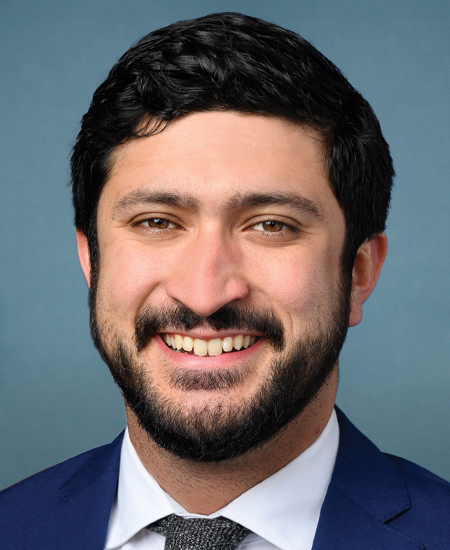
Rep. Greg Casar
Sponsored bills
Maddy summaryThe Affordable Connectivity Program Extension Act of 2024 allocates $7 billion in funding for the Affordable Connectivity Program (ACP) during fiscal year 2024. The ACP provides subsidies to low-income households to help cover the cost of internet service and connected devices like laptops or tablets. This funding ensures the program can continue supporting eligible households throughout the year, with the money remaining available until fully spent. The bill extends existing program funding without changing eligibility criteria or service requirements.
Maddy summaryThis resolution calls on the U.S. government to formally end the Monroe Doctrine - a historical policy used to justify U.S. intervention in Latin America - and develop a new "Good Neighbor" policy focused on partnership. It specifically urges the State Department to declare the doctrine obsolete, end unilateral sanctions (like the Cuba embargo), reform international financial institutions, and support regional cooperation on issues like climate change and human rights. The resolution targets U.S. foreign policy mechanisms and aims to improve relations with Latin American and Caribbean nations by shifting from intervention to mutual respect. As a non-binding resolution, it expresses congressional intent but does not create new law.
Maddy summaryThe Public Banking Act of 2023 establishes a federal framework for public banks owned by state, tribal, or community entities. It creates a process for chartering public lending banks (which provide financial services to public entities) and public payment banks (which focus on payment services), while requiring democratic governance with community representation on boards. The bill sets specific lending preferences prioritizing environmental justice communities, quality job creation, and worker protections, while prohibiting loans to fossil fuel companies, private prisons, and tobacco industries. It also creates grant and incubator programs to help establish these banks and establishes public deposit insurance for them, fundamentally changing how public banking institutions operate in the United States.
Maddy summaryHR 6768, the Public Health Nursing Act, authorizes $5 billion annually (2024-2033) to expand public health nursing services through federal grants to state and local health departments. The bill requires grantees to use funds for recruiting and training registered nurses in underserved areas, covering wages, medical supplies (like PPE), and administrative costs to improve maternal/infant health and chronic disease management. Priority is given to applicants serving communities with high chronic disease rates, maternal mortality, low-income populations, rural areas, or health professional shortage zones. This directly affects public health departments and their ability to hire nurses providing in-person care, home visits, and mobile clinic services.
Maddy summaryThe Brittany Clardy Missing and Murdered Black Women and Girls Act establishes a new Office within the Department of Justice to address the disproportionate rates of missing and murdered Black women and girls in the U.S. The Office will collect and analyze data on these cases - including case resolution times, Amber Alert usage, and trafficking links - and create a public dashboard for tracking. It also creates a grant program for community organizations to provide culturally appropriate prevention services, law enforcement training, and victim support. The Office must submit biennial reports to Congress with findings and recommendations to improve the criminal justice response to these cases. This bill directly affects Black women and girls facing violence, law enforcement agencies, and community organizations providing related services.
This resolution expresses the sense of the House of Representatives that regular journalistic activities, including the obtainment and publication of information, are protected under the First Amendment and that the federal government should drop all charges against and attempts to extradite Julian Assange.
Maddy summaryThis bill restricts warrantless surveillance of U.S. persons by amending the Foreign Intelligence Surveillance Act. It limits who can conduct queries of U.S. person data (capping at five personnel per FBI field office), prohibits using such queries for law enforcement without proper authorization, and requires documentation of all queries. The bill creates exceptions for emergencies, consent, and cybersecurity, but prohibits using metadata results to access protected communications. It also limits how information acquired under Section 702 can be used in criminal proceedings, requiring specific approvals for such use.
Maddy summaryHR 6654, the Farewell to Foam Act of 2023, bans the sale and distribution of expanded polystyrene foam food containers, packaging peanuts ("loose fill"), and coolers starting January 1, 2026. It directly affects food service providers (like restaurants and schools), manufacturers, distributors, and retailers who sell these foam products. The bill prohibits selling these items, with enforcement starting with a written warning for first violations, followed by escalating civil penalties ($250 for a second violation, up to $1,000 for fourth+ violations), while exempting small businesses with low annual revenue from repeated penalties within a 7-day period.
Maddy summaryThe ARMAS Act of 2023 transfers regulatory control of certain firearm exports from the Department of Commerce to the Department of State. It designates Mexico, Guatemala, Honduras, El Salvador, Haiti, Jamaica, and other Caribbean nations as "covered countries" requiring special oversight for firearm exports. The bill requires the State Department to develop strategies to disrupt illegal firearm trafficking to these countries, implement tracking systems for firearms, and submit annual reports on exports. It establishes certification requirements for exports to covered countries, including detailed reporting to Congress about proposed exports. The law aims to improve tracking of firearms used in violence and reduce illegal trafficking that fuels crime and violence in the region.