Maddy summaryHRES 1068 is a symbolic House resolution condemning all forms of rape and sexual violence against women globally, both during conflicts and in peacetime. It specifically denounces the weaponization of sexual violence in recent conflicts (including Hamas attacks on Israel, Sudan, Ukraine, and others) and highlights ongoing issues in the U.S. and worldwide. The resolution calls for international action to hold perpetrators accountable and prioritize eliminating gender-based violence in conflict settings. As a non-binding statement, it does not create new laws or allocate funding but formally expresses congressional disapproval of sexual violence.
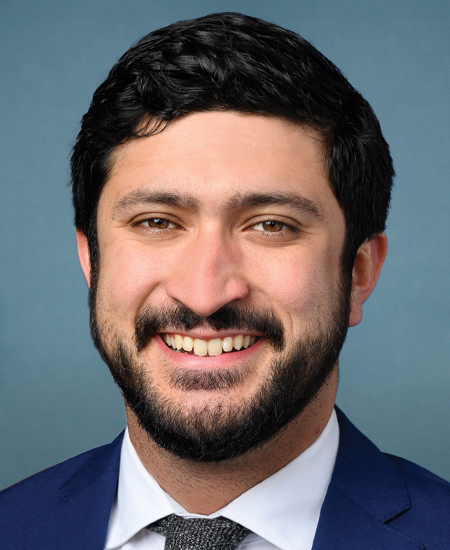
Rep. Greg Casar
Sponsored bills
Young Adult Tax Credit Act This bill allows a refundable young adult tax credit and a monthly advance payment of such credit. The bill defines young adult as an individual who is at least age 18, but not yet 25, and is either a citizen, national, or resident of the United States. The amount of such credit is the sum of $500 for each taxpayer or taxpayer dependent who is a young adult in any calendar month.
Maddy summaryHR 6203 extends funding for the Emergency Food Assistance Program (EFAP) through fiscal year 2028, increasing annual commodity funding to $500 million per year for 2024-2028. It raises storage and distribution funding from $100 million to $200 million annually and creates new delivery options for geographically isolated states (Hawaii, Alaska, Puerto Rico, Northern Mariana Islands, U.S. Virgin Islands, and Guam), including allowing them to order through the Department of Defense Fresh Fruit and Vegetable Program. The bill also permits these states to use up to 20% of allocated funds to directly purchase locally grown food. Finally, it allows the Secretary to consider factors like product variety and transportation distance when awarding contracts for fresh produce packages, while maintaining nutritional goals.
Maddy summaryThe Connect the Grid Act modifies federal energy regulations to improve grid connectivity, primarily affecting ERCOT (Texas' grid) and neighboring transmission organizations like SPP and MISO. It repeals exemptions for ERCOT under the Federal Power Act and establishes minimum power transfer requirements between ERCOT and other grids (e.g., 4.3-12.6 gigawatts to SPP). The bill requires joint planning by grid operators to build or upgrade transmission facilities by 2035, prioritizing grid-enhancing technologies, existing infrastructure corridors, environmental justice communities, and renewable energy access. Projects must follow environmental reviews under NEPA and the Endangered Species Act, with mandatory community outreach to tribal, Indigenous, and low-income groups.
Maddy summaryHR 7127, the FAIR Act, establishes pay adjustments for federal employees in 2025. It increases base pay by 4% for most federal workers under statutory pay systems and for "prevailing rate" employees (like those in specific geographic areas), while raising locality pay rates by 3.4%. The bill directly affects all federal employees receiving pay under these systems, as it modifies their 2025 salary calculations. These changes are based on statutory formulas under Title 5 of the U.S. Code, with no new policy mechanisms beyond the specified percentage increases. The adjustments apply to pay rates in effect as of the end of fiscal year 2024.
Maddy summaryThe ACCESS Act of 2024 creates a federal grant program to help clinics and health care providers expand abortion and reproductive health services in states where abortion is legal (outside of life or health exceptions). It authorizes $200 million annually for fiscal years 2024-2028 to fund specific capacity-building activities, including facility expansions, hiring clinical staff, telehealth services, and culturally appropriate patient resources. Priority is given to providers in states experiencing the highest increases in out-of-state patients seeking abortion care. The bill directly supports health care entities serving patients who travel across state lines for services, aiming to reduce wait times and improve access for vulnerable communities.
Maddy summaryHR 6569, the EFFECTIVE Food Procurement Act, requires the U.S. Department of Agriculture (USDA) to prioritize specific food purchases in its procurement programs. The bill mandates that USDA spending must include a minimum percentage of foods supporting: equity (from beginning, veteran, or socially disadvantaged farmers/fishermen/ranchers), resilient supply chains (small/mid-sized farms, organic, animal welfare certified), worker well-being (unionized or certified vendors), and climate-friendly practices (low emissions, deforestation policies). It establishes annual reporting requirements on procurement spending, greenhouse gas emissions, and targets to increase these categories by 2032. The bill also creates a pilot program for "best value" procurement (20% of spending) and provides $25 million in grants to help small and underrepresented producers meet USDA vendor requirements.
Maddy summaryHR 7056, the Access to Family Building Act, establishes federal rights for individuals to access assisted reproductive technology (ART) like IVF without unreasonable restrictions, directly affecting patients seeking fertility treatments and health care providers offering ART services. The bill prohibits states from imposing limitations on ART that are more burdensome than those for comparable medical procedures, fail to advance safety, or unduly restrict access, while allowing health and safety regulations that are necessary and least restrictive. It creates federal enforcement mechanisms, including lawsuits by the Attorney General or affected individuals to challenge violating state laws, and preempts conflicting state regulations. The bill explicitly preserves state authority over health/safety regulations and does not alter existing state insurance coverage laws for ART.
Maddy summaryThe Stronger Communities through Better Transit Act establishes a new federal grant program to improve public transportation service. It provides funding to urban areas, states, and Indian tribes to cover up to 50% of public transit operating costs (up to 80% in persistent poverty areas and 100% for Indian tribes), with requirements to report on service frequency, access to jobs, and conduct community surveys. The program mandates that a majority of funds must benefit underserved communities and areas of persistent poverty, defined as census tracts with high poverty rates or minority populations. Recipients must maintain their transit funding levels and report on improvements in access to essential services. The bill authorizes $20 billion annually for fiscal years 2024-2027.
Maddy summary# Summary of "Protecting Communities from Plastics Act" (Title II) This comprehensive legislation addresses the environmental, health, and environmental justice impacts of plastics production and use. Key provisions include: ## Environmental Justice Protections - Requires environmental justice assessments for permits of "covered facilities" (plastics manufacturing facilities) - Mandates consultation with "fenceline communities" (communities near facilities) including: * Prompt notification in multiple languages * Public hearings with translation services * Community benefit agreements - Establishes a 45-day waiting period before approving permits after public hearings ## Regulatory Requirements - Amends Clean Air Act to establish new source performance standards for plastics facilities - Requires continuous monitoring of air emissions (benzene, nitrogen oxides, etc.) - Amends Clean Water Act to prohibit discharge of plastic pellets in wastewater - Requires financial assurance for facility closure and emergency response - Prohibits new facility permits within 5 miles of community buildings (schools, hospitals, etc.) ## Research and Monitoring - Requires study of microplastics in food (including fish, meat, fruits, vegetables) - Mandates research on microplastics in human bodies (urine, breastmilk, stool) - Establishes a pilot program to test technologies for microplastic removal - Requires inventory of plastics manufacturing and distribution ## Additional Provisions - Temporary permitting moratorium on new plastics facilities (during "temporary pause period") - Requires listing of discarded polyvinyl chloride as hazardous waste - Limits National Recycling Strategy to exclude chemical recycling technologies - Creates grants to reduce single-use plastics in agricultural packaging - Requires biodegradable alternatives to plastic weed barriers The legislation aims to address the disproportionate environmental and health impacts of plastics production on vulnerable communities while establishing comprehensive regulatory frameworks for plastics manufacturing and disposal.