

Maddy summaryThe FAMILY Act (HR 3481) would establish a national paid family and medical leave insurance program administered by the Social Security Administration. Eligible workers would receive wage replacement benefits (up to 85% of average earnings, with a maximum of $4,000 monthly) for up to 60 caregiving days per 12-month benefit period for qualifying reasons like caring for a sick family member, personal serious health conditions, or responding to domestic violence. The program would be funded through 0.2% payroll taxes from employees and employers (with self-employed individuals paying 0.4%), with benefits coordinated with existing state programs. The law includes protections against employer retaliation for taking leave and requires employers to maintain health coverage during leave periods.
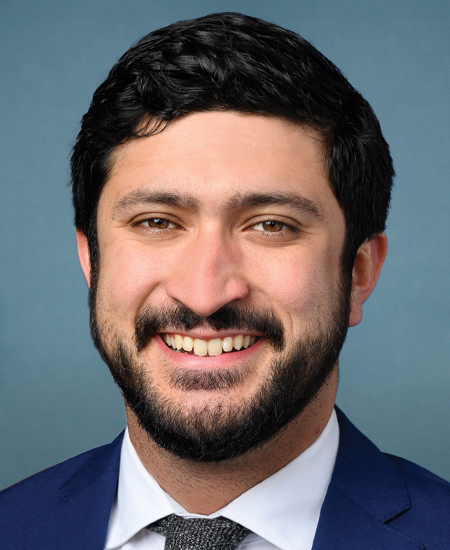
Rep. Greg Casar
Sponsored bills
Maddy summaryThe Medicare for All Act would establish a single-payer national health insurance program providing comprehensive coverage to all U.S. residents without cost-sharing. It would replace current private insurance and government programs like Medicare and Medicaid with a unified system covering all medically necessary services including hospital care, prescription drugs, mental health services, reproductive care, long-term care, and preventive services. The bill prohibits private insurers from offering duplicate coverage and requires providers to participate without charging patients for covered services. Implementation would occur over a two-year transition period, with a "Medicare Transition Buy-In" option allowing people to enroll before full implementation.
Maddy summaryThe Green New Deal for Health Act establishes a federal Office of Climate Change and Health Equity within the Department of Health and Human Services to coordinate climate and health efforts across government agencies. It requires health care facilities to become more climate-resilient through infrastructure upgrades, mandates climate risk disclosure for medical products, and creates new training programs for health professionals on climate-related health risks. The bill expands Medicare coverage for home resiliency services like heat pumps and solar batteries for individuals medically vulnerable during climate disasters, and provides funding for community mental health programs focused on climate resilience. It prioritizes support for environmental justice communities and individuals disproportionately affected by climate change, including those with certain health conditions, ages, or social vulnerabilities.
Maddy summaryThis bill establishes a new workplace violence prevention standard for healthcare and social service workers. It requires employers in covered facilities - including hospitals, nursing homes, mental health clinics, and social service settings - to develop and implement comprehensive prevention plans with specific requirements. These plans must include risk assessments, hazard prevention measures, employee training on violence prevention, and procedures for reporting and investigating violent incidents. The bill also amends Medicare regulations to require compliance with these standards for hospitals and skilled nursing facilities receiving Medicare funds.
Maddy summaryThis bill establishes minimum nurse-to-patient ratios for registered nurses in hospital units (such as 1:1 in trauma units, 2:1 in critical care units, and 3:1 in emergency rooms), requiring hospitals to develop and maintain staffing plans that meet these standards. It mandates transparency in documenting staffing levels, ensures hospitals verify nurses' competence for specific units, and enforces compliance through Medicare and Medicaid programs with penalties for violations. The bill protects nurses who refuse unsafe assignments due to staffing concerns and includes initiatives to improve nurse retention and address staffing shortages. It directly affects hospitals, nurses, and patients by aiming to improve patient safety and care quality through standardized staffing requirements. The bill applies to all hospitals, with extended implementation timelines for rural facilities.
Maddy summaryThe Housing Is a Human Right Act of 2023 creates federal grant programs to address homelessness and housing instability, prioritizing people who are homeless, housing unstable, or cost-burdened, including members of populations at higher risk of homelessness such as people of color, veterans, and justice system-involved individuals. It establishes a CDBG Plus program to fund permanent supportive housing, infrastructure for basic needs like public restrooms, and alternatives to criminalizing homelessness, while requiring community involvement and non-discrimination protections in program implementation. The bill creates new taxes on luxury real estate transactions and large landlords to fund these initiatives, and includes provisions to improve voting access for homeless individuals. It defines key terms like "homeless" and "housing unstable" to guide eligibility and requires programs to follow a Housing First approach that provides housing without preconditions like sobriety or treatment requirements.
Maddy summaryThe Social Security Expansion Act would increase benefits for many Social Security recipients, extend eligibility for certain groups, and introduce new tax provisions. It raises the calculation method for benefits (increasing the first bend point from 90% to 95%), increases minimum benefits for low earners based on years worked (with higher minimums for those with more work history), and extends benefit eligibility for children who are full-time students until age 22. The bill also introduces a new tax on income between the Social Security wage base and $250,000, and increases the tax on investment income from 3.8% to 16.2%. These changes would primarily affect Social Security beneficiaries, high-income earners, and those with investment income, with the new tax revenues funding the Social Security Trust Fund.
Maddy summaryThe Stop the Wait Act of 2023 eliminates the current 5-month waiting period for Social Security Disability Insurance (SSDI) benefits by phasing it out: applications filed in 2023-2025 would face a 3-month wait, 2026 a 2-month wait, and 2027 a 1-month wait, with full elimination by January 2028. It also changes Medicare rules to allow individuals without minimum essential health coverage to receive Medicare benefits retroactively from the first month of SSDI eligibility, rather than waiting 24 months. This directly affects people under 65 applying for SSDI who lack other health insurance, ensuring they have coverage during the waiting period. The bill amends the Social Security Act to implement these changes, effective January 1, 2028.
Maddy summary# Summary of Proposed Election Reform Legislation This document outlines a comprehensive federal election reform bill with multiple titles addressing various aspects of voting rights, election administration, and election integrity. ## Key Provisions: ### 1. Democracy Restoration (Title I) - Restores voting rights to citizens with felony convictions who are not serving a felony sentence in a correctional institution - Requires states to notify individuals of restored voting rights upon release from prison, completion of probation, or sentencing - Prohibits states from conditioning voting rights on payment of fines or fees - Requires states to provide notification of voting rights to citizens with criminal convictions ### 2. Voter Identification Requirements (Title II) - Establishes a broad definition of acceptable identification documents (including utility bills, bank statements, student IDs, etc.) - Requires states to provide free identification to voters who lack one - Authorizes $5 million annually for 5 years to cover costs of providing identification - Sets procedures for provisional voting when identification is not presented ### 3. Voter List Maintenance (Title III) - Prohibits "voter caging" (using undeliverable mail to challenge voter registration) - Bans use of unverified match lists to remove voters from registration lists - Sets strict conditions for removing voters from registration lists - Requires states to provide notice to voters removed from registration lists ### 4. Election Integrity Measures (Title V) - Prohibits hindering or interfering with voter registration (Section 2001) - Restricts removal of local election administrators (Section 3001) - Prohibits harassment of election workers (Section 3101) - Bans deceptive practices in elections (Section 3201), including false statements about voting locations, eligibility, or endorsements ### 5. Additional Provisions - Requires states to provide notice of voting rights restoration to citizens - Establishes private rights of action for violations of the law - Sets criminal penalties for violations (up to $100,000 fines and 5 years imprisonment) - Includes provisions for federal funding to be contingent on compliance with voting rights restoration This legislation represents a significant overhaul of voting rights and election administration procedures across the United States, with a focus on expanding voting access, protecting voter rights, and ensuring fair election administration.
Maddy summaryHR 549, the Metastatic Breast Cancer Access to Care Act, removes waiting periods for disability and Medicare coverage for people diagnosed with metastatic breast cancer. Specifically, it amends Social Security Act sections to allow immediate eligibility for disability insurance benefits (eliminating the standard waiting period) and immediate Medicare coverage (waiving the 24-month waiting period) for these patients. The bill directly affects individuals with metastatic breast cancer who would otherwise face delays in accessing critical benefits. These changes apply to applications filed or benefits beginning after the bill's enactment date. The law makes no other policy changes beyond these specific eligibility adjustments.