

Maddy summaryThe SHIP Act imposes sanctions on foreign entities that knowingly handle Iranian petroleum, targeting those involved in port operations, transportation, refining, or ship-to-ship transfers of Iranian oil. Starting 90 days after enactment, the President must block assets, deny visas, and impose penalties on individuals or companies engaging in these activities, including family members or owners of sanctioned entities. It requires annual reports tracking Iran's oil exports, revenues, and key players like shipping companies and ports. The sanctions terminate if the President certifies Iran has stopped supporting terrorism and dismantled weapons programs.
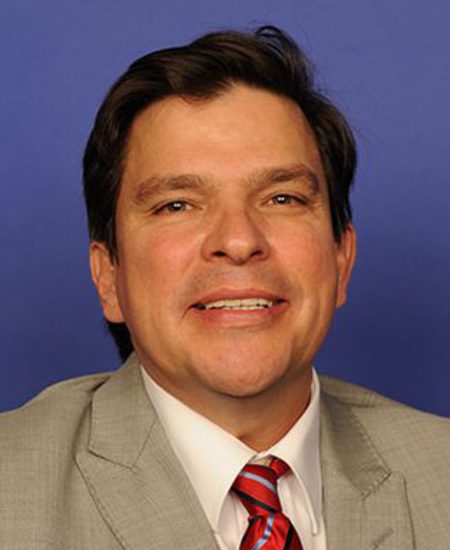
Rep. Vicente Gonzalez
Sponsored bills
Maddy summaryHR 662, the Block Grant Assistance Act of 2023, amends the Disaster Relief Supplemental Appropriations Act of 2023 to allow the Secretary of Agriculture to provide disaster loss assistance to eligible states and territories through block grants. This change permits states and territories to use the funds more flexibly for disaster recovery under the existing disaster relief framework, rather than requiring direct federal disbursement for specific losses. The bill directly affects states and territories experiencing disasters covered by the Disaster Relief Act. It modifies the current process by adding a specific provision enabling block grants as an option for distributing relief funds.
Maddy summaryHRES 785 is a non-binding resolution introduced by the U.S. House of Representatives that formally recognizes the contributions of Hispanic lawyers and judges while highlighting their underrepresentation in the legal profession and judiciary. It cites specific statistics, noting Hispanic lawyers make up 5.8% of U.S. lawyers and Hispanic judges represent just 7% of federal judicial appointments. The resolution expresses support for increasing Hispanic representation in the legal field to better reflect the Hispanic population, which comprises 18.7% of the U.S. population. As a symbolic measure, it does not enact new laws or policies but serves as a statement of the House's acknowledgment of diversity efforts in the legal sector.
Maddy summaryHRES 771 is a non-binding resolution expressing the U.S. House of Representatives' support for Israel following Hamas' October 7, 2023, attack. It condemns Hamas' actions, affirms Israel's right to self-defense, and calls for the immediate release of hostages. The resolution also urges enforcement of existing laws restricting aid to terrorists and sanctions against Iran for supporting Hamas. It does not create new policies or allocate funds, as it is a symbolic statement of congressional support.
Maddy summaryHRES 768 is a symbolic House Resolution expressing congressional support for Israel following Hamas' October 7, 2023 attacks. It condemns Hamas' actions, reaffirms Israel's right to self-defense, and calls for the immediate release of hostages. The resolution references the U.S. commitment to Israel's security through existing military aid programs, including the 2016 U.S.-Israel Memorandum of Understanding, and emphasizes enforcement of laws like the Taylor Force Act to prevent U.S. aid from reaching terrorist groups. As a symbolic resolution, it does not create new policy but serves as a statement of congressional support for Israel.
Maddy summaryHRES 762 is a non-binding House resolution expressing congressional support for increasing Latino representation in science, technology, engineering, and mathematics (STEM) careers. It highlights that Latinos make up 18% of the U.S. workforce but only 8% of STEM workers, despite growing population and interest in STEM fields. The resolution cites challenges like unmet financial needs (70% of Latino students) and notes STEM job growth (10.8%) outpaces non-STEM sectors. It formally acknowledges the underrepresentation in STEM, encourages federal support for initiatives targeting Latino students, and recognizes Hispanic-serving institutions' role - without creating new programs or funding.
Maddy summaryThis bill authorizes a one-time $40,000 payment to former Air America employees who served at least five years during 1950-1976, or to their survivors (widows/widowers, dependents, or children). Additional $8,000 payments are provided for each full year of service beyond five years. The total funding is capped at $60 million, with claims due within two years of regulations being finalized. It does not create ongoing benefits or change Air America’s legal status, and payments are issued as a single lump sum.
Maddy summaryThe Safe Schools Improvement Act (HR 6031) requires public elementary and secondary schools to implement comprehensive anti-bullying policies that specifically prohibit harassment based on protected characteristics like race, gender identity, disability, religion, and sexual orientation. It mandates schools to collect and publicly report annual data on bullying incidents while establishing clear grievance procedures for students and parents. The bill also requires states to submit biennial reports on school compliance and supports evidence-based interventions, such as restorative practices, to reduce exclusionary discipline. This legislation directly affects all public K-12 schools and students in the U.S., aiming to create safer learning environments through standardized policy requirements and data transparency.
Border Enforcement, Security, and Trade (BEST) Facilitation Act of 2023 This bill establishes positions within U.S. Customs and Border Protection (CBP) to review inspection images of vehicles and cargo entering or exiting the United States. Specifically, the bill establishes the position of image technician within the CBP Office of Field Operations. An image technician must (1) review nonintrusive inspection images of vehicles and cargo entering or exiting the United States; (2) assess whether there are indications that such vehicles and cargo contain contraband, illicitly concealed merchandise (e.g., drugs and weapons), or persons seeking to unlawfully enter the United States; and (3) recommend suspicious vehicles and cargo for further inspection by a CBP officer. The bill also establishes the position of supervisory image technician with additional responsibilities, including receiving and reporting intelligence to the National Targeting Center about techniques used by malign actors to transport contraband, illicitly concealed merchandise, and persons seeking to unlawfully enter the United States. A CBP officer shall retain the discretion and final decision-making authority on whether to release a vehicle or cargo or refer the vehicle or cargo for further inspection. The bill establishes annual training requirements for both image technician and supervisory image technician positions, including training on privacy and civil liberties and how to analyze inspection images. Within a year of this bill's enactment, CBP must develop a workforce staffing model for these positions. The Government Accountability Office must validate the model within six months of the model's completion.
Maddy summaryThis bill requires the Department of Homeland Security (DHS) to conduct a comprehensive assessment of technology needs for securing U.S. maritime borders within two years of enactment, with biannual updates for four years. The analysis must evaluate current and emerging technologies to address threats like drug trafficking, human smuggling, cybersecurity risks, and gaps in surveillance, while considering operational impacts and coordination with agencies. DHS must report findings to Congress, focusing on how technology can enhance border security, improve resource deployment, and support legal trade without mandating specific technology purchases or funding.