

Maddy summaryThe Assad Regime Anti-Normalization Act of 2023 amends the Caesar Syria Civilian Protection Act to expand sanctions against individuals and entities supporting the Assad regime in Syria. It targets those who provide financial or material support to the regime, divert humanitarian aid, seize property, or engage with Syria Arab Airlines or Cham Wings. The bill prohibits U.S. officials from recognizing or normalizing relations with the Assad regime and requires the administration to develop a strategy to counter other countries' engagement with Syria. It also mandates annual reports on diplomatic meetings with Syria, transactions involving Syria, and how the Assad regime manipulates UN operations in Syria.
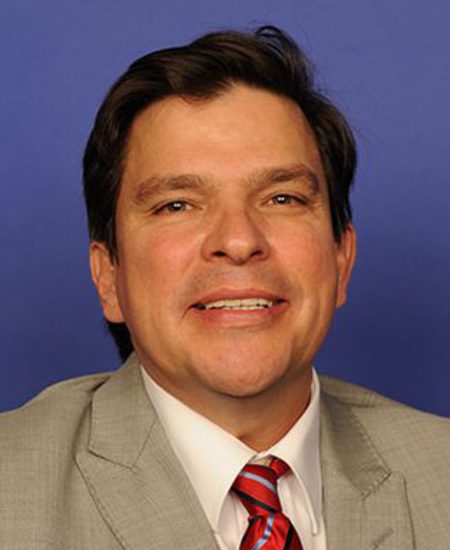
Rep. Vicente Gonzalez
Sponsored bills
Maddy summaryHR 7374 designates the United States Postal Service facility at 500 Sergeant Gonzales Drive in Fort Davis, Texas, as the "Sergeant Manuel Sillas Gonzales Post Office." This bill directly affects the specific postal facility by changing its official name to honor Sergeant Manuel Sillas Gonzales. The key mechanism requires all federal references in laws, documents, or records to use the new name moving forward. As a naming bill, it makes no substantive policy changes beyond the official designation.
Maddy summaryHR 803, the PROTECT Taiwan Act, requires U.S. financial regulators to bar representatives of China from participating in key international financial organizations (like the G20, Bank for International Settlements, and Financial Stability Board) within 10 days of the President notifying Congress about a threat to Taiwan's security or economy from China. The exclusion applies to meetings and activities of these specific groups, triggered by a presidential declaration under the Taiwan Relations Act. The President may waive this requirement with a report explaining the national interest, and the law automatically expires after 5 years or if the President declares termination. This bill directly affects China's representation in global financial governance when the U.S. declares a Taiwan-related threat.
Maddy summaryHR 6980, the DOCTORS Act, reallocates unused J-1 visa waivers that states did not use for foreign medical graduates. Each state must report unused waivers by September 30 annually, and the State Department will redistribute them equally over three years for the next fiscal year. Ten percent of redistributed waivers must support doctors working in facilities serving medically underserved communities. This directly affects state agencies managing visa waivers and impacts foreign doctors seeking permanent U.S. residency after training.
Maddy summaryThe Affordable Connectivity Program Extension Act of 2024 allocates $7 billion in funding for the Affordable Connectivity Program (ACP) during fiscal year 2024. The ACP provides subsidies to low-income households to help cover the cost of internet service and connected devices like laptops or tablets. This funding ensures the program can continue supporting eligible households throughout the year, with the money remaining available until fully spent. The bill extends existing program funding without changing eligibility criteria or service requirements.
Capital Markets Financing and Economic Growth Investments Act of 2023 This bill allows a money market fund, under specified conditions, to elect to operate using a different method of valuation than is otherwise required. A money market fund that elects to do so shall not be subject to requirements related to the imposition of liquidity fees. (A money market fund is a type of mutual fund that invests in liquid, short-term assets.) The Securities and Exchange Commission and securities exchanges are prohibited from enforcing rules or issuing guidance that imposes specified pricing structures or fees on an open-end company. (An open-end company offers securities in pooled investment vehicles such as mutual funds.)
Maddy summaryHRES 904 is a House resolution supporting World AIDS Day goals. It encourages efforts to achieve zero new HIV transmissions, zero discrimination, and zero AIDS-related deaths by 2030, while commending existing programs like PEPFAR and the Ryan White CARE Act. The resolution also supports continued funding for HIV prevention, treatment, and research, with specific focus on communities disproportionately affected by HIV in the U.S. and globally. As a symbolic statement, it does not create new laws or allocate funds.
This resolution honors the service, sacrifice, and contributions of Texas veterans and their families. The resolution also expresses that the House of Representatives commits to working with the Department of Veterans Affairs to ensure that veterans are provided timely care and applicable benefits and compensation as a result of their service.
Maddy summaryHR 6327, the Youth Financial Learning Act, provides federal grants to state education agencies to integrate financial literacy education into public elementary and secondary schools. States use these funds to develop curricula covering topics like budgeting, credit, and student loans, and to award subgrants to local schools, prioritizing high-need areas. States must contribute 25% of the grant amount from non-federal sources and ensure programs sustain beyond the grant period. The bill directly affects public K-12 schools, requiring them to embed financial literacy into classroom learning and partner with community organizations for after-school programs. It authorizes funding for fiscal years 2024 through 2027.
Increased Cost of Compliance Modernization Act of 2023 This bill increases insurance coverage available to structures in high-risk flood areas under the National Flood Insurance Program (NFIP), commonly known as Increased Cost of Compliance (ICC) coverage. ICC coverage applies to costs related to flood mitigation requirements for repairs to, or the rebuilding of, flood-damaged structures with existing NFIP coverage. Currently, ICC coverage is capped at $30,000. The bill increases this amount to $50,000, or 20% of the maximum amount of flood insurance coverage, with additional coverage available of up to $100,000, or 40% of the maximum amount of coverage. The bill removes the cap on ICC premiums and requires the premium amount to be calculated pursuant to other NFIP rates. Additionally, ICC coverage does not count towards the cap on overall NFIP coverage. Finally, ICC policyholders are allowed to assign the rights or benefits of this coverage to a governmental agency to satisfy certain cost-sharing requirements applicable to mitigation assistance programs.