

Protecting Election Administration from Interference Act of 2021 This bill revises preservation and retention requirements for federal election records. It also revises criminal penalties related to election records and the voting process. Under current law, election officials must, for a period of 22 months from the federal election, retain and preserve all election-related records and papers. This bill extends the requirement to electronic records and electronic equipment. Next, the bill directs the Cybersecurity and Infrastructure Security Agency to issue minimum standards and best practices for retaining and preserving records (including electronic records), papers, and electronic equipment, including protocols for observing their preservation, security, and transfer by the Department of Justice (DOJ) and a representative of each political party. In addition, the bill revises the federal criminal offense related to election records or papers to include reckless disregard of election record requirements resulting in the theft, destruction, concealment, mutilation, or alteration of a record, paper, or electronic equipment. Further, the bill allows DOJ to demand electronic records and electronic equipment for inspection and generally prohibits DOJ from disclosing this information. The bill allows DOJ and candidates for federal office to bring an action in a district court to compel compliance with election record requirements. Finally, the bill extends criminal penalties related to voting interference to include intimidating, threatening, or coercing (or attempting to do so) an individual for processing or scanning ballots, tabulating, canvassing, or certifying voting results.
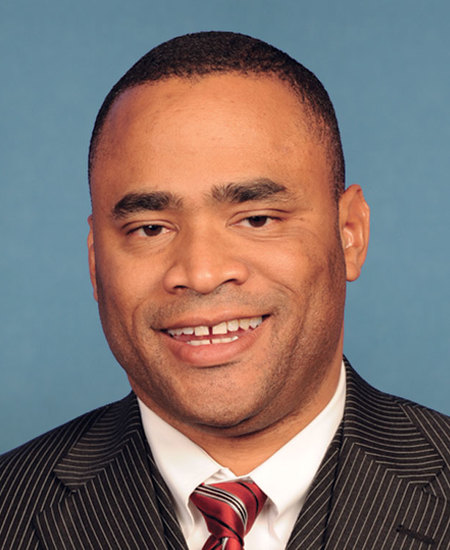
Rep. Marc A. Veasey
Sponsored bills
Transnational Repression Accountability and Prevention Act of 2021 or the TRAP Act of 2021 This bill establishes requirements related to U.S. cooperation with International Criminal Police Organization (INTERPOL) communications. Specifically, no U.S. agency or department may extradite an individual based solely on an INTERPOL notice. In addition, the Department of Justice and the Department of State must take certain actions to support reforms to increase transparency of INTERPOL, including with respect to its communications. The bill also requires reports on countries that abuse INTERPOL communications for political motives and other unlawful purposes.
Supreme Court Ethics Act This bill establishes a new statutory requirement for the Judicial Conference of the United States to issue a judicial code of conduct for judges and justices of U.S. courts, including Justices of the Supreme Court. Currently, the Judicial Conference issues a code of conduct for judges of U.S. courts (but not for Justices of the Supreme Court).
Disarm Hate Act The bill expands the categories of persons who are prohibited from receiving or possessing a firearm. Specifically, it prohibits firearm sale or transfer to and receipt, possession, shipment, or transport by a person (1) who has been convicted of a misdemeanor hate crime, or (2) who has received an enhanced hate crime misdemeanor sentence.
Tulsa-Greenwood Massacre Claims Accountability Act of 2021 This bill provides a cause of action for the victims of the 1921 race massacre that occurred in the Greenwood community of Tulsa, Oklahoma. Specifically, any person who acted under color of authority of the State of Oklahoma or the City of Tulsa to deprive a victim, on account of race, of any constitutional right secured to the victim at that time shall be liable to the victim or the victim's beneficiary or heir in a civil action for compensation.
Original National Domestic Violence Awareness Month Resolution of 2022 This resolution supports the goals and ideals of National Domestic Violence Awareness Month. Further, it expresses the sense of the House of Representatives that Congress should continue to raise awareness of and support programs to end domestic violence.
Major Richard Star Act This bill provides that combat-disabled uniformed services retirees with fewer than 20 years of creditable service may concurrently receive, without reduction, veterans' disability compensation and retired pay or combat-related special compensation.
Global Malnutrition Prevention and Treatment Act of 2021 This act sets out programs and otherwise directs the U.S. Agency for International Development (USAID) to carry out activities to prevent and treat malnutrition globally. Specifically, USAID may leverage resources to address malnutrition through the Global Nutrition Coordination Plan (an interagency effort to strengthen the impact of U.S. investments in nutrition) and its role on the board of directors of the U.S. International Development Finance Corporation. USAID must also select countries based on specified malnutrition-related indicators for purposes of targeting malnutrition prevention and treatment programs and update the selection within five years. Additionally, USAID may establish the Nutrition Leadership Council to coordinate federal government activities to prevent and treat malnutrition; and target resources and nutrition interventions to the populations most susceptible to severe malnutrition and otherwise support efforts to prevent and treat malnutrition globally. The act also requires USAID to provide to Congress an implementation plan and annual reports concerning its programs for treating and preventing malnutrition. The act's provisions terminate seven years after its enactment.
Maddy summaryHRES 1437 is a symbolic House resolution expressing support for World Sight Day and highlighting the global importance of accessible, affordable, and inclusive eye care. It does not create new laws or allocate funding but emphasizes statistics showing how vision loss impacts health, education, and economic productivity - such as 450 million children needing treatment and 1 billion people lacking eye care access. The resolution urges global prioritization of eye health and draws attention to the need for better vision care services worldwide. As a non-binding expression of support, it directly affects public awareness rather than specific populations through policy changes.
This bill designates the facility of the United States Postal Service located at 3900 Crown Road Southwest in Atlanta, Georgia, as the John R. Lewis Post Office Building.