

Maddy summaryThe SHIP Act imposes sanctions on foreign entities that knowingly handle Iranian petroleum, targeting those involved in port operations, transportation, refining, or ship-to-ship transfers of Iranian oil. Starting 90 days after enactment, the President must block assets, deny visas, and impose penalties on individuals or companies engaging in these activities, including family members or owners of sanctioned entities. It requires annual reports tracking Iran's oil exports, revenues, and key players like shipping companies and ports. The sanctions terminate if the President certifies Iran has stopped supporting terrorism and dismantled weapons programs.
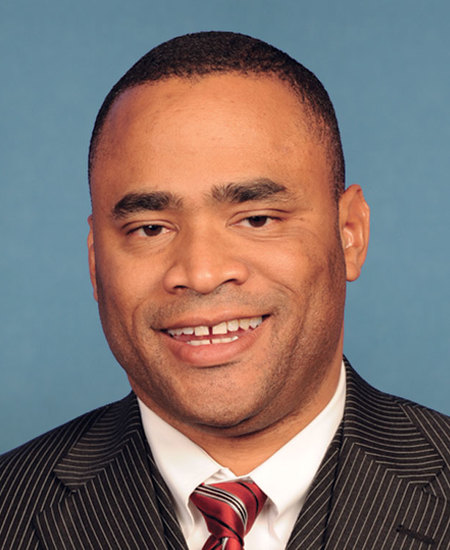
Rep. Marc A. Veasey
Sponsored bills
Maddy summaryHRES 844 is a symbolic resolution recognizing the religious and historical significance of Diwali, the festival of lights. It specifically acknowledges how Diwali is celebrated by Hindus, Sikhs, and Jains in the U.S., including its meaning for Sikhs (commemorating Guru Hargobind's release) and Jains (marking Lord Mahavira's Nirvana). The resolution expresses respect for Indian-American communities and highlights Diwali's role as a celebration of light over darkness and good over evil. It also affirms religious diversity in India and the U.S. and supports U.S.-India relations. As a non-binding resolution, it does not create legal obligations or affect any policies.
This resolution expresses support for the designation of National Vitiligo Awareness Day. (Vitiligo is a chronic condition that results in the loss of pigment in patches on the skin, hair, eyes, and inside of the mouth; the condition may lead to discomfort, itching, and pain.)
Maddy summaryHRES 780 is a non-binding resolution expressing the U.S. House of Representatives' support for World Sight Day. It highlights the global need for accessible, affordable, and inclusive eye care by citing statistics on vision loss impacts, including over 1 billion people worldwide lacking access to services. The resolution encourages prioritizing eye health and recognizes how vision impairment affects employment, education, and economic productivity. It does not create new policies or allocate funding, serving solely as a symbolic statement of support.
Maddy summaryThis bill creates a tax credit for video distributors (like cable or streaming companies) that carry content from independent programmers meeting specific criteria. Distributors earn a credit up to $0.30 per subscriber for new or expanded carriage agreements reaching at least 40% of subscribers, based on license fees paid to qualifying creators. The credit applies only to content from small, independent creators (not owned by large media companies, publicly traded firms, or networks). The FCC must submit biennial reports tracking how many independent programmers benefit from this policy, including average carriage duration.
Maddy summaryThis bill establishes new requirements for law enforcement agencies that use facial recognition technology. It requires court orders for most uses (with limited emergency exceptions), prohibits using facial recognition to monitor constitutional rights or for immigration enforcement, and mandates the removal of photos from arrest databases for certain individuals (under 18, released without charges, or acquitted). The bill requires annual accuracy and bias testing of facial recognition systems, detailed logging of searches, and public reporting of usage statistics disaggregated by race, ethnicity, gender, and age. Violations can lead to evidence suppression, civil lawsuits, and disciplinary action against officers. The bill directly affects state and local law enforcement agencies conducting criminal investigations using facial recognition.
Maddy summaryHRES 771 is a non-binding resolution expressing the U.S. House of Representatives' support for Israel following Hamas' October 7, 2023, attack. It condemns Hamas' actions, affirms Israel's right to self-defense, and calls for the immediate release of hostages. The resolution also urges enforcement of existing laws restricting aid to terrorists and sanctions against Iran for supporting Hamas. It does not create new policies or allocate funds, as it is a symbolic statement of congressional support.
Maddy summaryHRES 768 is a symbolic House Resolution expressing congressional support for Israel following Hamas' October 7, 2023 attacks. It condemns Hamas' actions, reaffirms Israel's right to self-defense, and calls for the immediate release of hostages. The resolution references the U.S. commitment to Israel's security through existing military aid programs, including the 2016 U.S.-Israel Memorandum of Understanding, and emphasizes enforcement of laws like the Taylor Force Act to prevent U.S. aid from reaching terrorist groups. As a symbolic resolution, it does not create new policy but serves as a statement of congressional support for Israel.
Maddy summaryHR 6054, the Represent America Abroad Act of 2023, creates a 3-year pilot program to increase diversity in the U.S. Foreign Service by recruiting mid-career professionals from historically excluded groups - including racial/ethnic minorities, women, people with disabilities, and others - through a modified lateral entry pathway. The program requires participants to have 5-8 years of relevant experience, pass standard Foreign Service exams, and complete specialized training, with a goal of placing at least 50% of participants into mid-level Foreign Service roles annually. It mandates annual reporting to Congress on applicant demographics, advancement rates, retention, and recruitment efforts, targeting outreach to minority-serving institutions and community organizations. The bill directly affects the Department of State and USAID, aiming to address documented diversity gaps in leadership (currently 13-17% minority representation at executive levels) by expanding recruitment from underrepresented talent pools.
Maddy summaryThis bill authorizes a one-time $40,000 payment to former Air America employees who served at least five years during 1950-1976, or to their survivors (widows/widowers, dependents, or children). Additional $8,000 payments are provided for each full year of service beyond five years. The total funding is capped at $60 million, with claims due within two years of regulations being finalized. It does not create ongoing benefits or change Air America’s legal status, and payments are issued as a single lump sum.