

Maddy summaryThis bill (HR 2365, Public Law 118-66) directs the U.S. Department of Health and Human Services (HHS) to establish the National Parkinson’s Project. It requires HHS to create and update a coordinated national plan for preventing, diagnosing, treating, and researching Parkinson’s disease and related disorders (including multiple system atrophy and progressive supranuclear palsy), while coordinating federal research and care efforts across agencies like the NIH, CDC, and VA. The law mandates annual progress assessments, an advisory council with patient advocates and diverse experts, and annual reports to Congress on federal Parkinson’s programs and recommendations for improvement. It affects federal agencies managing Parkinson’s-related programs and aims to improve care coordination and research efficiency for patients and caregivers, with the law sunsetting in 2035.
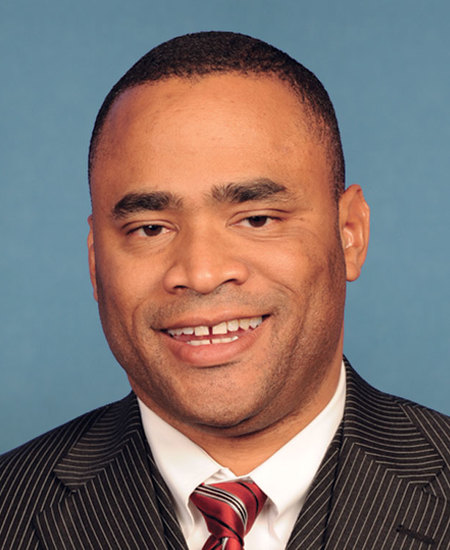
Rep. Marc A. Veasey
Sponsored bills
Maddy summaryHRES 1330 is a non-binding resolution supporting Alzheimer’s and Brain Awareness Month in June. It recognizes the significant impact of Alzheimer’s disease on millions of Americans, including high prevalence among women and racial/ethnic minorities. The resolution encourages the public to educate themselves about Alzheimer’s, advocate for research and support services, and offer assistance to affected individuals, families, and caregivers. It does not create new programs, funding, or legal obligations. The resolution is directed at raising public awareness and fostering community support during the designated month.
Maddy summaryThis bill bans developers and deployers of AI algorithms from using them to deceive voters about election procedures (like voting locations or registration rules) or intimidate people from voting. It requires clear disclaimers - such as "AI Disclaimer: This output was generated by artificial intelligence" - on AI-generated election content, including fake candidate videos or altered voting information. The law sets safety standards for election-related AI, requiring developers to ensure algorithms are "safe and effective" before use. The Federal Trade Commission enforces these rules, with violations potentially leading to fines or up to one year in prison.
Maddy summaryThis bill creates a federal framework for "extreme risk protection orders" (ERPOs) that temporarily remove firearms from individuals who pose a risk of harming themselves or others. Family members or law enforcement officers can petition a federal court for a temporary order (up to 14 days) based on probable cause, followed by a hearing within 72 hours to determine if a longer-term order (up to 180 days) is warranted. The bill requires clear and convincing evidence of risk at the hearing and mandates respondents to surrender firearms to law enforcement within 48 hours. It also includes provisions for reporting, training law enforcement on ERPOs, and a federal grant program to support state ERPO implementation, without preempting state laws.
Maddy summaryHRES 901 is a U.S. House resolution expressing support for democracy and human rights in Pakistan. It calls on the U.S. President and Secretary of State to collaborate with Pakistan to uphold democratic processes, human rights, and the rule of law. The resolution urges Pakistan to protect freedoms of speech, assembly, and press, and to avoid arbitrary detention or suppression of political participation. It also condemns efforts to undermine Pakistan's electoral or judicial systems, including harassment of citizens during protests or interference with elections.
Maddy summaryHR 8824, the U.S.-European Nuclear Energy Cooperation Act of 2024, requires the U.S. State Department to develop a strategy within 120 days to strengthen cooperation with European nations on nuclear energy and reduce reliance on Russian nuclear technology. The strategy must analyze reactor types, fuel cycles, and U.S. funding to replace Russian supply chains in uranium mining, enrichment, and reactor construction by 2030. It directly affects European countries (including Ukraine, Czech Republic, and others) dependent on Russian-designed nuclear plants and fuel, aiming to counter Russian influence following Russia’s invasion of Ukraine and occupation of the Zaporizhzhia plant. The bill authorizes $30 million annually (2025-2029) for U.S. engagement to support European nuclear capacity building and counter Russian disinformation in the sector.
Maddy summaryHR 8794, the Border Workforce Improvement Act, requires the Department of Homeland Security (DHS) to assess staffing needs for U.S. Customs and Border Protection (CBP), Immigration and Customs Enforcement (ICE), and U.S. Citizenship and Immigration Services (USCIS) at the southern border within 90 days of enactment. The assessment must review current staffing models, identify factors affecting workloads and capability gaps in human resources and technology, and evaluate solutions needing congressional action. DHS must submit a report with findings and implementation recommendations to relevant congressional committees within 180 days. This bill directly affects DHS agencies by mandating a comprehensive review of border workforce challenges, not by changing existing policies.
Maddy summaryThis resolution recognizes June 19, 2024, as Juneteenth Independence Day, acknowledging its historical significance as the anniversary of the end of slavery in the U.S. (specifically referencing Union soldiers' announcement in Galveston, Texas, on June 19, 1865). It does not create new policy but formally encourages all Americans to observe the day through ceremonies and educational activities. The resolution emphasizes Juneteenth's role in honoring African American freedom and its importance to U.S. history and cultural heritage. It follows the 2022 law that established Juneteenth as a federal holiday, focusing solely on symbolic recognition and annual observance.
Maddy summaryHR 8770, the Cybersecurity Clinics Grant Program Act, establishes a federal grant program to fund cybersecurity education at eligible institutions including junior/community colleges, HBCUs, HSIs, and other minority-serving colleges. The program requires grantees to develop hands-on workshops for students and communities, create practical cybersecurity curricula, and build student career pathways into the cybersecurity workforce. It directly supports under-resourced organizations like small businesses, local governments, and critical infrastructure providers by helping them improve their cyber defenses. The grant program will be administered by CISA and FEMA, with annual reports tracking fund use and graduate workforce placements.
Maddy summaryHRES 1295 is a symbolic resolution expressing the House's support for recognizing Sunday, June 16, 2024, as Father's Day. It does not create new laws or policies but formally acknowledges the role of fathers in families and society. The resolution urges support for existing policy goals like universal paid family leave, affordable childcare, and child tax credits - though it does not mandate any changes. It directly affects all fathers and families in the U.S. by affirming their importance, but has no binding legal effect. This is a procedural resolution, not a legislative bill with concrete policy changes.